Technology
8 innovations that seemed like science fiction but exist today
Discover 8 futuristic technologies that stepped out of science fiction and into the real world. See how the future has already arrived!
10/29/2025
Leonardo Fróes


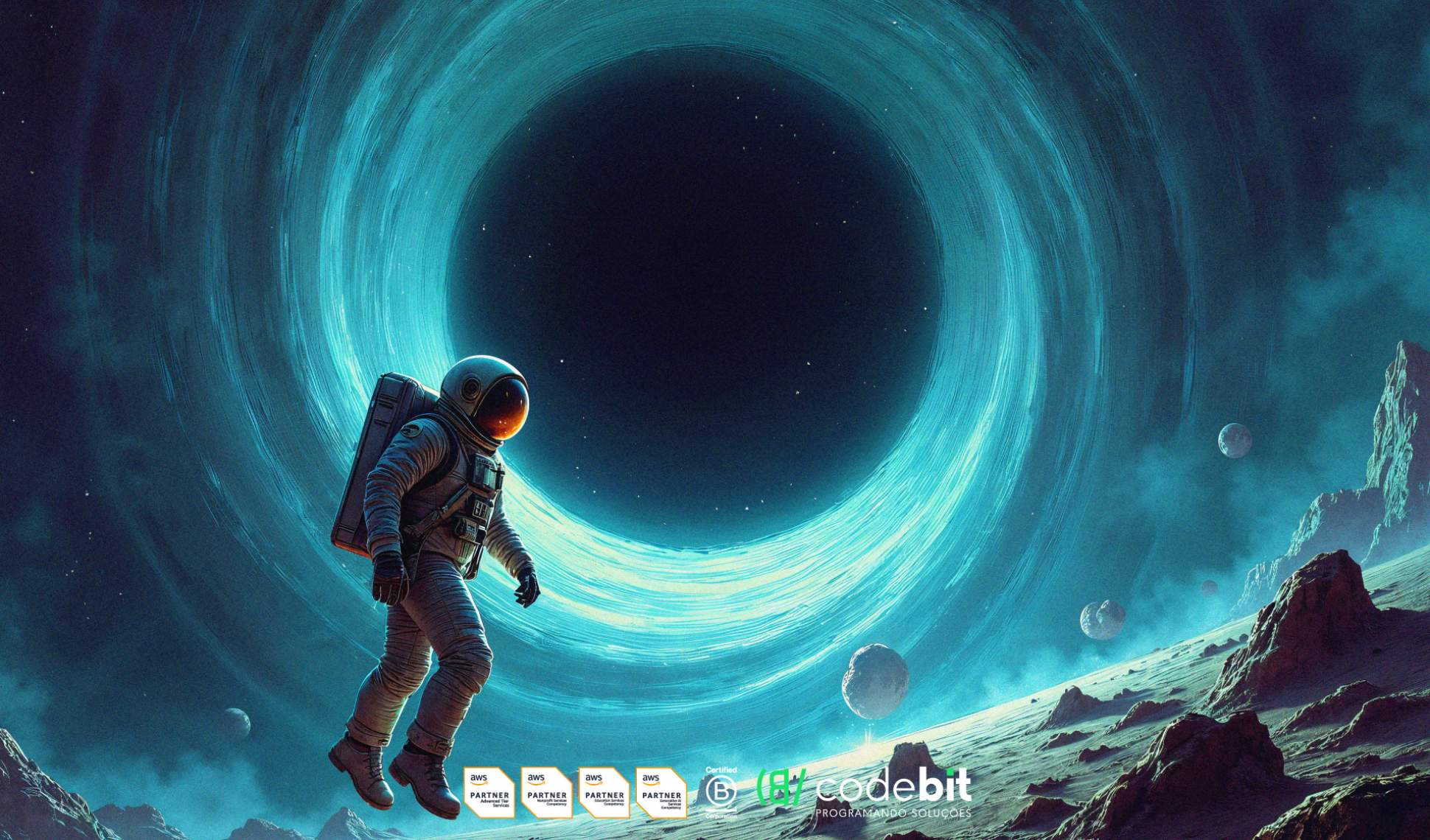
From science fiction classics to modern productions, we have always been fascinated by ideas that seemed impossible: space travel, conscious artificial intelligence, mind-machine interfaces, instant replications of objects… Today, many of these ideas have ceased to be mere daydreams and have become part of our daily lives, or are very close to it.
In this article, we will explore 8 futuristic innovations that we used to see in movies or books, but which are already a reality or in an advanced stage of development. Let's see how they work, who is behind them, and what this means for our future.
1. 3D Printing
3D printing has ceased to be an exclusive tool of laboratories to become an everyday accessory. Today, anyone can print functional objects at home, with affordable printers that cost less than a smartphone released today. Platforms like Thingiverse, Printables, and Cults3D gather millions of ready-made designs, ranging from household utensils and spare parts to industrial prototypes.
This access has democratized on-demand manufacturing, allowing individuals and small businesses to create what they need, when they need it, without relying on large industries.
But the technology also scales in the opposite direction: while some print miniatures on a desk, others print entire houses. Companies like ICON (USA) and Apis Cor develop giant 3D printers that construct homes in a few hours, layer by layer, using special concrete. Experimental neighborhoods are already being built using this method, reducing costs, deadlines, and waste.
2. Smart glasses and integrated viewfinders
For decades, smart glasses were portrayed as a futuristic dream; the idea of seeing data and graphics overlaid on the real world seemed distant. Today, this technology is finally beginning to fit into everyday life.
Apple is also investing heavily in this direction and is already paving the way for the brand's smart glasses, expected in the coming years.
Check out the details about this race for the device that will replace the smartphone: Meta vs Apple: the race for the future of mobile
3. Brain-computer interfaces (BCI)
The idea of controlling machines with thought seemed like science fiction. Movies like Matrix and even episodes of Black Mirror imagined futures where human brains connect directly to digital systems. Today, this vision is starting to leap off the screens.
Brain-Computer Interfaces (BCI) are technologies that allow direct communication between the brain and electronic devices. In practice, sensors capture neural impulses and translate them into commands to move cursors, type, operate robotic prostheses, or even interact with computers.
Companies like Elon Musk's Neuralink are already testing brain implants capable of restoring communication to people with paralysis, allowing them to control a computer just with their thoughts. Universities such as MIT and the Stanford Neuroprosthetics Lab are developing less invasive versions, with external sensors (like EEG bands) that detect mental patterns and transform them into digital actions.
These technologies are still in their early stages, but the results are impressive: there are tetraplegic patients who can move robotic arms, write sentences, or surf the internet solely through brain activity.
4. Artificial neurons and quantum computing
Artificial neurons inspired by the brain — physical neural networks (neuromorphic computing) — are being developed to make AI processing more energy-efficient and faster. Companies and laboratories like IBM, Intel, and specialized startups are creating chips that mimic biological synapses and neurons, allowing extreme parallel processing.
At the same time, quantum computing is already leaving the laboratory: companies like Google, IBM, and Rigetti offer remote access to quantum processors for simulations, cryptography, and problems requiring immense calculating power. Although still far from everyday use, there are real applications in computational chemistry, financial modeling, and optimization.
5. Smart homes and buildings
The homes of the future, once imagined only in cartoons like The Jetsons, are becoming a reality and with a level of sophistication that goes far beyond turning on lights by voice command.
Today, smart homes and buildings are capable of automatically adjusting temperature, lighting, irrigation, energy consumption, and air quality, learning from the behavior of residents. Sensors and systems based on artificial intelligence monitor the environment in real-time and optimize every detail for comfort and efficiency.
In China, cities like Xiong’an are already testing completely connected neighborhoods, with automated garbage collection, continuous environmental monitoring, and smart power grids. In the West, companies like Google (with Nest) and Amazon (with Alexa Smart Home) create home ecosystems that integrate devices and learn users' routines, adjusting the climate, music, or lights without the need to give a single command.
6. Artificial limbs and biotechnology
Fiction showed robotic arms or cybernetic prostheses decades ago. Today, there are already artificial limbs with haptic sensors, which allow users to feel pressure or vibrations. There is also advanced research in regenerative biotechnology, where tissues or organs are grown in laboratories for human use. Artificial skin, cartilage, and experiments with complete organs in animals.
Companies like Open Bionics, Össur, and academic laboratories are already testing sensory prostheses or exoskeletons that read muscle signals and allow natural movements.
7. Commercial space travel and orbital tourism
The idea of traveling into space might still seem like something restricted to movies, books, and major governmental space agencies. But this scenario has changed. Today, space tourism is starting to leave the drawing board and consolidate itself as a new frontier of the global economy.
Companies like SpaceX, Blue Origin, and Virgin Galactic lead the commercial race, conducting or testing suborbital flights aimed at civilians and researchers. The International Space Station has already hosted private visitors, and new projects aim to expand this access even further, with plans for private orbital stations, lunar hotels, and space habitats in development for the next decade.
In addition to tourism, the infrastructure around Earth is also evolving. Initiatives like Starlink and OneWeb are redesigning the concept of global connectivity, using satellite networks in low orbit to bring high-speed internet to previously disconnected regions. It is an advance that reinforces the idea that life outside Earth, or at least around it, has already begun to become part of human reality.
8. Immersive interfaces and spatial computing
The concept of spatial computing refers to interfaces that go beyond traditional screens, integrating information and applications into the physical space around the user.
A concrete example is the Apple Vision Pro, launched in 2024, which introduces the concept of spatial computing, where windows, applications, and videos “float” around the user, blending the real world with the digital. It is still an expensive product aimed at a professional audience, but it is a first step towards the application of spatial computing in daily life.
Furthermore, new technologies are creating immersive devices that combine virtual and augmented reality in a seamless way, allowing for more natural experiences integrated into daily life. Applications include interactive education, remote 3D collaboration, professional simulations, and entertainment that fills the entire room, turning physical space into an extension of the digital interface.
To understand the full potential of spatial computing, check out our complete article on the topic: Spatial computing: an immersive, realistic, and intuitive experience
Science fiction has always offered us glimpses of technologies that seemed impossible. Today, many of them are becoming reality, even though challenges such as costs, usability, and privacy still exist.
These innovations show that the future is closer than we imagine and invite us to reflect: what seems impossible today, will it be within our reach in a few years? How do we want to use these technologies: to improve lives, expand our capabilities, or simply surprise the world?



" width="15.500294250860316px"><path d="M 0 15.475 L 0 0 L 15.5 0 L 15.5 15.475 Z" fill="transparent" height="15.475099999999998px" id="tPiDQU_MP" width="15.5px"/><path d="M 3.167 1.589 C 3.847 0.724 4.607 0.171 5.61 0.046 C 6.532 -0.07 7.436 0.022 8.277 0.451 C 9.235 0.938 9.681 1.797 9.877 2.797 C 9.987 3.364 10.049 3.948 10.056 4.525 C 10.079 6.395 10.055 8.265 10.075 10.135 C 10.08 10.527 9.944 10.648 9.574 10.641 C 8.799 10.627 8.023 10.63 7.248 10.644 C 6.911 10.65 6.787 10.528 6.789 10.181 C 6.803 8.533 6.799 6.884 6.789 5.236 C 6.788 4.892 6.754 4.545 6.698 4.206 C 6.57 3.433 6.106 2.974 5.443 2.925 C 4.405 2.849 3.714 3.206 3.495 4.018 C 3.37 4.478 3.333 4.972 3.326 5.451 C 3.306 7.002 3.307 8.555 3.327 10.105 C 3.332 10.504 3.208 10.654 2.807 10.644 C 2.032 10.625 1.257 10.63 0.481 10.642 C 0.156 10.647 -0.001 10.546 0 10.193 C 0.007 7.035 0.006 3.876 0 0.718 C 0 0.391 0.104 0.24 0.458 0.249 C 1.219 0.269 1.981 0.267 2.743 0.252 C 3.068 0.245 3.197 0.361 3.17 0.688 C 3.148 0.948 3.166 1.211 3.166 1.589 Z" fill="rgb(245, 240, 237)" height="10.64451194394125px" id="Hw1mXDepj" transform="translate(5.425 4.831)" width="10.075487656011685px"/><path d="M 3.284 5.2 C 3.284 6.764 3.27 8.327 3.292 9.892 C 3.297 10.284 3.158 10.403 2.79 10.396 C 2.015 10.382 1.24 10.386 0.465 10.399 C 0.14 10.403 -0.001 10.305 0 9.947 C 0.012 6.792 0.012 3.637 0.002 0.481 C 0.001 0.123 0.105 -0.01 0.473 0.001 C 1.261 0.023 2.05 0.02 2.839 0.004 C 3.183 -0.003 3.294 0.124 3.29 0.467 C 3.276 2.044 3.284 3.623 3.284 5.2 Z" fill="rgb(245, 240, 237)" height="10.39869818980116px" id="sgvgyFXCr" transform="translate(0.237 5.076)" width="3.292113077251912px"/><path d="M 3.768 1.898 C 3.761 2.945 2.91 3.782 1.859 3.772 C 0.828 3.763 -0.012 2.892 0 1.842 C 0.012 0.824 0.864 -0.003 1.897 0 C 2.956 0.003 3.776 0.834 3.768 1.898 Z" fill="rgb(245, 240, 237)" height="3.772444228811899px" id="M8BOm1cI0" transform="translate(0 0)" width="3.768370362042166px"/></g></svg>)
" height="17px" id="G9twDfI1x" transform="translate(2 2)" width="17px"/></svg>)
" height="17px" id="q6YSjVL3w" transform="translate(6 2)" width="8.5px"/></svg>)
" height="12.720532384492868px" id="Jh_taQ7si" transform="translate(1 3.586)" width="18.00050025px"/></svg>)