Artificial Intelligence
The Pokémon GO Case: How Millions of Players Helped Train the World's Largest Geospatial AI
The game that encouraged people to explore the physical world also collected billions of data points, revealing how users become infrastructure in the era of spatial computing.
05/25/2026
Igor Reis


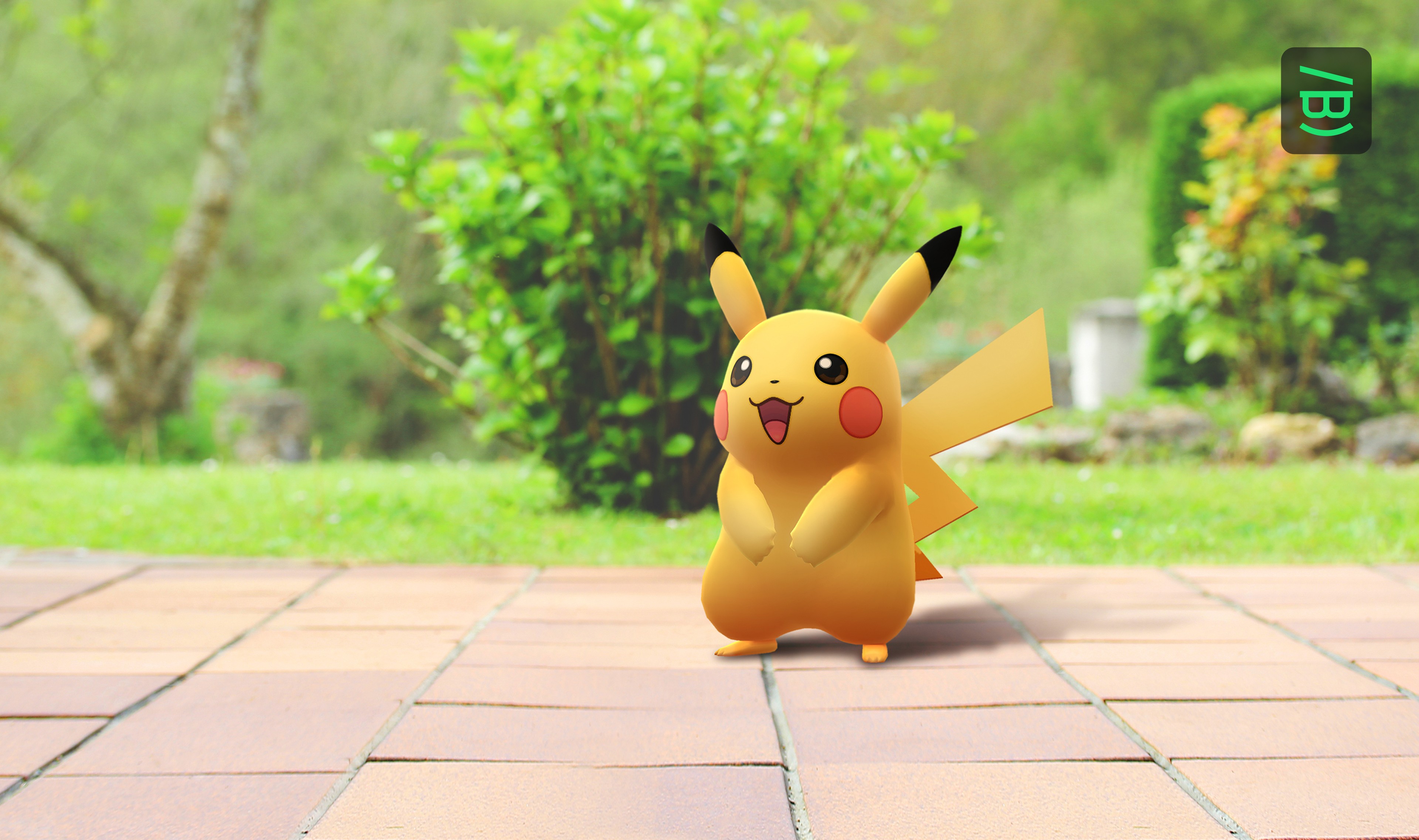
In 2016, Pokémon GO seemed like just a cultural phenomenon: people walking the streets, exploring cities, and catching virtual creatures. But behind this playful experience lay something much larger. As millions of users walked, scanned environments, and interacted with the physical world, Niantic collected valuable data, precise localization, movement patterns, and images of urban spaces. Years later, it has become clear that this data helped build advanced artificial intelligence models capable of mapping the world in 3D and understanding physical space with near-human precision.
What seemed like a game was, in practice, one of the largest geospatial data collection operations ever conducted and perhaps one of the clearest examples of how, in the digital economy, the user is also the product.
The Pokémon GO phenomenon: far beyond a game
When Pokémon GO was launched in 2016, it seemed like just a game that blended nostalgia and novelty. But what happened there was bigger: the first global experiment in location-based augmented reality actually working at scale.
Millions of people began moving through cities guided by a digital system, transforming physical space into part of the experience. The map ceased to be a backdrop and became an interface; the street, the park, and tourist landmarks became active elements of the product.
This movement marked an important turning point. For the first time, a technology not only existed in the real world but depended on it to function. The experience only made sense because it was connected to the environment, movement, and user behavior.
And that is precisely what makes the phenomenon so relevant: Pokémon GO was not just an entertainment success, it was proof that spatial computing could move from concept to daily habit.
A game, on the surface.
A new model of interaction with the world, in practice.
The invisible mechanics: how the game collects real-world data
For Pokémon GO to work, it needs to know exactly where you are, where you are going, and how you interact with the environment around you. This is not a secondary layer; it is the foundation of the experience.
The game uses GPS data to position the player on the map in real time, tracking movements, routes, and the frequency of visits to certain locations. Every walk, stop, or change of route ceases to be just a physical movement and also becomes a digital record.
But the collection does not stop at location. Sensors within the smartphone itself, such as the accelerometer and gyroscope, help understand whether the user is walking, stationary, or moving faster. This directly influences the game's logic, such as egg hatching or the appearance of creatures, while simultaneously generating detailed behavioral patterns.
The camera acts as another key element. By utilizing augmented reality, the game allows users to "position" Pokémon in the real world, capturing images and interacting with the physical environment. In parallel, this contributes to the visual recognition of spaces, which is essential for systems aiming to comprehend the world in three dimensions.
Additionally, there are interactions with specific points on the map, such as PokéStops and Gyms. These locations are not random: many were inherited from Niantic's previous databases, such as the game Ingress, and continue to be refined through ongoing use. Every visit, duration of stay, and level of activity helps validate and enrich these points in the system.
The result is a continuous and integrated collection: location, movement, imagery, and behavior. All of this happens seamlessly, without disrupting the user experience—on the contrary, it is precisely this collection that allows the game to exist as it does.
And perhaps that is the most important point: it is not a system that collects data separate from the product.
In the case of Pokémon GO, the collection is the product itself in operation.
From entertainment to infrastructure: the birth of a geospatial database
Over time, it became clear that Pokémon GO was not just reacting to the world; it was learning from it.
Each interaction by players, such as movements and camera use in augmented reality, began to feed systems capable of understanding physical space with greater precision. What was once isolated data began to transform into something structured: a digital model of the real world.
Niantic evolved this foundation into what it calls a Large Geospatial Model, a class of AI model designed to interpret space, understanding depth, position, and relationships between objects in the environment.
One of the pillars of this represents AR "scans". At various times, the game encourages users to scan locations with their camera, helping to generate three-dimensional reconstructions of real spaces. In practice, millions of players have contributed to creating increasingly detailed maps.
The result is a silent shift. What started as entertainment evolved into infrastructure.
Pokémon GO did not just create an experience; it helped build one of the most valuable geospatial bases of the digital era.
Spatial computing: Niantic's true play
Behind Pokémon GO, the goal was never just to create a game, but to build a foundation for what comes next.
Niantic is part of a larger movement in technology: spatial computing. In this model, systems stop operating only on screens and begin to understand, map, and interact with the physical world in real time.
This is where the collected data gains a new meaning. Detailed maps, environmental recognition, and movement patterns are not just for games. They are fundamental for applications like persistent augmented reality, contextual navigation, autonomous robotics, and even the functioning of smart cities.
Technology companies already treat physical space as the next interface. It is no longer enough to know "what" the user wants; it is necessary to understand "where" they are, "how" they move, and "what" exists around them. And this is only possible with a robust geospatial foundation.
In this scenario, Pokémon GO functions almost like a training layer. While users play, systems learn to interpret the world with increasing accuracy, creating the foundations for experiences that are still being built.
The game, therefore, was never the end goal.
It was the means to feed a new generation of technologies that no longer live inside the screen, but in the very space where we live.
"If it's free, you are the product"
Pokémon GO has always been free to play, but that does not mean there is no business model behind it. On the contrary, it is one of the clearest examples of indirect monetization in the digital economy.
Niantic generates revenue from in-app purchases, but that is only one of the pillars. Another strategic component lies in how the game connects physical behavior to commercial opportunities in the real world.
An example of this is sponsored locations. Businesses can pay to transform their spaces into relevant landmarks within the game, driving targeted foot traffic. This is not just advertising; it is direct influence over user movement.
Additionally, the data collected throughout the experience has value in its own right. Information on mobility, duration of stay in locations, and behavioral patterns helps build a highly detailed view of how people interact with urban space.
This type of data is extremely valuable in a landscape where location and context are increasingly central to business decisions. Whether for more precise marketing campaigns, urban planning, or the development of new technologies, the asset is not just in the user, but in what can be learned from them.
In the end, the logic is simple yet powerful: the game entertains, engages, and creates value.
And part of that value comes precisely from what the user delivers while playing, often without realizing it.
Consent, transparency, and the grey area of privacy
From a technical standpoint, Pokémon GO has always operated within a consent-based model. To function, the game requests clear permissions: access to location, the camera, and device sensors. All of this is described in the terms of use and privacy policies.
But there is an important difference between consenting and understanding.
In practice, few users read or understand in depth what they are authorizing. Consent happens quickly, often driven by the desire to access the experience. And that is where the grey area emerges: the user permits data collection but is not always clear on the scale, purpose, or value of this data over time.
Niantic, like other technology companies, operates within this widely accepted market model. Even so, the case raises an important discussion: to what extent is formal transparency enough when the product depends on continuous and sophisticated collection?
There is also the issue of perception. During the peak of the game, the dominant narrative was one of innovation and entertainment, not of data collection. This directly influences how the user interprets what is happening. When the experience is positive, concern tends to be lower.
The issue is not necessarily an explicit violation, but the asymmetry of understanding.
The user participates, interacts, and contributes.
But they do not always realize, with the same clarity, what they are handing over in return.
The legacy of Pokémon GO: the future of invisible products
Years after the initial hype, the true impact of Pokémon GO is beginning to become clearer, and it goes far beyond entertainment.
Over time, Niantic has accumulated a database with tens of billions of geolocated images, used to train systems capable of understanding the physical world with increasing accuracy.
This material feeds the so-called Large Geospatial Model, a new generation of AI that does not just understand text or images in isolation, but space itself, position, depth, and context.
What Pokémon GO revealed is a pattern that tends to repeat: products that look simple on the surface but function as collection and training systems on a global scale.
The game is over.
But the infrastructure it helped build is just beginning.




" width="15.500294250860316px"><path d="M 0 15.475 L 0 0 L 15.5 0 L 15.5 15.475 Z" fill="transparent" height="15.475099999999998px" id="tPiDQU_MP" width="15.5px"/><path d="M 3.167 1.589 C 3.847 0.724 4.607 0.171 5.61 0.046 C 6.532 -0.07 7.436 0.022 8.277 0.451 C 9.235 0.938 9.681 1.797 9.877 2.797 C 9.987 3.364 10.049 3.948 10.056 4.525 C 10.079 6.395 10.055 8.265 10.075 10.135 C 10.08 10.527 9.944 10.648 9.574 10.641 C 8.799 10.627 8.023 10.63 7.248 10.644 C 6.911 10.65 6.787 10.528 6.789 10.181 C 6.803 8.533 6.799 6.884 6.789 5.236 C 6.788 4.892 6.754 4.545 6.698 4.206 C 6.57 3.433 6.106 2.974 5.443 2.925 C 4.405 2.849 3.714 3.206 3.495 4.018 C 3.37 4.478 3.333 4.972 3.326 5.451 C 3.306 7.002 3.307 8.555 3.327 10.105 C 3.332 10.504 3.208 10.654 2.807 10.644 C 2.032 10.625 1.257 10.63 0.481 10.642 C 0.156 10.647 -0.001 10.546 0 10.193 C 0.007 7.035 0.006 3.876 0 0.718 C 0 0.391 0.104 0.24 0.458 0.249 C 1.219 0.269 1.981 0.267 2.743 0.252 C 3.068 0.245 3.197 0.361 3.17 0.688 C 3.148 0.948 3.166 1.211 3.166 1.589 Z" fill="rgb(245, 240, 237)" height="10.64451194394125px" id="Hw1mXDepj" transform="translate(5.425 4.831)" width="10.075487656011685px"/><path d="M 3.284 5.2 C 3.284 6.764 3.27 8.327 3.292 9.892 C 3.297 10.284 3.158 10.403 2.79 10.396 C 2.015 10.382 1.24 10.386 0.465 10.399 C 0.14 10.403 -0.001 10.305 0 9.947 C 0.012 6.792 0.012 3.637 0.002 0.481 C 0.001 0.123 0.105 -0.01 0.473 0.001 C 1.261 0.023 2.05 0.02 2.839 0.004 C 3.183 -0.003 3.294 0.124 3.29 0.467 C 3.276 2.044 3.284 3.623 3.284 5.2 Z" fill="rgb(245, 240, 237)" height="10.39869818980116px" id="sgvgyFXCr" transform="translate(0.237 5.076)" width="3.292113077251912px"/><path d="M 3.768 1.898 C 3.761 2.945 2.91 3.782 1.859 3.772 C 0.828 3.763 -0.012 2.892 0 1.842 C 0.012 0.824 0.864 -0.003 1.897 0 C 2.956 0.003 3.776 0.834 3.768 1.898 Z" fill="rgb(245, 240, 237)" height="3.772444228811899px" id="M8BOm1cI0" transform="translate(0 0)" width="3.768370362042166px"/></g></svg>)
" height="17px" id="G9twDfI1x" transform="translate(2 2)" width="17px"/></svg>)
" height="17px" id="q6YSjVL3w" transform="translate(6 2)" width="8.5px"/></svg>)
" height="12.720532384492868px" id="Jh_taQ7si" transform="translate(1 3.586)" width="18.00050025px"/></svg>)