Technology
How to avoid the potential security risks associated with online gaming?
How to avoid the potential security risks associated with online gaming? Check it out on CodeBlog!
04/02/2025
Leonardo Fróes


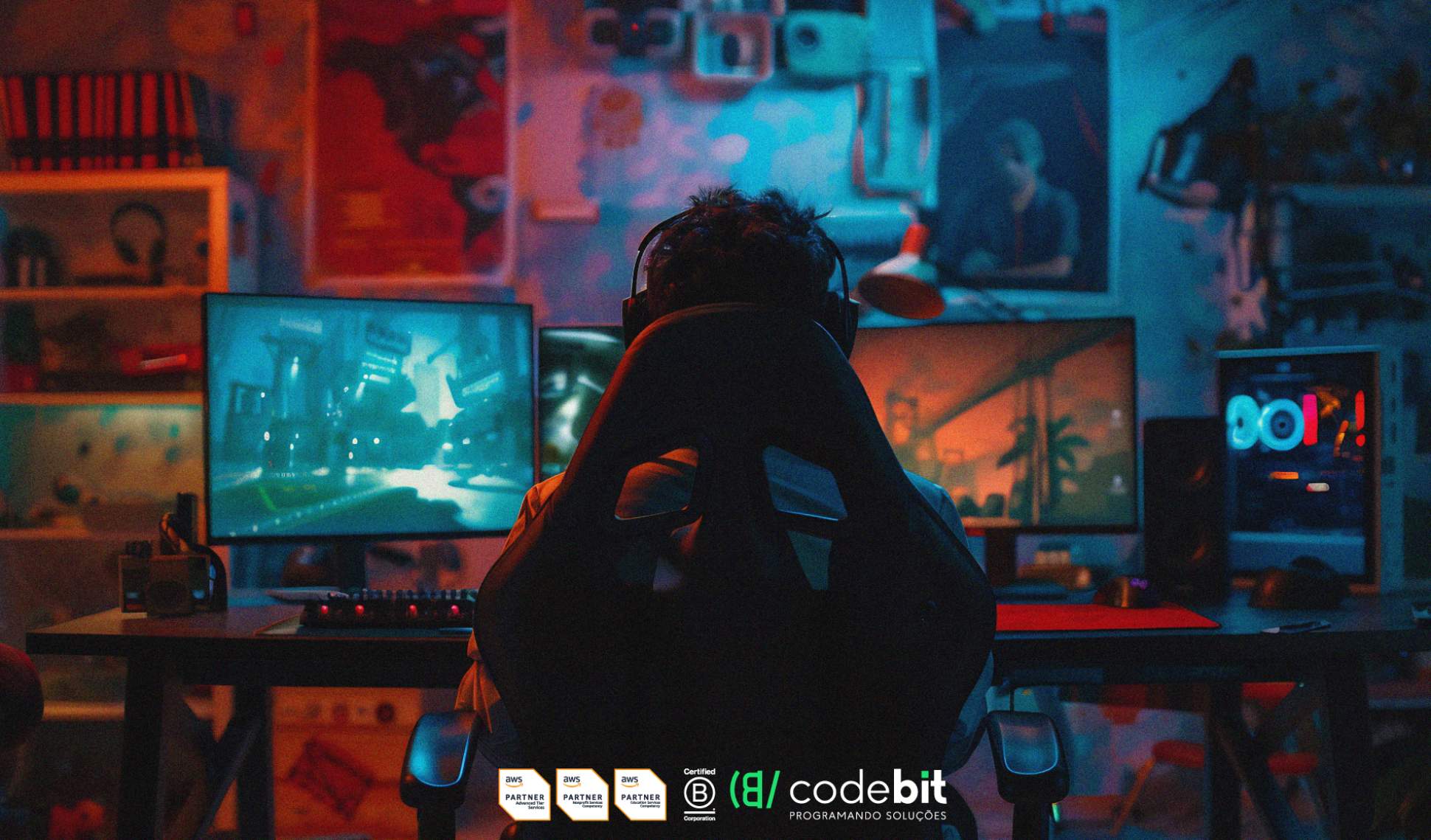
The online gaming industry is experiencing a period of unprecedented growth. With an annual global revenue exceeding $250 billion, this market already surpasses the film and music industries combined.
Platforms like Steam, PlayStation Network, and Xbox Live bring together millions of players daily who are eager for new digital experiences, while games like Fortnite, League of Legends, and Valorant set viewership records in esports competitions.
However, this spectacular success is accompanied by a worrying increase in digital security risks. According to recent reports from Akamai Technologies and Kaspersky, attacks on gaming accounts have increased by more than 50% in the last two years, with cases of phishing, malware, and data leaks becoming increasingly sophisticated and frequent.
What makes online games such an attractive target for cybercriminals? The answer lies in the combination of three critical factors:
Valuable data: gaming accounts store personal information, payment details, and even identification documents in some cases.
Virtual economy: rare items and skins in games like CS:GO and Fortnite can be worth thousands of dollars on the secondary market.
Social interaction: chats and real-time communication open doors for social engineering scams.
A study by ESET revealed that approximately 1 in 10 players has already been a victim of some type of online fraud, from account theft to financial extortion.
Situations range from a simple nuisance to cases with severe consequences, such as swatting (false reports to the police) and doxing (public exposure of personal data).
As the industry advances to new frontiers like the metaverse and blockchain gaming, security challenges become even more complex.
Riscos dos jogos online
The risks associated with online gaming represent a growing threat in our digital age, affecting everyone from casual players to major companies in the sector.
With the popularization of multiplayer games and the increase in value involved in virtual items and premium accounts, the industry has become a lucrative target for cybercriminals. The dynamic and competitive environment of gaming often causes players to lower their guard regarding security, making them vulnerable to attacks that can compromise not only their gaming experience but also their digital and even physical security.
These risks manifest in various ways, from technical threats that exploit system vulnerabilities to social dangers that take advantage of interaction between players.
The impact can range from minor inconveniences, such as losing progress in a game, to severe consequences like identity theft, financial fraud, and exposure of sensitive data.
As gaming technology evolves, with the introduction of virtual reality, integrated payments, and complex digital economies, attack vectors also become more sophisticated, requiring increased attention from everyone involved in the gaming ecosystem.
Technological Risks
Online games present several technological risks that exploit system and software flaws, endangering both players and developers. These threats have evolved along with the industry, becoming increasingly sophisticated and difficult to detect. The main ones are:
Malware and Viruses in Game Files
Pirated games, cracks, and cheats often contain malicious code
They can install keyloggers, ransomware, or spyware without the user's knowledge
It is estimated that 62% of unofficial modified files are infected
Example: In 2023, a supposed "mod" for GTA V installed a cryptocurrency miner.
Attacks on Servers and Infrastructure
DDoS (distributed denial of service) attacks take down entire platforms
340% increase in the last 2 years according to Cloudflare
They cause average losses of $50,000 per hour for developers
Recently, they affected eSports tournaments like the Valorant Champions.
Vulnerabilities in Engines and Systems
Flaws in Unity, Unreal Engine, and other graphics engines
They allow remote code execution and unauthorized access
Average delay of 3 months to patch after discovery
A critical case in 2022 allowed access to webcams through games
Issues in APIs and Payment Systems
Vulnerabilities in application programming interfaces
Theft of financial data in virtual item transactions
Fraud in game economies like CS:GO and FIFA Ultimate Team
Reports of losses exceeding $1,000 per victim.
Flaws in Devices and Firmware
Routers and consoles with outdated firmware
Exploitation of loopholes in video and audio drivers
Attacks on smart TVs and mobile devices used for playing
A recent vulnerability in AMD chipsets affected players.
These technological risks are particularly dangerous because they often operate silently, with players only discovering the problem when it is too late. The combination of complex systems, the economic value involved, and the large number of users makes online gaming an extremely attractive target for cybercriminals.
Social risks
Online games have created a complex social ecosystem where, unfortunately, new forms of threats have emerged that exploit interaction between players. These social risks are particularly worrying because they directly attack the human aspect of the gaming experience.
Social Engineering and Financial Scams
Criminals take advantage of the collaborative nature of games to execute sophisticated scams. They may pose as other players, clan members, or even technical support, using tactics like fake promotions for rare items or urgent requests for help.
The so-called "friend of your friend scam" on Discord is especially dangerous, where the criminal claims to know someone from your friends list to gain trust. Many victims only realize the scam when they have already lost valuable items or had their accounts stolen.
Data Exposure and Swatting
Doxing (exposure of personal data) has become a common weapon in disputes between players. Information such as real name, address, and even documents are collected and disclosed as a form of harassment.
In extreme cases, this leads to swatting - when criminals make false reports to the police against the victim. These attacks are traumatic and have already resulted in tragic situations in the international gaming scene.
Harassment and Cyberbullying
The competitive environment of gaming often turns into fertile ground for various forms of harassment. Research shows that the majority of players have already faced situations like offensive comments in voice chats, stalking between matches, or intentional exclusion from groups. This toxic behavior has profound impacts on mental health, especially among younger players.
Fraud in Virtual Economies
With the growth of the virtual items market, specialized scams have emerged, such as ghost sellers, fake trading sites, and pyramid schemes in games with NFTs. Many players lose hundreds of dollars in transactions that seem legitimate but are carefully prepared traps.
Grooming and Solicitation
Popular games among children and teenagers are frequent targets for predators who use gradual approach tactics. They offer in-game items, competitive advantages, or simply build friendship bonds to later exploit the trust gained.
These social risks are especially challenging because they cannot be solved with technical solutions alone. They require a combination of digital education, efficient moderation tools, and, above all, awareness on the part of everyone involved in the online gaming ecosystem.
How to protect yourself from these risks?
Protecting yourself from the dangers of online gaming requires a multifaceted approach that combines technical solutions with behavioral awareness. Here are the main protection strategies:
Account and Personal Data Protection
Use complex and unique passwords for each gaming platform
Enable two-factor authentication (2FA) on all services
Never share credentials, even with long-time friends in the game
Create pseudonyms that do not reveal personal information (avoid using real name or birth date)
Security in Transactions and Virtual Economy
Buy items only in the official marketplaces of the platforms
Be wary of offers that are "too good to be true" in Discord groups or forums
For transactions between players, always use the platform's mediation system
Never click on promotional links received through chat — always access the sites directly
Protection Against Social Threats
Carefully configure privacy options in games
Limit personal information shared in voice and text chats
Educate children and teenagers about the dangers of talking to strangers
Immediately report abusive or suspicious behavior to moderators
Basic Technical Security
Always keep updated: operating system, drivers, and game clients
Use a good antivirus with real-time protection (and scan downloaded files)
For competitive games, consider using a reliable VPN
Regularly back up game progress when possible
Best Practices for Parents
Enable available parental controls on the platforms
Establish time and interaction limits for online games
Maintain an open dialogue about children's virtual experiences
Periodically monitor friends lists and conversations
Remember that digital security in gaming is an ongoing process. As new threats emerge, protection measures must also evolve.
CodeBit keeps you informed and protected
At CodeBit, we understand that digital protection goes far beyond passwords and antivirus – it requires knowledge, constant updating, and smart solutions.
That is why, on the CodeBlog, we bring you relevant information and practical tips so you can navigate more safely, whether in gaming, at work, or in your digital daily life. We want you to play, work, and have fun without worries, always with the peace of mind of being well-informed.
Keep following our content and stay on top of the best practices in technology, security, and innovation. And if you need customized solutions for your company or project, our team is at your disposal to help.
The CodeBit is here to transform digital challenges into secure opportunities!




" width="15.500294250860316px"><path d="M 0 15.475 L 0 0 L 15.5 0 L 15.5 15.475 Z" fill="transparent" height="15.475099999999998px" id="tPiDQU_MP" width="15.5px"/><path d="M 3.167 1.589 C 3.847 0.724 4.607 0.171 5.61 0.046 C 6.532 -0.07 7.436 0.022 8.277 0.451 C 9.235 0.938 9.681 1.797 9.877 2.797 C 9.987 3.364 10.049 3.948 10.056 4.525 C 10.079 6.395 10.055 8.265 10.075 10.135 C 10.08 10.527 9.944 10.648 9.574 10.641 C 8.799 10.627 8.023 10.63 7.248 10.644 C 6.911 10.65 6.787 10.528 6.789 10.181 C 6.803 8.533 6.799 6.884 6.789 5.236 C 6.788 4.892 6.754 4.545 6.698 4.206 C 6.57 3.433 6.106 2.974 5.443 2.925 C 4.405 2.849 3.714 3.206 3.495 4.018 C 3.37 4.478 3.333 4.972 3.326 5.451 C 3.306 7.002 3.307 8.555 3.327 10.105 C 3.332 10.504 3.208 10.654 2.807 10.644 C 2.032 10.625 1.257 10.63 0.481 10.642 C 0.156 10.647 -0.001 10.546 0 10.193 C 0.007 7.035 0.006 3.876 0 0.718 C 0 0.391 0.104 0.24 0.458 0.249 C 1.219 0.269 1.981 0.267 2.743 0.252 C 3.068 0.245 3.197 0.361 3.17 0.688 C 3.148 0.948 3.166 1.211 3.166 1.589 Z" fill="rgb(245, 240, 237)" height="10.64451194394125px" id="Hw1mXDepj" transform="translate(5.425 4.831)" width="10.075487656011685px"/><path d="M 3.284 5.2 C 3.284 6.764 3.27 8.327 3.292 9.892 C 3.297 10.284 3.158 10.403 2.79 10.396 C 2.015 10.382 1.24 10.386 0.465 10.399 C 0.14 10.403 -0.001 10.305 0 9.947 C 0.012 6.792 0.012 3.637 0.002 0.481 C 0.001 0.123 0.105 -0.01 0.473 0.001 C 1.261 0.023 2.05 0.02 2.839 0.004 C 3.183 -0.003 3.294 0.124 3.29 0.467 C 3.276 2.044 3.284 3.623 3.284 5.2 Z" fill="rgb(245, 240, 237)" height="10.39869818980116px" id="sgvgyFXCr" transform="translate(0.237 5.076)" width="3.292113077251912px"/><path d="M 3.768 1.898 C 3.761 2.945 2.91 3.782 1.859 3.772 C 0.828 3.763 -0.012 2.892 0 1.842 C 0.012 0.824 0.864 -0.003 1.897 0 C 2.956 0.003 3.776 0.834 3.768 1.898 Z" fill="rgb(245, 240, 237)" height="3.772444228811899px" id="M8BOm1cI0" transform="translate(0 0)" width="3.768370362042166px"/></g></svg>)
" height="17px" id="G9twDfI1x" transform="translate(2 2)" width="17px"/></svg>)
" height="17px" id="q6YSjVL3w" transform="translate(6 2)" width="8.5px"/></svg>)
" height="12.720532384492868px" id="Jh_taQ7si" transform="translate(1 3.586)" width="18.00050025px"/></svg>)