Health
Dumbphones: digital detox or marketing ploy?
Minimalist phones have been gaining popularity. But is it really a digital detox or is the market just riding the wave of collective burnout?
09/24/2025
Brenda Pimentel


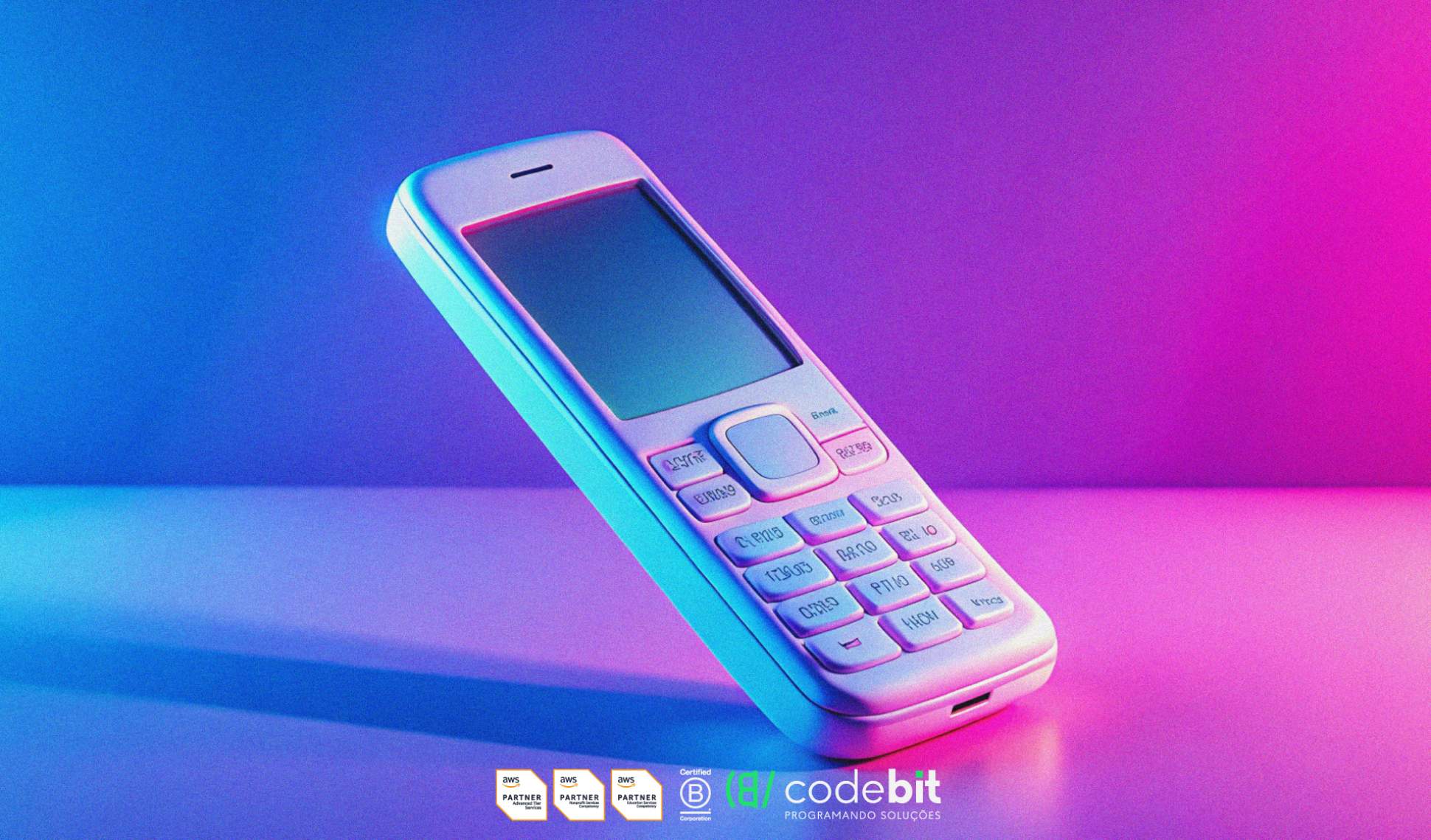
Nine hours daily. That is the average amount of time Brazilians spend online according to a study by DataReportal (2024). Now, multiply those hours by days, months, or decades.
We live in the era of the attention economy, where every notification, feed, and scroll is strategically designed to capture our focus. Applications use psychological triggers, such as variable reward systems similar to slot machines, to release dopamine in our brains, creating a cycle of compulsive use. The result is an increasingly anxious society, with declining sleep quality, a strong tendency towards depression, and a persistent feeling of missing out – the famous FOMO (Fear of Missing Out).
With growing awareness of smartphone addiction, a curious trend has been gaining traction: the so-called dumbphones — minimalist cell phones that promise to restore user freedom by offering only the basics. With a retro design, limited features, and the promise of a “digital detox”, these devices have attracted both people looking for more focus and brands that see this as a market opportunity. But after all: are we facing a real solution or just another marketing strategy?
The promise of simplicity
Forget high-resolution screens, multiple cameras, and the infinite app store. The new dumbphones, led by brands like Light Phone, Punkt, and re-releases of Nokia classics, offer the basics: making and receiving calls, sending text messages, and perhaps an alarm clock and a calculator. Some smarter models may include a first-generation GPS or a music player, but the goal is to eliminate distractions, meaning no social media, games, infinite apps, or scrolling feeds.
The proposal is simple and direct: by removing the gateway to the addictive universe of social media, emails, and 24/7 news, the user is forced to reconnect with the world around them. Advocates argue that the change results in an immediate improvement in focus, the quality of face-to-face social interactions, and a drastic reduction in anxiety. The battery that lasts for days, not hours, is a bonus that reminds us of a time when we were not slaves to the wall outlet.
When the problem is the software, not the hardware
Smartphones, in themselves, are not a problem. What makes them highly addictive is the intentional design of the apps: excessive notifications, variable rewards, infinite scrolling, and algorithms that learn what attracts the most attention. Furthermore, modern life, for many, depends on authentication apps, banking services, real-time maps, and communication platforms like WhatsApp for work. For these people, giving up these tools is not just inconvenient, but often unfeasible.
Thus, swapping a smartphone for a dumbphone does not eliminate the core problem — it only bypasses it. In this sense, the truth seems to lie somewhere in the middle.
Dumbphones as a market niche
Driven mainly by Millennials and Generation Z – paradoxically, digital natives –, interest in these devices has increased significantly. The hashtag #dumbphone accumulates millions of views on platforms like TikTok, where young people showcase their minimalist cell phones as a symbol of counterculture and a testament of control over their own attention. For many, the switch is an effective tool that imposes a physical barrier against the urge to check notifications.
But, the dumbphone is not a magic solution. Addictive behavior can simply migrate to other devices, such as tablets or laptops. The real change is not in the hardware, but in developing healthy digital habits and self-discipline. After all, it is perfectly possible to turn a smartphone into a dumbphone by deleting apps, disabling notifications, and using grayscale modes.
This brings us to the marketing aspect. Companies like Light Phone and Punkt do not just market a phone; they sell a lifestyle, a philosophy. For some specialists, this movement resembles the phenomenon of “conscious luxury consumption”: paying more to have less, in exchange for the promise of a lifestyle.
With a premium design and a price that often competes with entry-level smartphones, these devices are positioned as objects of desire for a niche of conscious consumers looking for intentionality in their relationship with technology. In this sense, dumbphones can be both an ally for well-being and a marketing ploy. It is a brilliant strategy that transforms disconnection into a status product.
A tool, not a cure
In the end, dumbphones can indeed help those seeking a more radical break from hyperconnectivity, but they will hardly be a universal solution. They represent a powerful tool for those seeking a change and recognizing the difficulty of self-policing in a digital environment designed to be addictive.
For some, the absence of more advanced features can be exactly the obstacle that prevents breaking the cycle. For others, the idea of carrying two devices or simply not having access to a map in an unfamiliar city is yet another hurdle.
It may be that the resurgence of dumbphones is more of a symptom than a solution. It signals a cultural turning point, a collective recognition that our relationship with technology is unbalanced and that mindfulness is our most valuable resource. Whether through a minimalist cell phone or a more conscious configuration of your smartphone, the search for digital well-being has become essential. The choice of device depends on the path that each person decides to follow.




" width="15.500294250860316px"><path d="M 0 15.475 L 0 0 L 15.5 0 L 15.5 15.475 Z" fill="transparent" height="15.475099999999998px" id="tPiDQU_MP" width="15.5px"/><path d="M 3.167 1.589 C 3.847 0.724 4.607 0.171 5.61 0.046 C 6.532 -0.07 7.436 0.022 8.277 0.451 C 9.235 0.938 9.681 1.797 9.877 2.797 C 9.987 3.364 10.049 3.948 10.056 4.525 C 10.079 6.395 10.055 8.265 10.075 10.135 C 10.08 10.527 9.944 10.648 9.574 10.641 C 8.799 10.627 8.023 10.63 7.248 10.644 C 6.911 10.65 6.787 10.528 6.789 10.181 C 6.803 8.533 6.799 6.884 6.789 5.236 C 6.788 4.892 6.754 4.545 6.698 4.206 C 6.57 3.433 6.106 2.974 5.443 2.925 C 4.405 2.849 3.714 3.206 3.495 4.018 C 3.37 4.478 3.333 4.972 3.326 5.451 C 3.306 7.002 3.307 8.555 3.327 10.105 C 3.332 10.504 3.208 10.654 2.807 10.644 C 2.032 10.625 1.257 10.63 0.481 10.642 C 0.156 10.647 -0.001 10.546 0 10.193 C 0.007 7.035 0.006 3.876 0 0.718 C 0 0.391 0.104 0.24 0.458 0.249 C 1.219 0.269 1.981 0.267 2.743 0.252 C 3.068 0.245 3.197 0.361 3.17 0.688 C 3.148 0.948 3.166 1.211 3.166 1.589 Z" fill="rgb(245, 240, 237)" height="10.64451194394125px" id="Hw1mXDepj" transform="translate(5.425 4.831)" width="10.075487656011685px"/><path d="M 3.284 5.2 C 3.284 6.764 3.27 8.327 3.292 9.892 C 3.297 10.284 3.158 10.403 2.79 10.396 C 2.015 10.382 1.24 10.386 0.465 10.399 C 0.14 10.403 -0.001 10.305 0 9.947 C 0.012 6.792 0.012 3.637 0.002 0.481 C 0.001 0.123 0.105 -0.01 0.473 0.001 C 1.261 0.023 2.05 0.02 2.839 0.004 C 3.183 -0.003 3.294 0.124 3.29 0.467 C 3.276 2.044 3.284 3.623 3.284 5.2 Z" fill="rgb(245, 240, 237)" height="10.39869818980116px" id="sgvgyFXCr" transform="translate(0.237 5.076)" width="3.292113077251912px"/><path d="M 3.768 1.898 C 3.761 2.945 2.91 3.782 1.859 3.772 C 0.828 3.763 -0.012 2.892 0 1.842 C 0.012 0.824 0.864 -0.003 1.897 0 C 2.956 0.003 3.776 0.834 3.768 1.898 Z" fill="rgb(245, 240, 237)" height="3.772444228811899px" id="M8BOm1cI0" transform="translate(0 0)" width="3.768370362042166px"/></g></svg>)
" height="17px" id="G9twDfI1x" transform="translate(2 2)" width="17px"/></svg>)
" height="17px" id="q6YSjVL3w" transform="translate(6 2)" width="8.5px"/></svg>)
" height="12.720532384492868px" id="Jh_taQ7si" transform="translate(1 3.586)" width="18.00050025px"/></svg>)