Education
Learn what gamification in education is and how to implement it.
Discover what gamification is and how this resource can help in the learning of children and adolescents. Access and check it out!
09/28/2020


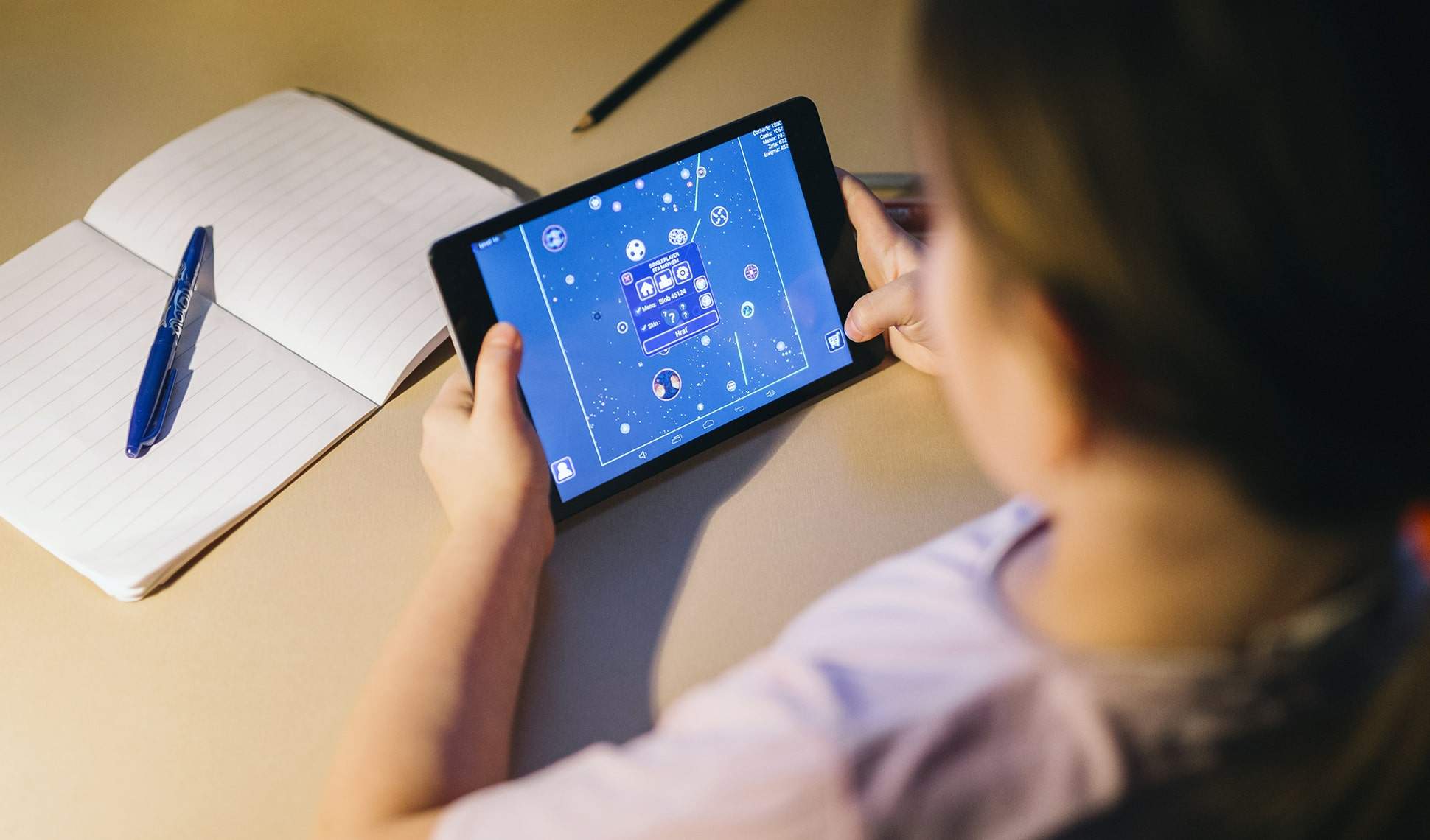
Without a doubt, joining the useful with the pleasant is a strategy that works well in almost all processes.
In this context, regarding the education of children and adolescents, a great way to make students more interested in the content presented in the classroom is by transforming the teaching process. For this, presenting techniques based on the students' interests is fundamental.
A great example of this is the gamification of education – a methodology that uses elements of digital games to promote creativity, engagement, and productivity, in order to guarantee more meaningful learning.
Want to know more? Check out below what gamification is and how to implement it in teaching!
What is gamification?
Derived from English, gamification, the term consists of using game mechanics and characteristics to motivate and facilitate people's interest in real-life situations.
Within the pedagogical process, gamification enables the adoption of rules, logistics, and design of games (analog or electronic) to make the knowledge process more attractive and welcoming. After all, by using gamer resources in pedagogical activities, the learning exercise becomes more personal and challenging. In addition, this type of strategy can urge students to develop behaviors related to socialization, competitiveness, competition, and cooperation.
How to implement gamification in teaching?
In fact, there are several ways to apply the concept of gamification in teaching.
Above all, the current scenario, motivated by the COVID-19 pandemic, requires the execution of new learning practices to capture the attention of children and adolescents who are isolated in their homes, had their routines interrupted, and began to live with feelings and sensations that, until then, were unknown.
Among the applicable alternatives, teachers and institutions can, for example, use technological resources such as mobile or tablet apps to make classes more dynamic and interactive.
Furthermore, it is possible to create scavenger hunts and tournaments among students through specialized platforms that enable the mass use of the necessary tools. This type of strategy is very useful to facilitate socialization among students, especially in the case of the more introverted ones.
It is also possible to provide gamified actions with the use of QR Codes, which offer students the possibilities to create personalized avatars, solve math problems in a dynamic way, decipher riddles, and complete the missions contained in the codes.
In this delicate moment of social distancing, thinking outside the box and escaping the obvious in the teaching process is an excellent way to promote the capacity for dialogue and conflict resolution among students.
Benefits of gamification in the learning environment
1. Attention retention
Social isolation, students at home, thousands of pieces of information per second, difficulty concentrating, noises, etc. If even adults cannot concentrate at all times, obviously this is much more difficult for children and adolescents.
In this context, gamification can be a great ally of learning, since games naturally spark people's attention and motivation.
2. In-depth knowledge
Indeed, everything that is learned with positive stimuli is fixed and memorized in an easier and more lasting way. Therefore, the application of gamification in teaching helps fix important knowledge for students and also increases their pool of relevant information.
3. Variety of resources
By using technological gamification, besides presenting new formats to educational activities, it is still possible to customize learning styles according to the individual level of knowledge of each student.
4. Use of data
Finally, the electronic model of gamification allows the collection of data on the performance of participants while they carry out the proposed activities, in addition to generating specific reports on their performances.
In other words, educational institutions can monitor, in real-time, the performance of students, verify the evolution of learning, and analyze which contents should be reinforced to ensure better retention.
Very cool indeed, isn't it? If you want to know how to apply gamification in practice, get in touch with the CodeBit team and discover the software and applications that can help you reinvent the format of learning.




" width="15.500294250860316px"><path d="M 0 15.475 L 0 0 L 15.5 0 L 15.5 15.475 Z" fill="transparent" height="15.475099999999998px" id="tPiDQU_MP" width="15.5px"/><path d="M 3.167 1.589 C 3.847 0.724 4.607 0.171 5.61 0.046 C 6.532 -0.07 7.436 0.022 8.277 0.451 C 9.235 0.938 9.681 1.797 9.877 2.797 C 9.987 3.364 10.049 3.948 10.056 4.525 C 10.079 6.395 10.055 8.265 10.075 10.135 C 10.08 10.527 9.944 10.648 9.574 10.641 C 8.799 10.627 8.023 10.63 7.248 10.644 C 6.911 10.65 6.787 10.528 6.789 10.181 C 6.803 8.533 6.799 6.884 6.789 5.236 C 6.788 4.892 6.754 4.545 6.698 4.206 C 6.57 3.433 6.106 2.974 5.443 2.925 C 4.405 2.849 3.714 3.206 3.495 4.018 C 3.37 4.478 3.333 4.972 3.326 5.451 C 3.306 7.002 3.307 8.555 3.327 10.105 C 3.332 10.504 3.208 10.654 2.807 10.644 C 2.032 10.625 1.257 10.63 0.481 10.642 C 0.156 10.647 -0.001 10.546 0 10.193 C 0.007 7.035 0.006 3.876 0 0.718 C 0 0.391 0.104 0.24 0.458 0.249 C 1.219 0.269 1.981 0.267 2.743 0.252 C 3.068 0.245 3.197 0.361 3.17 0.688 C 3.148 0.948 3.166 1.211 3.166 1.589 Z" fill="rgb(245, 240, 237)" height="10.64451194394125px" id="Hw1mXDepj" transform="translate(5.425 4.831)" width="10.075487656011685px"/><path d="M 3.284 5.2 C 3.284 6.764 3.27 8.327 3.292 9.892 C 3.297 10.284 3.158 10.403 2.79 10.396 C 2.015 10.382 1.24 10.386 0.465 10.399 C 0.14 10.403 -0.001 10.305 0 9.947 C 0.012 6.792 0.012 3.637 0.002 0.481 C 0.001 0.123 0.105 -0.01 0.473 0.001 C 1.261 0.023 2.05 0.02 2.839 0.004 C 3.183 -0.003 3.294 0.124 3.29 0.467 C 3.276 2.044 3.284 3.623 3.284 5.2 Z" fill="rgb(245, 240, 237)" height="10.39869818980116px" id="sgvgyFXCr" transform="translate(0.237 5.076)" width="3.292113077251912px"/><path d="M 3.768 1.898 C 3.761 2.945 2.91 3.782 1.859 3.772 C 0.828 3.763 -0.012 2.892 0 1.842 C 0.012 0.824 0.864 -0.003 1.897 0 C 2.956 0.003 3.776 0.834 3.768 1.898 Z" fill="rgb(245, 240, 237)" height="3.772444228811899px" id="M8BOm1cI0" transform="translate(0 0)" width="3.768370362042166px"/></g></svg>)
" height="17px" id="G9twDfI1x" transform="translate(2 2)" width="17px"/></svg>)
" height="17px" id="q6YSjVL3w" transform="translate(6 2)" width="8.5px"/></svg>)
" height="12.720532384492868px" id="Jh_taQ7si" transform="translate(1 3.586)" width="18.00050025px"/></svg>)