Technology
AI image generators: an emerging threat to cybersecurity
AI image generators: an emerging threat to cybersecurity. Discover on CodeBlog!
04/16/2025
Igor Reis


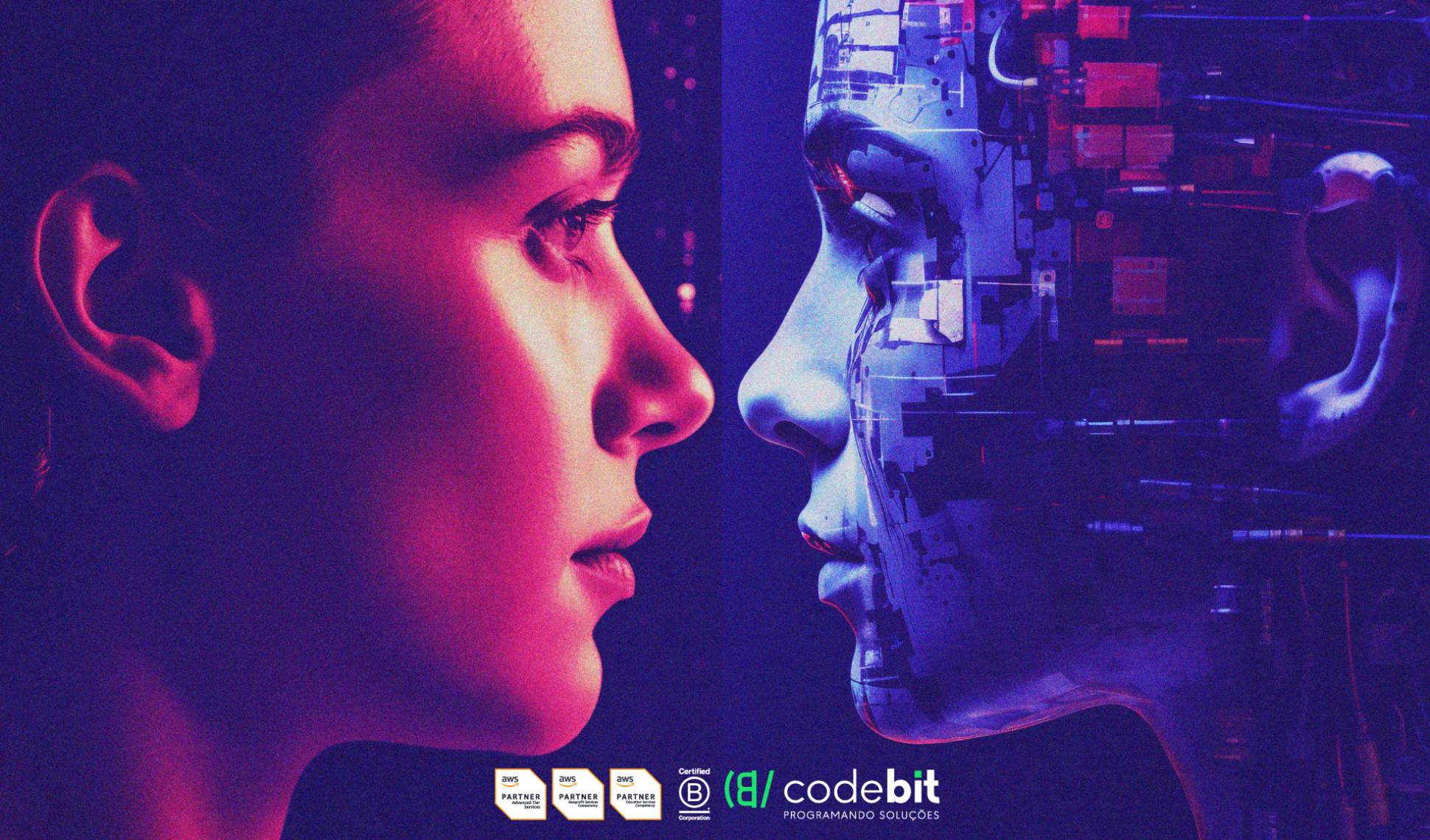
Artificial Intelligence (AI) is advancing at a rapid pace, transforming various sectors and driving a new era of innovation. Among its most notable applications, image generators stand out for their ability to create highly realistic visual content from simple text descriptions. Such tools are being widely used in areas like design, advertising, entertainment, and education.
At the same time, the ease of producing fake or manipulated images raises concerns about cybersecurity, privacy, and information integrity. In a digital environment already marked by misinformation, these technologies require double the attention and responsibility in their use.
The growth of AI image generators
In recent years, artificial intelligence image generators have transitioned from being a technical curiosity to becoming widely integrated tools in digital daily life.
With platforms like Midjourney, DALL·E, and Leonardo AI, anyone with internet access can create highly detailed and stylized images just by typing in a text description. This accessibility has made these tools popular quickly, driving a new wave of digital creativity, as well as controversy.
A striking example of this phenomenon occurred recently, when thousands of users on social media began creating their own portraits in the style of Studio Ghibli films, using simple commands in AI generators.
This episode exposes not only the engaging power of these tools, but also the ethical and legal challenges that arise with their use. While they democratize visual creation, AI image generators raise questions about authorship, copyright, and even the future of creative professionals.
As their use becomes increasingly common in areas such as advertising, fashion, design, and entertainment, the need for clear regulations, transparency in the development of these technologies, and digital education for more conscious and responsible use is growing.
The legal implications of using AI to create deceptive content
The growing capability of artificial intelligence to generate convincing fake images has raised serious concerns in the legal field. AI tools can be used to create deceptive content, such as manipulated or completely invented photographs that simulate real-life situations with extreme fidelity.
Such materials are often used to spread misinformation, damage the reputation of public or private individuals, or even influence political and social decisions. This ease of creation, combined with the speed at which these images spread on social media, considerably amplifies the impact of such actions.
However, the legal system still faces difficulties in adapting to this new technological reality. In many countries, there are no specific laws addressing accountability for content created by AI, making it difficult to effectively punish crimes like digital defamation, identity theft, or public opinion manipulation.
Furthermore, proving authorship and intent behind content generated by artificial intelligence is not always a simple task. Given this scenario, experts advocate for the creation of more robust and updated regulatory frameworks that consider the complexities involved in the malicious use of these technologies.
Copyright and intellectual property of AI-generated images
One of the most complex and current debates in technology and law concerns the authorship and intellectual property of images generated by artificial intelligence. Unlike traditional human creations, works made by AI stem from automated processes based on text commands and large databases.
This raises the question: who should be considered the legitimate author of these images? The programmer responsible for the algorithm, the user who provided the description, or do these works have no recognizable authorship? The lack of consensus on this issue has generated uncertainties regarding the commercial use of these images, hindering the regulation of the creative digital market.
Another sensitive point involves the data used to train these artificial intelligences. Many models absorb vast quantities of images available on the internet, including copyrighted works, without proper authorization from the original creators.
This practice could constitute copyright infringement, which raises ethical and legal discussions about misappropriation, plagiarism, and fair compensation for artists. With the rapid expansion of these technologies, there is an urgent need for clear policies that protect both users and original creators, promoting transparency, accountability, and fairness in the use of AI in visual creation.
The fabricated reality of Deepfakes
In recent years, artificial intelligence has evolved rapidly, bringing impressive innovations but also worrying challenges. One of the most striking examples of this duality is the emergence of deepfakes.
What are Deepfakes?
Deepfakes are audiovisual materials created with the help of artificial intelligence, capable of simulating with high fidelity the appearance, gestures, and voice of real people. Using machine learning techniques, these videos or audios manipulate faces and speech, making individuals appear to say or do things that, in reality, never happened. Although this technology can be used for creative purposes, like in cinema or educational content, it also presents a significant potential for malicious use.
What are the risks?
- Technology
The main technical challenge is identifying fabricated content. As deepfakes become more sophisticated, traditional visual and auditory verification tools become insufficient. This generates a technological race between deepfake creators and developers of detection systems, requiring constant updating and innovation by cybersecurity companies and institutions.
- Politics
In the political context, the risks are alarming. Deepfakes can be used to create fake speeches by leaders, release manipulated videos during election periods, and incite institutional crises. The speed with which this content spreads on social media makes it difficult to contain its effects before they influence public opinion or harm the image of public figures, such as during the 2024 municipal elections, where candidates from different parties were targets of deepfakes with criminal and inappropriate content, aiming to discredit them and affect their campaigns.
- Education
In education and general information consumption, deepfakes compromise the formation of critical thinking. The spread of manipulated content can confuse students, misinform the public, and weaken trust in journalistic and scientific sources. This makes the role of digital literacy in school and social environments even more important.
How should we act?
In the face of the sophistication and impacts of deepfakes, it is urgent to develop public policies that regulate the use of this technology, encourage the creation of effective detection systems, and promote media education from the early stages of civic education. More than just a technical issue, combating the harmful effects of deepfakes is a collective responsibility involving governments, companies, educational institutions, and civil society.
The impact of AI on digital trust and privacy
The growing use of artificial intelligence in image and video generation has transformed how we handle information online, directly impacting digital trust.
The difficulty in distinguishing real content from fabricated content creates an environment of constant uncertainty, where the authenticity of images and statements is frequently questioned.
This scenario fosters misinformation and weakens the credibility of sources, generating a cycle of distrust that affects both ordinary users and institutions.
Another worrying aspect is the misuse of these technologies to create manipulated content involving ordinary people, often without their consent. Intimate or compromising images can be fabricated and distributed maliciously, affecting the personal, professional, and emotional lives of the victims.
This type of violation raises serious questions about the right to privacy and data protection, requiring quicker and more efficient legal responses, as well as preventive actions in the development and use of these AI tools.
Government initiatives to curb threats
Governments around the world have been adopting a range of measures to tackle the risks associated with the use of artificial intelligence in generating manipulated images and videos.
Among these actions are specific regulations, public awareness campaigns, and investments in detection technologies, all aimed at protecting digital integrity and combating misinformation.
However, these efforts still face significant limitations if not accompanied by consistent international collaboration.
The digital environment is global by nature, and the effectiveness of government efforts depends on coordination between different countries to create common standards, share best practices, and curb the malicious use of AI in a coordinated manner.
The responsibility of tech companies
Large corporations in the tech sector also play a crucial role in curbing threats caused by the misuse of artificial intelligence. Companies that develop or host AI tools need to establish clear usage guidelines, build efficient mechanisms to identify and flag fabricated content, and foster a culture of ethics in developing new technologies.
The central challenge lies in balancing the freedom to innovate with user safety and intellectual protection. The responsible behavior of tech companies, combined with a commitment to transparency and collaboration with governments and civil society, is essential for building a safer, more reliable, and ethical digital ecosystem.
Stay updated on digital security trends and solutions with CodeBit!
Keep ahead in the digital security universe by following CodeBlog by CodeBit. With informative content on data protection, compliance, and technology, you will always be informed about the best practices to protect your company and your clients. Do not miss the opportunity to enhance your knowledge and strengthen your business security!




" width="15.500294250860316px"><path d="M 0 15.475 L 0 0 L 15.5 0 L 15.5 15.475 Z" fill="transparent" height="15.475099999999998px" id="tPiDQU_MP" width="15.5px"/><path d="M 3.167 1.589 C 3.847 0.724 4.607 0.171 5.61 0.046 C 6.532 -0.07 7.436 0.022 8.277 0.451 C 9.235 0.938 9.681 1.797 9.877 2.797 C 9.987 3.364 10.049 3.948 10.056 4.525 C 10.079 6.395 10.055 8.265 10.075 10.135 C 10.08 10.527 9.944 10.648 9.574 10.641 C 8.799 10.627 8.023 10.63 7.248 10.644 C 6.911 10.65 6.787 10.528 6.789 10.181 C 6.803 8.533 6.799 6.884 6.789 5.236 C 6.788 4.892 6.754 4.545 6.698 4.206 C 6.57 3.433 6.106 2.974 5.443 2.925 C 4.405 2.849 3.714 3.206 3.495 4.018 C 3.37 4.478 3.333 4.972 3.326 5.451 C 3.306 7.002 3.307 8.555 3.327 10.105 C 3.332 10.504 3.208 10.654 2.807 10.644 C 2.032 10.625 1.257 10.63 0.481 10.642 C 0.156 10.647 -0.001 10.546 0 10.193 C 0.007 7.035 0.006 3.876 0 0.718 C 0 0.391 0.104 0.24 0.458 0.249 C 1.219 0.269 1.981 0.267 2.743 0.252 C 3.068 0.245 3.197 0.361 3.17 0.688 C 3.148 0.948 3.166 1.211 3.166 1.589 Z" fill="rgb(245, 240, 237)" height="10.64451194394125px" id="Hw1mXDepj" transform="translate(5.425 4.831)" width="10.075487656011685px"/><path d="M 3.284 5.2 C 3.284 6.764 3.27 8.327 3.292 9.892 C 3.297 10.284 3.158 10.403 2.79 10.396 C 2.015 10.382 1.24 10.386 0.465 10.399 C 0.14 10.403 -0.001 10.305 0 9.947 C 0.012 6.792 0.012 3.637 0.002 0.481 C 0.001 0.123 0.105 -0.01 0.473 0.001 C 1.261 0.023 2.05 0.02 2.839 0.004 C 3.183 -0.003 3.294 0.124 3.29 0.467 C 3.276 2.044 3.284 3.623 3.284 5.2 Z" fill="rgb(245, 240, 237)" height="10.39869818980116px" id="sgvgyFXCr" transform="translate(0.237 5.076)" width="3.292113077251912px"/><path d="M 3.768 1.898 C 3.761 2.945 2.91 3.782 1.859 3.772 C 0.828 3.763 -0.012 2.892 0 1.842 C 0.012 0.824 0.864 -0.003 1.897 0 C 2.956 0.003 3.776 0.834 3.768 1.898 Z" fill="rgb(245, 240, 237)" height="3.772444228811899px" id="M8BOm1cI0" transform="translate(0 0)" width="3.768370362042166px"/></g></svg>)
" height="17px" id="G9twDfI1x" transform="translate(2 2)" width="17px"/></svg>)
" height="17px" id="q6YSjVL3w" transform="translate(6 2)" width="8.5px"/></svg>)
" height="12.720532384492868px" id="Jh_taQ7si" transform="translate(1 3.586)" width="18.00050025px"/></svg>)