Artificial Intelligence
AI in the 2026 World Cup: how technology is transforming athlete performance
From body sensors to artificial intelligence capable of predicting injuries: discover what is at stake in the new era of sports technology.
10/06/2026
Igor Reis


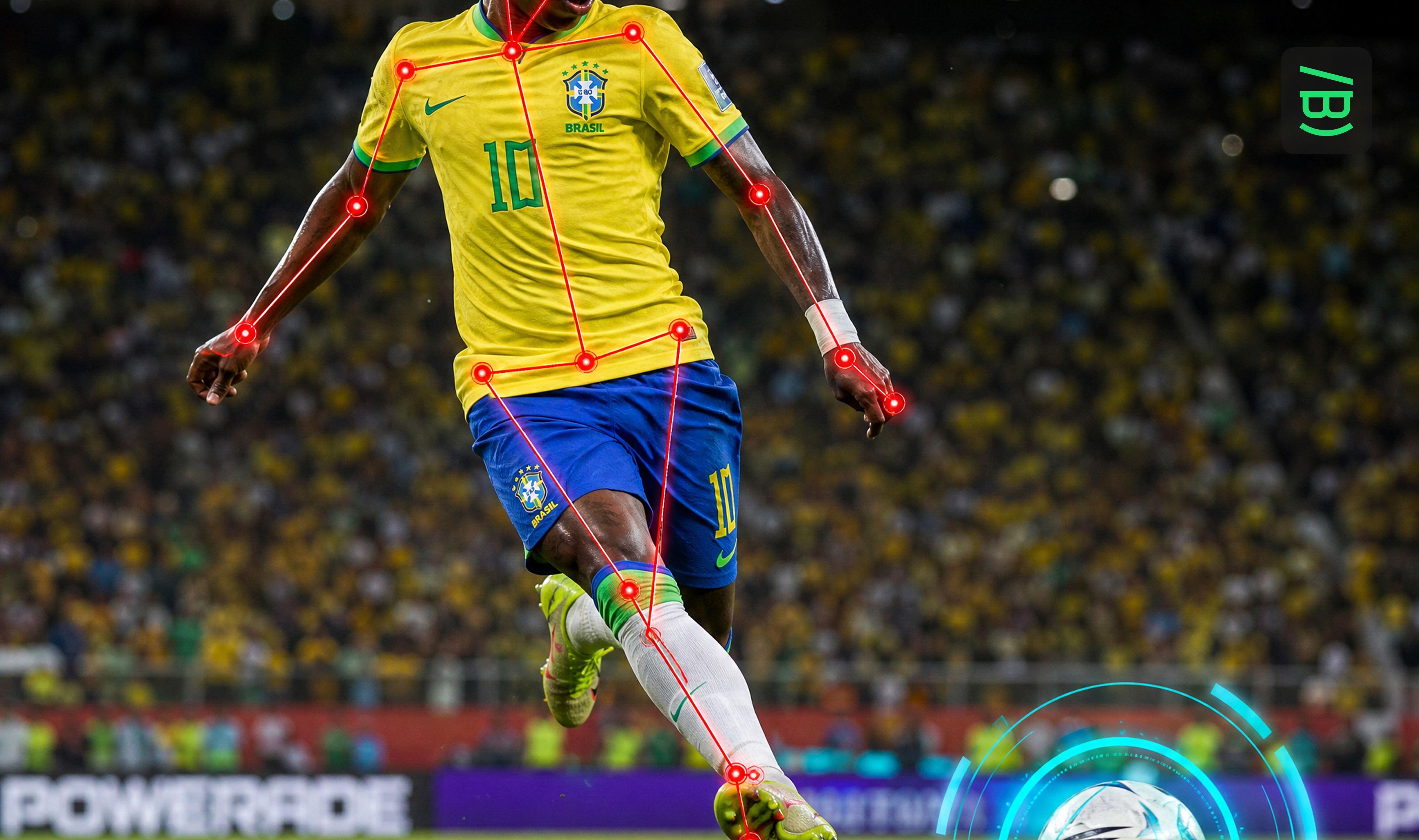
The 2026 World Cup does not just represent an evolution on the pitch. Behind the scenes, a technological revolution is changing how athletes train, recover, and make decisions about their own bodies. Traditional monitoring using smartwatches and fitness bands has given way to a much more sophisticated ecosystem, comprised of advanced body sensors, physical artificial intelligence, edge computing, and systems capable of analyzing thousands of biometric data points in real time. The goal is not only to improve performance but to anticipate problems before they happen. In a scenario where a few seconds can define a match, the combination of biohacking and AI is becoming one of the modern sport's greatest competitive advantages. Recent studies show that systems based on wearables and artificial intelligence are already able to identify fatigue patterns, predict injury risks, and optimize recovery processes with increasingly high levels of accuracy.
What is Physical AI and why it has become a trend in elite sports
Sports technology is entering a new phase with the advancement of Physical AI. Unlike traditional artificial intelligence, which analyzes digital information, Physical AI uses sensors and connected devices to interpret real-world data in real time. In high-performance sports, this allows for accurate monitoring of factors such as movement, physical wear and tear, and muscle recovery.
Traditional AI vs. Physical AI
While traditional AI works with already recorded data, Physical AI receives information directly from the environment through body sensors, wearables, and smart equipment. This way, the systems can understand what is happening to the athlete at that exact moment and not just analyze past results.
How technology interprets the human body
Sensors collect thousands of data points during training and matches, including heart rate, speed, acceleration, and movement patterns. Supported by machine learning algorithms, this information is transformed into analyses that help identify fatigue, injury risks, and performance improvement opportunities.
The arrival of Physical AI in soccer
Professional soccer was one of the quickest sports to adopt this technology. Today, clubs and national teams use wearable sensors and smart platforms to monitor athletes in real time, making training more personalized and increasing the efficiency of physical preparation for high-level competitions.
Athletic biohacking: the science behind optimizing the human body
Biohacking has ceased to be a concept restricted to tech enthusiasts and has become part of the routine of high-performance athletes. In sports, the practice consists of using data, science, and technology to better understand how the body works and find ways to maximize physical and mental performance. With the help of sensors, apps, and artificial intelligence systems, it is possible to monitor indicators such as sleep quality, muscle recovery, hydration, and fatigue levels, allowing for personalized adjustments in each athlete's preparation.
In the 2026 World Cup, biohacking gains even more relevance by being combined with AI tools capable of analyzing large volumes of data in real time. Instead of following generic protocols, players receive specific recommendations for their physiological needs, making training, nutrition, and recovery much more efficient. The result is an increasingly precise approach, in which technology helps extract the maximum potential from the human body without exceeding its natural limits.
Smart wearables: the sensors that track every athlete's movement
Smart wearables have become one of the most important technologies in high-performance sports. Featured in GPS vests, body bands, biomechanical sensors, and even smart clothing, these devices are capable of continuously monitoring the physical behavior of athletes during training and matches. Speed, distance covered, acceleration, heart rate, exertion load, and movement patterns are just some of the information collected in real time.
The differentiator of this new generation of wearables is not just in data collection, but in the ability to turn it into actionable information. Integrated with artificial intelligence systems, the sensors can identify signs of fatigue, biomechanical changes, and even patterns associated with increased risk of injury before they become noticeable to athletes and coaching staff.
In professional soccer, these technologies are already part of the teams' preparation routine. Outgoing continuous analysis of data allows for personalizing training, controlling players' physical load, and making more accurate decisions regarding recovery and performance. In a scenario where every detail can influence the outcome of a match, wearables have ceased to be simple tech accessories to become strategic tools in the pursuit of a competitive edge.
How predictive analysis can identify injury risks before they happen
One of the most valuable applications of artificial intelligence in modern sports is the predictive analysis of injuries. Instead of acting only after the problem has occurred, current systems use machine learning algorithms to identify patterns that may indicate a high risk of injury even before the first symptoms appear. Machine learning models are already able to analyze dozens of variables simultaneously to estimate the probability of an athlete suffering specific types of injuries. A review published by the British Journal of Sports Medicine identified soccer as the most studied sport in this area and pointed to algorithms such as Random Forest and XGBoost among the models with the best predictive performance for injury risk analysis.
These platforms process information such as training load, heart rate, medical history, recovery quality, movement patterns, and fatigue indicators. When the system detects out-of-pattern behavior, it can issue alerts to trainers and medical staff to adjust training intensity or strengthen recovery protocols.
In professional soccer, where the schedule is increasingly intense, this ability to anticipate represents a significant competitive advantage. After all, avoiding a major injury does not only mean preserving the athlete's health, but also maintaining the team's performance throughout the entire season. Therefore, predictive analysis has been consolidating itself as one of the most promising areas in the union between sports science and artificial intelligence.
Confidential computing and protection of players' biometric data
The digital transformation of sports has brought a new challenge for clubs and national teams: protecting the massive amount of biometric data generated by athletes. Information such as heart rate, sleep quality, injury history, training load, and muscle recovery has become extremely valuable assets, both for improving performance and guiding strategic decisions on and off the field.
In this scenario, confidential computing emerges as one of the most promising technologies to ensure the privacy of this information. Unlike traditional security methods, it protects data even during processing, utilizing isolated environments that prevent unauthorized access, even by infrastructure administrators or cloud providers.
The concern is justified. Biometric data can reveal much more than an athlete's performance, influencing medical evaluations, contract negotiations, and even transfer decisions. Therefore, as sensors, wearables, and AI systems become more present in professional soccer, the need for solutions capable of balancing technological innovation, security, and privacy also grows.
Smart recovery: when technology stops just monitoring and starts acting
For a long time, the main function of sports technologies was to collect and analyze data. Today, however, the most advanced systems can go beyond monitoring and actively participate in athletes' recovery processes. Supported by artificial intelligence, information on sleep, muscle fatigue, physiological stress, and training load is continuously analyzed to generate personalized recommendations that help speed up physical recovery and reduce the risk of injuries.
This approach allows each athlete to follow specific protocols according to their individual needs. Instead of using standardized methods for the entire team, coaches and medical departments can adjust rest periods, training intensity, muscle recovery strategies, and even guidelines related to sleep and nutrition. Data-based personalization tends to increase the efficiency of recovery processes and contribute to better performance maintenance throughout the season. Initiatives supported by FIFA aimed at athlete health and performance reinforce the importance of individualized approaches involving sleep, nutrition, training load, and physical recovery to optimize athletic performance.
As smart sensors and algorithms become more sophisticated, recovery stops being just a post-exertion phase and becomes part of a continuous strategy to optimize performance. In an increasingly demanding sports calendar, this ability to act preventatively can represent a decisive difference between keeping an athlete at a high level or facing periods of performance decline.
The future of soccer: digital twins, connected athletes, and data-driven decisions
If wearables, predictive analysis, and Physical AI are already transforming soccer today, future innovations promise to take this revolution to a new level. Among the most promising technologies are digital twins, vital models capable of replicating an athlete's physical and physiological characteristics to simulate scenarios, predict training impacts, and assist in decision-making with an increasingly high level of accuracy.
At the same time, the integration between sensors, artificial intelligence, and real-time processing is making sports increasingly data-driven. The 2026 World Cup represents just the beginning of this transformation, which is poised to redefine athletic preparation and performance in the coming years.




" width="15.500294250860316px"><path d="M 0 15.475 L 0 0 L 15.5 0 L 15.5 15.475 Z" fill="transparent" height="15.475099999999998px" id="tPiDQU_MP" width="15.5px"/><path d="M 3.167 1.589 C 3.847 0.724 4.607 0.171 5.61 0.046 C 6.532 -0.07 7.436 0.022 8.277 0.451 C 9.235 0.938 9.681 1.797 9.877 2.797 C 9.987 3.364 10.049 3.948 10.056 4.525 C 10.079 6.395 10.055 8.265 10.075 10.135 C 10.08 10.527 9.944 10.648 9.574 10.641 C 8.799 10.627 8.023 10.63 7.248 10.644 C 6.911 10.65 6.787 10.528 6.789 10.181 C 6.803 8.533 6.799 6.884 6.789 5.236 C 6.788 4.892 6.754 4.545 6.698 4.206 C 6.57 3.433 6.106 2.974 5.443 2.925 C 4.405 2.849 3.714 3.206 3.495 4.018 C 3.37 4.478 3.333 4.972 3.326 5.451 C 3.306 7.002 3.307 8.555 3.327 10.105 C 3.332 10.504 3.208 10.654 2.807 10.644 C 2.032 10.625 1.257 10.63 0.481 10.642 C 0.156 10.647 -0.001 10.546 0 10.193 C 0.007 7.035 0.006 3.876 0 0.718 C 0 0.391 0.104 0.24 0.458 0.249 C 1.219 0.269 1.981 0.267 2.743 0.252 C 3.068 0.245 3.197 0.361 3.17 0.688 C 3.148 0.948 3.166 1.211 3.166 1.589 Z" fill="rgb(245, 240, 237)" height="10.64451194394125px" id="Hw1mXDepj" transform="translate(5.425 4.831)" width="10.075487656011685px"/><path d="M 3.284 5.2 C 3.284 6.764 3.27 8.327 3.292 9.892 C 3.297 10.284 3.158 10.403 2.79 10.396 C 2.015 10.382 1.24 10.386 0.465 10.399 C 0.14 10.403 -0.001 10.305 0 9.947 C 0.012 6.792 0.012 3.637 0.002 0.481 C 0.001 0.123 0.105 -0.01 0.473 0.001 C 1.261 0.023 2.05 0.02 2.839 0.004 C 3.183 -0.003 3.294 0.124 3.29 0.467 C 3.276 2.044 3.284 3.623 3.284 5.2 Z" fill="rgb(245, 240, 237)" height="10.39869818980116px" id="sgvgyFXCr" transform="translate(0.237 5.076)" width="3.292113077251912px"/><path d="M 3.768 1.898 C 3.761 2.945 2.91 3.782 1.859 3.772 C 0.828 3.763 -0.012 2.892 0 1.842 C 0.012 0.824 0.864 -0.003 1.897 0 C 2.956 0.003 3.776 0.834 3.768 1.898 Z" fill="rgb(245, 240, 237)" height="3.772444228811899px" id="M8BOm1cI0" transform="translate(0 0)" width="3.768370362042166px"/></g></svg>)
" height="17px" id="G9twDfI1x" transform="translate(2 2)" width="17px"/></svg>)
" height="17px" id="q6YSjVL3w" transform="translate(6 2)" width="8.5px"/></svg>)
" height="12.720532384492868px" id="Jh_taQ7si" transform="translate(1 3.586)" width="18.00050025px"/></svg>)