Technology
KPIs: what are they and why are they important?
KPIs: what are they and why are they important?
04/28/2023


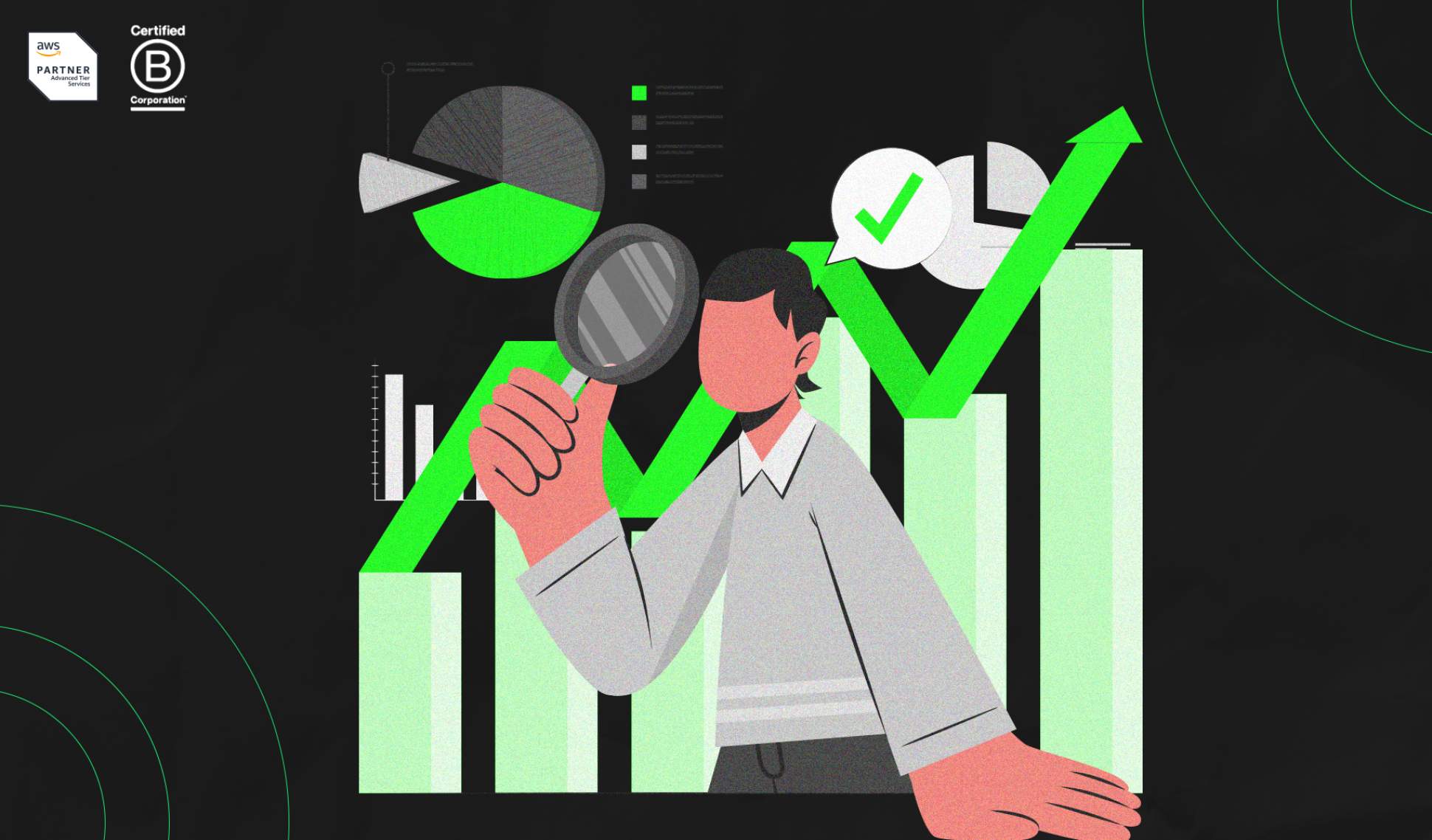
Without a doubt, to ensure the competitiveness and sustainability of a business, all actions must be measured. Only in this way is it possible to discover which processes are on the right track and which areas need better results.
For this, there are KPIs, key indicators that analyze ventures both externally and internally, and contribute to helping managers make decisions based on precise and important data, ensuring much more assertiveness.
If you want to discover what KPIs are and why they are so important, you are in the right place! Continue reading and check out the article that the CodeBlog team has prepared for you.
What are KPIs?
The term KPI is an acronym for Key Performance Indicator.
KPIs are indicators applied in various areas of a company to check whether the adopted strategies are generating good results or not.
To do this, they analyze metrics, evaluate the growth of a particular process or sector, and identify whether the directed efforts have yielded the expected return.
In short, KPIs demonstrate how a product or a business behaves in the market.
What are KPIs used for?
In fact, KPIs act as a right hand for managers and business owners and operate as valuable business management tools in relation to measuring work effectiveness. With precise data and information, key indicators assist in defining processes and strategies so that a business can define and reach its short-, medium-, and long-term goals and objectives.
In practice, when KPIs present satisfactory results, they indicate that the efforts were valid and that it is possible to reinforce them to ensure even better results.
On the other hand, when KPIs demonstrate behaviors below expectations, they signal that it is time to rethink ideas and draw up other plans.
KPIs: why are they important?
KPIs are essential for a company to have visibility into how its actions perform. The indicators identify whether the proposed goals are being executed and provide a general overview of the current status of a given project or sector.
Considering that KPIs can be applied to both projects and teams, they also present, in a transparent manner, what is expected of each collaborator and what must be done to achieve the objectives, thus ensuring a clearer direction for the team.
Another advantage of indicators is that they can intensify a team's communication, productivity, and engagement - essential factors for the success of a business.
Are KPIs and metrics the same thing?
Definitely, NO!
As much as they are similar and directly related in the corporate context, it must be mentioned that they are not synonyms, but rather complementary concepts.
Metrics are indicators that point out certain behaviors, but, unlike KPIs, they are not associated with goals. In addition, metrics provide the data that feed KPIs and evaluate more specific actions, while KPIs operate under a broader and more managerial view.
Types of KPIs
There are four different types of KPIs. Learn more about them in the next topics.
Productivity indicators
KPIs related to productivity point out what resources, equipment, or raw materials are required for the developed products or services to be delivered to customers in the best way.
In this scenario, they act in defining costs and in optimizing inputs. An example to illustrate a productivity KPI is the production time spent on a particular activity.
Quality indicators
Quality KPIs, on the other hand, measure the efficiency of processes in delivering what was expected. Genarally, they are used to analyze customer satisfaction regarding the products sold or services provided by a company. For example, satisfaction surveys.
Capacity indicators
Capacity KPIs estimate a company's ability to deliver products and services on a large scale. These are fundamental indicators for identifying growth or retention in the production base. Furthermore, they can benefit from data intelligence to ensure even more precise decision-making. An example of a capacity KPI is the volume of production per person.
Strategic indicators
Lastly, strategic indicators are those directly related to the goals defined in the business's strategic planning.
In practice, they demonstrate how far a business is from reaching its objectives. Moreover, they can be integrated into action plans, if necessary.
A good example of this indicator is revenue.
How to choose the right KPIs for your business?
KPIs are extremely important in ensuring strategic and efficient business management, but for this, they must be defined in advance, in a careful manner.
Furthermore, they must be related to the results that a company wishes to obtain in a given period. To do this, there is an endless number of KPIs such as: sales, marketing, logistics, financial, operational processes, and much more. Check out below some factors that can help in defining and implementing more effective KPIs:
Measurability
A good KPI must be objective, measurable, and achievable. To do this, it must contain clear directions and the ability to be measured quantitatively.
Relevance
In addition to being measurable, indicators must guide assertive decision-making, always measuring the quality and effectiveness of strategic actions.
Verifiability
An efficient KPI is one that can be verified, measured, and monitored frequently. After all, only with constant verifications is it possible to propose adjustments along the way and suggest appropriate optimizations.
Alignment with goals
Finally, it is important that KPIs are fully aligned with an organization's goals; only then can they, in fact, contribute to reaching results and achieving objectives.
Conclusion
We hope that after this reading you have learned what KPIs are, how they contribute to the success of a business, and how they can be defined and applied.
If you want to discover how technology can help your company or institution in process optimization, task automation, team productivity, and increased availability of data and information, click here, access the CodeBit website and check out all the customized solutions developed by a team of experts to meet your demand.
Other than that, keep an eye on CodeBlog. We will have news here soon.
A big hug and see you in the next post!




" width="15.500294250860316px"><path d="M 0 15.475 L 0 0 L 15.5 0 L 15.5 15.475 Z" fill="transparent" height="15.475099999999998px" id="tPiDQU_MP" width="15.5px"/><path d="M 3.167 1.589 C 3.847 0.724 4.607 0.171 5.61 0.046 C 6.532 -0.07 7.436 0.022 8.277 0.451 C 9.235 0.938 9.681 1.797 9.877 2.797 C 9.987 3.364 10.049 3.948 10.056 4.525 C 10.079 6.395 10.055 8.265 10.075 10.135 C 10.08 10.527 9.944 10.648 9.574 10.641 C 8.799 10.627 8.023 10.63 7.248 10.644 C 6.911 10.65 6.787 10.528 6.789 10.181 C 6.803 8.533 6.799 6.884 6.789 5.236 C 6.788 4.892 6.754 4.545 6.698 4.206 C 6.57 3.433 6.106 2.974 5.443 2.925 C 4.405 2.849 3.714 3.206 3.495 4.018 C 3.37 4.478 3.333 4.972 3.326 5.451 C 3.306 7.002 3.307 8.555 3.327 10.105 C 3.332 10.504 3.208 10.654 2.807 10.644 C 2.032 10.625 1.257 10.63 0.481 10.642 C 0.156 10.647 -0.001 10.546 0 10.193 C 0.007 7.035 0.006 3.876 0 0.718 C 0 0.391 0.104 0.24 0.458 0.249 C 1.219 0.269 1.981 0.267 2.743 0.252 C 3.068 0.245 3.197 0.361 3.17 0.688 C 3.148 0.948 3.166 1.211 3.166 1.589 Z" fill="rgb(245, 240, 237)" height="10.64451194394125px" id="Hw1mXDepj" transform="translate(5.425 4.831)" width="10.075487656011685px"/><path d="M 3.284 5.2 C 3.284 6.764 3.27 8.327 3.292 9.892 C 3.297 10.284 3.158 10.403 2.79 10.396 C 2.015 10.382 1.24 10.386 0.465 10.399 C 0.14 10.403 -0.001 10.305 0 9.947 C 0.012 6.792 0.012 3.637 0.002 0.481 C 0.001 0.123 0.105 -0.01 0.473 0.001 C 1.261 0.023 2.05 0.02 2.839 0.004 C 3.183 -0.003 3.294 0.124 3.29 0.467 C 3.276 2.044 3.284 3.623 3.284 5.2 Z" fill="rgb(245, 240, 237)" height="10.39869818980116px" id="sgvgyFXCr" transform="translate(0.237 5.076)" width="3.292113077251912px"/><path d="M 3.768 1.898 C 3.761 2.945 2.91 3.782 1.859 3.772 C 0.828 3.763 -0.012 2.892 0 1.842 C 0.012 0.824 0.864 -0.003 1.897 0 C 2.956 0.003 3.776 0.834 3.768 1.898 Z" fill="rgb(245, 240, 237)" height="3.772444228811899px" id="M8BOm1cI0" transform="translate(0 0)" width="3.768370362042166px"/></g></svg>)
" height="17px" id="G9twDfI1x" transform="translate(2 2)" width="17px"/></svg>)
" height="17px" id="q6YSjVL3w" transform="translate(6 2)" width="8.5px"/></svg>)
" height="12.720532384492868px" id="Jh_taQ7si" transform="translate(1 3.586)" width="18.00050025px"/></svg>)