Technology
The impact of Pix, Drex, and other payment methods on commerce and financial life
The way we handle money is changing right before our eyes. Are you noticing the transformations? Read the article and find out!
07/14/2025
Leonardo Fróes


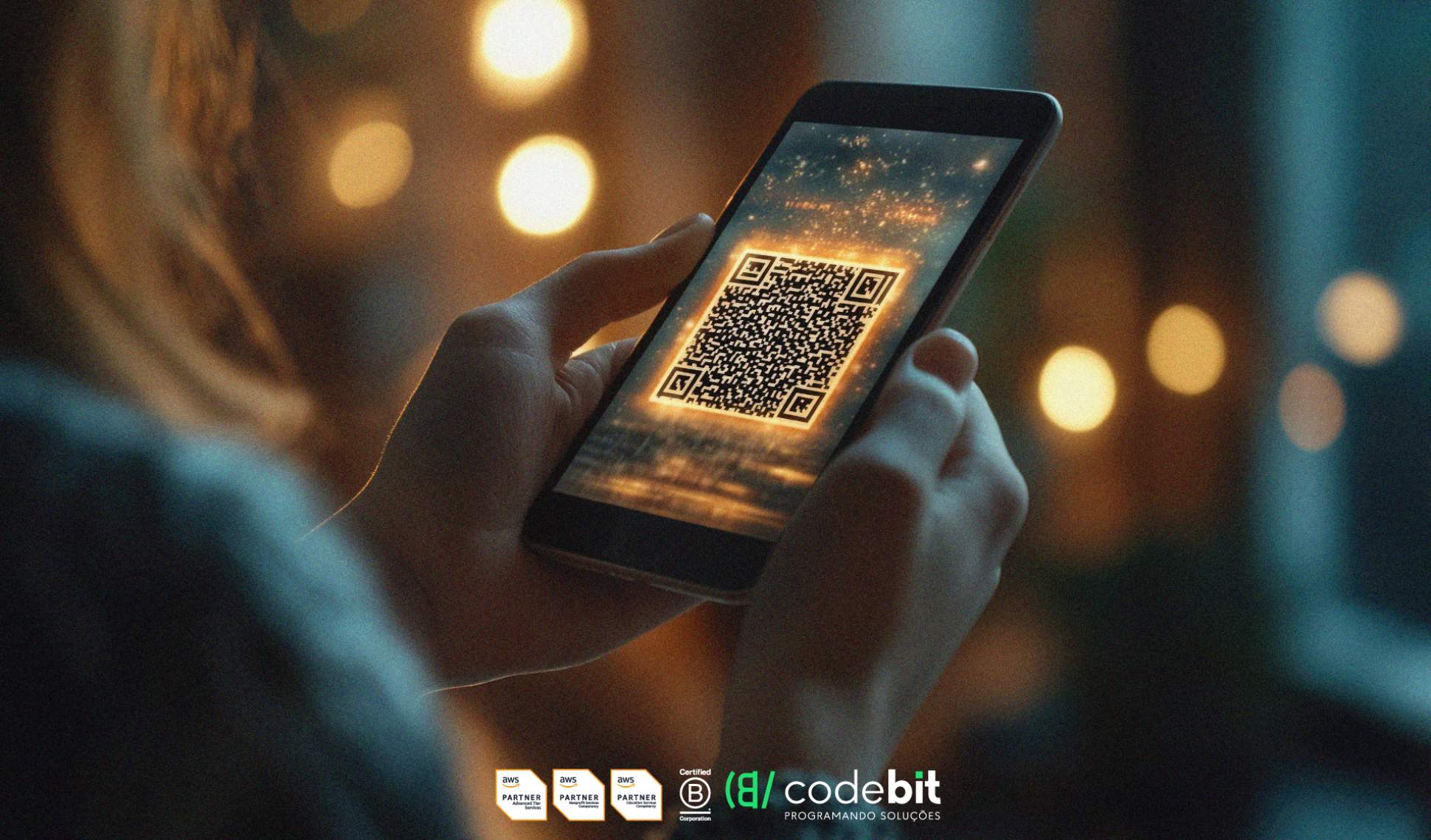
In recent years, payment methods have undergone deep transformations driven by technological advancements, shifts in consumer habits, and public policies for digitalization. Pix, for instance, created and operated by the Central Bank, is currently one of the most widely used methods in Brazil for making transfers and payments.
In addition to it, other innovations have been gaining ground: digital wallets, contactless payments, biometric authentication, and the Drex digital currency, which is currently in development. These solutions are shaping a new logic in commerce and personal finance, directly impacting financial inclusion, transaction efficiency, and user experience.
This article presents the main trends reshaping the digital payments landscape in Brazil, their benefits, challenges, and projections for the coming years.
Pix and the consolidation of instant payments in everyday life
Officially launched in November 2020, Pix transformed the way individuals and businesses handle money in Brazil. Fast, free, and available 24/7, the instant payment system developed by the Central Bank became a milestone in the digitalization of financial transactions.
Today, more than 150 million Brazilians use Pix regularly. According to data from the Central Bank itself, there are over 4 billion monthly transactions conducted via Pix, a number that grows each quarter. In addition to peer-to-peer transfers, the system has also taken center stage in purchases, bill payments, services, and billing via QR Code.
Interestingly, Brazil was the first country to design and deploy an instant payment solution on a national and public scale, serving as an inspiration for other emerging economies.
How Pix drives digital and local commerce
The popularization of Pix goes beyond convenience for the end user. Commerce, especially physical and digital retail, has been one of the biggest beneficiaries. Micro-entrepreneurs started receiving payments without relying on POS terminals or bank slips. Small businesses saw their sales increase with the option of a fast, fee-free payment method.
Among the main impacts are:
Reduction in operational costs related to bank fees and intermediaries.
Higher sales conversion by facilitating immediate payments in online and physical stores.
Incentive for business formalization through digital transaction records.
Increased cash flow agility, since funds are received instantly.
Pix also paved the way for subscription models, microtransactions, and real-time donations, accelerating the digital economy.
New payment methods gain ground
Despite Pix's leadership, it is not alone in this revolution. The advancement of digital technologies has enabled new payment methods that integrate into different moments of the consumer journey. Highlights include:
Facial and fingerprint biometrics as a form of payment authentication.
Wearable devices, such as smartwatches, which allow for contactless transactions.
Digital wallets, which are becoming increasingly comprehensive, integrating credit, debit, crypto assets, and Cashback.
Voice payments via virtual assistants.
This diversity shows that payment methods will coexist and complement each other, allowing for choices more closely aligned with each person's habits and preferences.
Drex and the future of digital currency in Brazil
Aside from Pix, another major innovation is gaining ground in discussions about the future of payments: Drex, the Brazilian digital currency being developed by the Central Bank. Scheduled to be launched as early as 2025, Drex promises to facilitate automated transactions, integrate smart contracts, and expand the digitalization of the economy.
To understand in detail how it will work, its uses, and implications, check out the full article on this topic here on the CodeBlog.
Drex: what you need to know about the Brazilian digital currency
Security and user experience
With the expansion of digital payments, concerns about fraud, usability, and data protection also arise. Complaints related to app downtime, scams, and customer service difficulties have become frequent, especially in apps from smaller institutions.
The sector has responded with solutions like:
Dynamic transaction limits, adjustable through enhanced authentication.
Real-time notifications, allowing for quick dispute initiation in case of an error or scam.
Use of AI to identify suspicious transactions and improve customer support.
Adoption of clearer and more accessible design standards across different apps.
The next step will be to ensure standardization in user experience, interoperability between platforms, and more transparency in security rules.
Fintech innovations and the evolution of payment methods
The rise of fintechs is driving a profound transformation in how individuals and businesses handle money. By combining technology, user-centered design, and flexible business models, these companies are democratizing access to financial services and shaping a new standard of experience for the digital consumer.
Among the main differentiators offered by fintechs, the highlights are:
Contactless and QR Code payments, which speed up physical purchases and eliminate the use of paper money.
Digital wallets, which consolidate multiple functions in a single app, from payments to balance and credit management.
Biometrics and facial authentication, ensuring security along with convenience when approving transactions.
Artificial intelligence, used to project spending, suggest financial goals, and prevent fraud in real time.
Omnichannel solutions, which connect physical and digital environments for an integrated purchasing journey.
These platforms incorporate features that previously required multiple intermediaries, such as:
Real-time credit and debit.
Personalized cashback programs.
Smart installment plans based on consumer profiles.
Integration with Pix for instant transfers and automated billing.
This digital ecosystem reduces traditional barriers, such as bureaucracy, high fees, and physical branch requirements, putting the user at the center of the experience.
For commerce, this translates to higher conversion and less friction. For the consumer, it brings freedom, transparency, and control in the palm of their hand.
Digital payments and sustainability
The digitalization of payments also has significant environmental potential. By reducing the use of paper money, physical cards, and in-person travel, these solutions contribute to lowering the financial system's carbon footprint.
Fintechs and digital banks have incorporated features that allow users to monitor the carbon footprint generated by their consumption habits. Some apps already provide personalized reports and recommendations for offsetting emissions, aligning financial choices with more sustainable lifestyles.
Hosting COP30 in Brazil highlights the relevance of this agenda even further. The event, taking place this November in Belém/PA, will be an international showcase for financial solutions that combine inclusion, innovation, and environmental responsibility.
In this context, the payments sector can play a strategic role by integrating sustainability into the user experience, both as an aspirational value and as an everyday practice.
The future of payments
The future of payments is already happening, driven by technologies that make transactions increasingly fast, secure, and integrated into our daily lives.
New digital payment methods are transforming how we consume, work, and relate to finance, promoting more convenience, agility, and control for individuals and businesses.
This technological evolution directly impacts our habits, expanding access to financial services, simplifying processes, and creating unprecedented opportunities for inclusion and innovation. At the same time, it brings significant challenges, such as the need to strengthen digital security, ensure usability for all audiences, and promote transparency to build user trust.
Understanding these innovations and their impacts is essential for companies, entrepreneurs, and professionals who want to keep pace with market changes.
Staying well-informed about trends and challenges in digital payments helps identify opportunities, optimize processes, and build strategies more aligned with current demands, guaranteeing greater competitiveness and efficiency in a constantly changing environment.




" width="15.500294250860316px"><path d="M 0 15.475 L 0 0 L 15.5 0 L 15.5 15.475 Z" fill="transparent" height="15.475099999999998px" id="tPiDQU_MP" width="15.5px"/><path d="M 3.167 1.589 C 3.847 0.724 4.607 0.171 5.61 0.046 C 6.532 -0.07 7.436 0.022 8.277 0.451 C 9.235 0.938 9.681 1.797 9.877 2.797 C 9.987 3.364 10.049 3.948 10.056 4.525 C 10.079 6.395 10.055 8.265 10.075 10.135 C 10.08 10.527 9.944 10.648 9.574 10.641 C 8.799 10.627 8.023 10.63 7.248 10.644 C 6.911 10.65 6.787 10.528 6.789 10.181 C 6.803 8.533 6.799 6.884 6.789 5.236 C 6.788 4.892 6.754 4.545 6.698 4.206 C 6.57 3.433 6.106 2.974 5.443 2.925 C 4.405 2.849 3.714 3.206 3.495 4.018 C 3.37 4.478 3.333 4.972 3.326 5.451 C 3.306 7.002 3.307 8.555 3.327 10.105 C 3.332 10.504 3.208 10.654 2.807 10.644 C 2.032 10.625 1.257 10.63 0.481 10.642 C 0.156 10.647 -0.001 10.546 0 10.193 C 0.007 7.035 0.006 3.876 0 0.718 C 0 0.391 0.104 0.24 0.458 0.249 C 1.219 0.269 1.981 0.267 2.743 0.252 C 3.068 0.245 3.197 0.361 3.17 0.688 C 3.148 0.948 3.166 1.211 3.166 1.589 Z" fill="rgb(245, 240, 237)" height="10.64451194394125px" id="Hw1mXDepj" transform="translate(5.425 4.831)" width="10.075487656011685px"/><path d="M 3.284 5.2 C 3.284 6.764 3.27 8.327 3.292 9.892 C 3.297 10.284 3.158 10.403 2.79 10.396 C 2.015 10.382 1.24 10.386 0.465 10.399 C 0.14 10.403 -0.001 10.305 0 9.947 C 0.012 6.792 0.012 3.637 0.002 0.481 C 0.001 0.123 0.105 -0.01 0.473 0.001 C 1.261 0.023 2.05 0.02 2.839 0.004 C 3.183 -0.003 3.294 0.124 3.29 0.467 C 3.276 2.044 3.284 3.623 3.284 5.2 Z" fill="rgb(245, 240, 237)" height="10.39869818980116px" id="sgvgyFXCr" transform="translate(0.237 5.076)" width="3.292113077251912px"/><path d="M 3.768 1.898 C 3.761 2.945 2.91 3.782 1.859 3.772 C 0.828 3.763 -0.012 2.892 0 1.842 C 0.012 0.824 0.864 -0.003 1.897 0 C 2.956 0.003 3.776 0.834 3.768 1.898 Z" fill="rgb(245, 240, 237)" height="3.772444228811899px" id="M8BOm1cI0" transform="translate(0 0)" width="3.768370362042166px"/></g></svg>)
" height="17px" id="G9twDfI1x" transform="translate(2 2)" width="17px"/></svg>)
" height="17px" id="q6YSjVL3w" transform="translate(6 2)" width="8.5px"/></svg>)
" height="12.720532384492868px" id="Jh_taQ7si" transform="translate(1 3.586)" width="18.00050025px"/></svg>)