Technology
Why does Artificial Intelligence consume so much energy?
Why does Artificial Intelligence consume so much energy? Find out on CodeBlog!
03/07/2025
Igor Reis


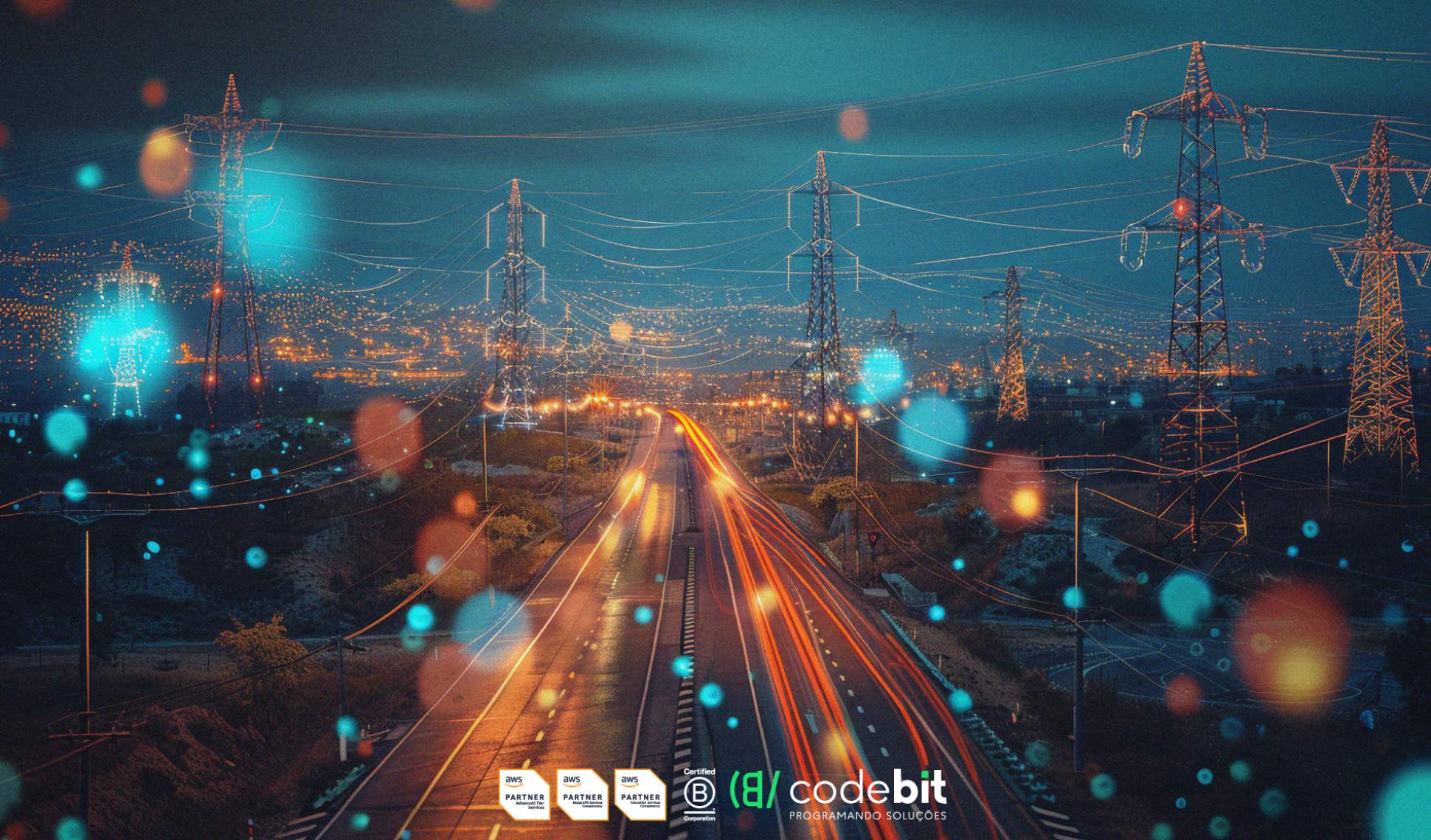
Artificial Intelligence (AI) has been transforming our lives in ways we never imagined, impacting everything from how we work to how we have fun and relate to the world, assisting in various areas such as study, work, healthcare, entertainment, data analysis, and complex decision-making.
However, with all this progress, a crucial question arises that could directly affect our future and that of society: the high energy consumption generated by its complex operations.
AI models require enormous amounts of energy to run, and as this technology advances, the demand is only set to increase. If action is not taken now, the sustainability of AI and, consequently, the health of our planet could be compromised.
This dilemma brings new challenges to light, but also opens doors for innovative solutions in the technology sector that could shape the future in a more sustainable way.
What is the energy demand required by AI?
The demand for energy to power artificial intelligence (AI) has increased significantly in recent years, mainly due to the growing use of large language models (LLMs) and other advanced technologies. Models like GPT-3 and GPT-4, for example, require huge amounts of energy for their training because they need to process and analyze massive volumes of data.
To give you an idea, training the GPT-4 model consumes about 28.8 million kWh, which is equivalent to the annual consumption of approximately 1,300 homes in the United States. Furthermore, using AI in daily activities, such as generating responses or performing simple tasks, also consumes energy, with values that can range between 0.001 and 0.01 kWh per use. These numbers are much higher than the energy consumption of common online activities, such as doing a quick Google search.
Another factor contributing to the increase in AI's energy demand is the use of powerful chips, such as Nvidia's GPUs (graphics processing units), which are designed to support data-intensive processing tasks. Models like the A100 and H100 can consume up to 700W per chip, which is quite significant. The next generations of these chips, such as Intel's Falcon Shores and Nvidia's Blackwell GPUs, are expected to require up to 2,700W, meaning a considerable increase in energy consumption. The type of task performed also influences consumption: for example, generating high-definition images (such as 4K images) consumes far more energy than simply generating simple text.
This increase in energy demand is one of the main concerns for the future of AI, as it not only impacts operational costs but also poses significant challenges to the sustainability and environmental balance of the technology.
For AI to continue to expand responsibly, it is essential to find solutions that reduce its energy consumption, such as the use of cleaner energy sources and more efficient technologies.
Why does AI consume so much energy?
The high energy consumption of AI is mainly attributed to the amount of calculations required to train and run complex models, which are data-intensive and require high-performance processors like GPUs and specialized accelerators.
Powerful models, such as GPT-4, require vast computational resources and consume large amounts of energy. Training these models involves adjusting billions of parameters, which demands a colossal number of machines and servers.
In addition, AI operations require intensive cooling systems, which consume a significant portion of the energy, with estimates indicating that up to 75% of energy consumption is used to keep the systems running and cooled.
This high consumption becomes even more evident when comparing the training of generative image or text models with common data classification operations, which require much less energy.
Energy growth driven by AI
As artificial intelligence (AI) continues to grow, its demand for energy is also increasing rapidly. Projections indicate that in the coming years, AI's energy consumption could account for up to 0.5% of global electricity, representing a considerable increase compared to current levels.
This growth is directly related to the increasing complexity of the tasks performed by AI, especially in areas such as image generation and the processing of large models.
By 2022, data centers were already responsible for consuming between 1% and 1.3% of global energy, totaling approximately 460 terawatt-hours (TWh), with this percentage expected to double by 2026.
The rapid adoption of AI is intensifying this demand for processing, causing its energy impact to grow at a faster rate than the adoption of previous technologies, such as computers and the internet.
To what extent is the energy issue an obstacle to the growth of AI?
High energy consumption represents a significant obstacle to the continuous expansion of artificial intelligence (AI), especially due to the heavy use of high-performance computing systems, such as data centers, which require large amounts of energy to operate.
These data centers are responsible for storing and processing information for countless AI services but, at the same time, overload power grids, putting pressure on grid capacity and posing additional challenges to the energy infrastructure.
This scenario is particularly worrying in countries like the US, where there is still a significant dependence on fossil fuel sources, such as coal and natural gas, to generate electricity.
As a result, the rapid growth of AI could not only jeopardize global decarbonization efforts but also increase the carbon footprint associated with the technology, especially when the energy consumed does not come from renewable sources.
The search for greater energy efficiency, while essential, can paradoxically worsen the problem. This phenomenon is known as "Jevons' Paradox", an economic concept originated in 1865 by the British economist William Stanley Jevons.
He observed that as the efficiency of coal use increased, the price of coal fell, which ultimately made the fuel more accessible and increased the demand for it, instead of reducing its consumption.
This phenomenon applies to various technologies, including AI, where improvements in system performance can make technology more accessible and, therefore, result in higher energy consumption.
AI, by becoming more efficient and widespread, can attract a larger number of users and use cases, further driving up its demand for electricity.
Therefore, the key to the sustainable advancement of AI lies in finding more efficient and adaptable alternatives for global energy systems.
How to ensure that new AI technologies are sustainable?
The growing demand for AI and its heavy processing capacity require sustainable solutions to ensure that the technology's expansion does not overload power grids and worsen environmental impacts. Various efforts and approaches can be adopted to achieve this goal. Below, we detail some of the main strategies that can be implemented to make AI more efficient and sustainable.
Use of Smaller and More Efficient Models (SLM)
One of the most promising approaches to reducing AI's energy consumption is the use of Smaller and More Efficient Models (SLMs). These models are designed to perform specific tasks and require less computational power and, consequently, lower energy consumption.
Smaller models can be integrated into mobile devices, allowing AI operations to be performed efficiently without relying on large data centers or high-performance systems that consume large amounts of electricity.
This strategy is particularly important for implementing AI in devices like smartphones and other portable equipment, which are increasingly driving the demand for more accessible and energy-efficient AI technologies.
Furthermore, by focusing on specific tasks, these models can significantly reduce energy consumption without compromising the performance or effectiveness of the operations. This translates into a more rational use of computational resources and a smaller environmental impact, without sacrificing the desired functionality.
Investments in Clean Energy and Renewable Generation
To ensure that the expansion of AI is sustainable, it is essential that the growing demand for energy is met by renewable sources. Solar and wind energy are promising alternatives to meet the energy needs of AI systems, which consume large volumes of electricity.
Investing in infrastructure to increase the generation of clean energy will help mitigate environmental impacts, reducing the carbon footprint associated with the growth of this technology.
In addition, using renewable energy sources can help balance the growing demand for electricity generated by AI without worsening environmental concerns. This transition is crucial because it allows AI to continue advancing without contributing to increased greenhouse gas emissions, fostering long-term sustainability.
Optimizing Energy Management in Data Centers
Data centers, responsible for processing large volumes of data and running complex AI models, are major energy consumers. To make the use of AI more sustainable, it is necessary to implement more efficient energy consumption practices within these centers. One of the most effective approaches is optimizing cooling systems, which are responsible for a significant portion of energy consumption.
Additionally, data centers can integrate more efficient technologies, such as the use of artificial intelligence, to better manage energy distribution and balance the electrical load across different sectors.
The use of smart grids and smart meters can improve energy allocation, reducing consumption peaks and optimizing the use of electrical resources. These intelligent systems are capable of predicting energy demands and adjusting processes in real time, ensuring greater efficiency and less waste.
Adoption of More Efficient Chips
Another important factor in reducing the environmental impact of AI is the use of low-energy but high-performance chips. Companies like Qualcomm, Apple, and ARM have been investing in specialized AI chips, which are designed to offer more processing power without a proportional increase in energy consumption.
These chips are essential for making mobile devices more efficient, allowing AI technologies to be implemented across a broad range of devices without a major impact on energy consumption. Innovation in dedicated chipsets also helps mitigate the overload of traditional processing systems, such as high-performance GPUs, which require much more energy to run large-scale AI operations.
Integrating AI with Smart Grids
One of the most promising innovations in the energy sector is the implementation of smart grids, which use AI to optimize energy distribution. AI can help improve efficiency in power grid management, managing energy flow in a more effective and adaptive way. This includes predicting peak demands, adjusting energy allocation as needed, and implementing real-time monitoring systems.
Using smart grids can reduce energy consumption during peak times and balance supply and demand, preventing waste and improving the overall sustainability of the system. This type of smart management is crucial, especially with the rising adoption of AI, since the demand for electricity generated by this technology is only set to grow.
The expansion of AI technologies is closely linked to the increase in energy consumption, but with the adoption of innovative practices, it is possible to mitigate its environmental impacts.
The implementation of smaller and more efficient models, the use of clean energy, the optimization of cooling systems in data centers, the creation of low-consumption chips, and the integration of smart grids are essential steps to ensure the sustainability of AI growth.
These initiatives not only meet the growing demand for greater processing capacity but also contribute to reducing the technology's carbon footprint.
With these efforts, we can promote a future in which artificial intelligence develops in a responsible manner and aligned with the principles of sustainability, benefiting both society and the environment.
In conclusion, the adoption of these strategies will be crucial to securing sustainable growth for AI, balancing innovation with environmental responsibility.
Stay tuned to CodeBlog to follow our content on technology, innovation, and much more!
Until the next post!
">




" width="15.500294250860316px"><path d="M 0 15.475 L 0 0 L 15.5 0 L 15.5 15.475 Z" fill="transparent" height="15.475099999999998px" id="tPiDQU_MP" width="15.5px"/><path d="M 3.167 1.589 C 3.847 0.724 4.607 0.171 5.61 0.046 C 6.532 -0.07 7.436 0.022 8.277 0.451 C 9.235 0.938 9.681 1.797 9.877 2.797 C 9.987 3.364 10.049 3.948 10.056 4.525 C 10.079 6.395 10.055 8.265 10.075 10.135 C 10.08 10.527 9.944 10.648 9.574 10.641 C 8.799 10.627 8.023 10.63 7.248 10.644 C 6.911 10.65 6.787 10.528 6.789 10.181 C 6.803 8.533 6.799 6.884 6.789 5.236 C 6.788 4.892 6.754 4.545 6.698 4.206 C 6.57 3.433 6.106 2.974 5.443 2.925 C 4.405 2.849 3.714 3.206 3.495 4.018 C 3.37 4.478 3.333 4.972 3.326 5.451 C 3.306 7.002 3.307 8.555 3.327 10.105 C 3.332 10.504 3.208 10.654 2.807 10.644 C 2.032 10.625 1.257 10.63 0.481 10.642 C 0.156 10.647 -0.001 10.546 0 10.193 C 0.007 7.035 0.006 3.876 0 0.718 C 0 0.391 0.104 0.24 0.458 0.249 C 1.219 0.269 1.981 0.267 2.743 0.252 C 3.068 0.245 3.197 0.361 3.17 0.688 C 3.148 0.948 3.166 1.211 3.166 1.589 Z" fill="rgb(245, 240, 237)" height="10.64451194394125px" id="Hw1mXDepj" transform="translate(5.425 4.831)" width="10.075487656011685px"/><path d="M 3.284 5.2 C 3.284 6.764 3.27 8.327 3.292 9.892 C 3.297 10.284 3.158 10.403 2.79 10.396 C 2.015 10.382 1.24 10.386 0.465 10.399 C 0.14 10.403 -0.001 10.305 0 9.947 C 0.012 6.792 0.012 3.637 0.002 0.481 C 0.001 0.123 0.105 -0.01 0.473 0.001 C 1.261 0.023 2.05 0.02 2.839 0.004 C 3.183 -0.003 3.294 0.124 3.29 0.467 C 3.276 2.044 3.284 3.623 3.284 5.2 Z" fill="rgb(245, 240, 237)" height="10.39869818980116px" id="sgvgyFXCr" transform="translate(0.237 5.076)" width="3.292113077251912px"/><path d="M 3.768 1.898 C 3.761 2.945 2.91 3.782 1.859 3.772 C 0.828 3.763 -0.012 2.892 0 1.842 C 0.012 0.824 0.864 -0.003 1.897 0 C 2.956 0.003 3.776 0.834 3.768 1.898 Z" fill="rgb(245, 240, 237)" height="3.772444228811899px" id="M8BOm1cI0" transform="translate(0 0)" width="3.768370362042166px"/></g></svg>)
" height="17px" id="G9twDfI1x" transform="translate(2 2)" width="17px"/></svg>)
" height="17px" id="q6YSjVL3w" transform="translate(6 2)" width="8.5px"/></svg>)
" height="12.720532384492868px" id="Jh_taQ7si" transform="translate(1 3.586)" width="18.00050025px"/></svg>)