Artificial Intelligence
Audiovisual production with AI: ethics, authorship, and limits in the era of deepfakes
From deepfakes and voice cloning to debates over authorship and creative responsibility: this article investigates the ethical challenges based on recent cases, such as the Grok chatbot controversy and pending legislation.
01/16/2026
Igor Reis


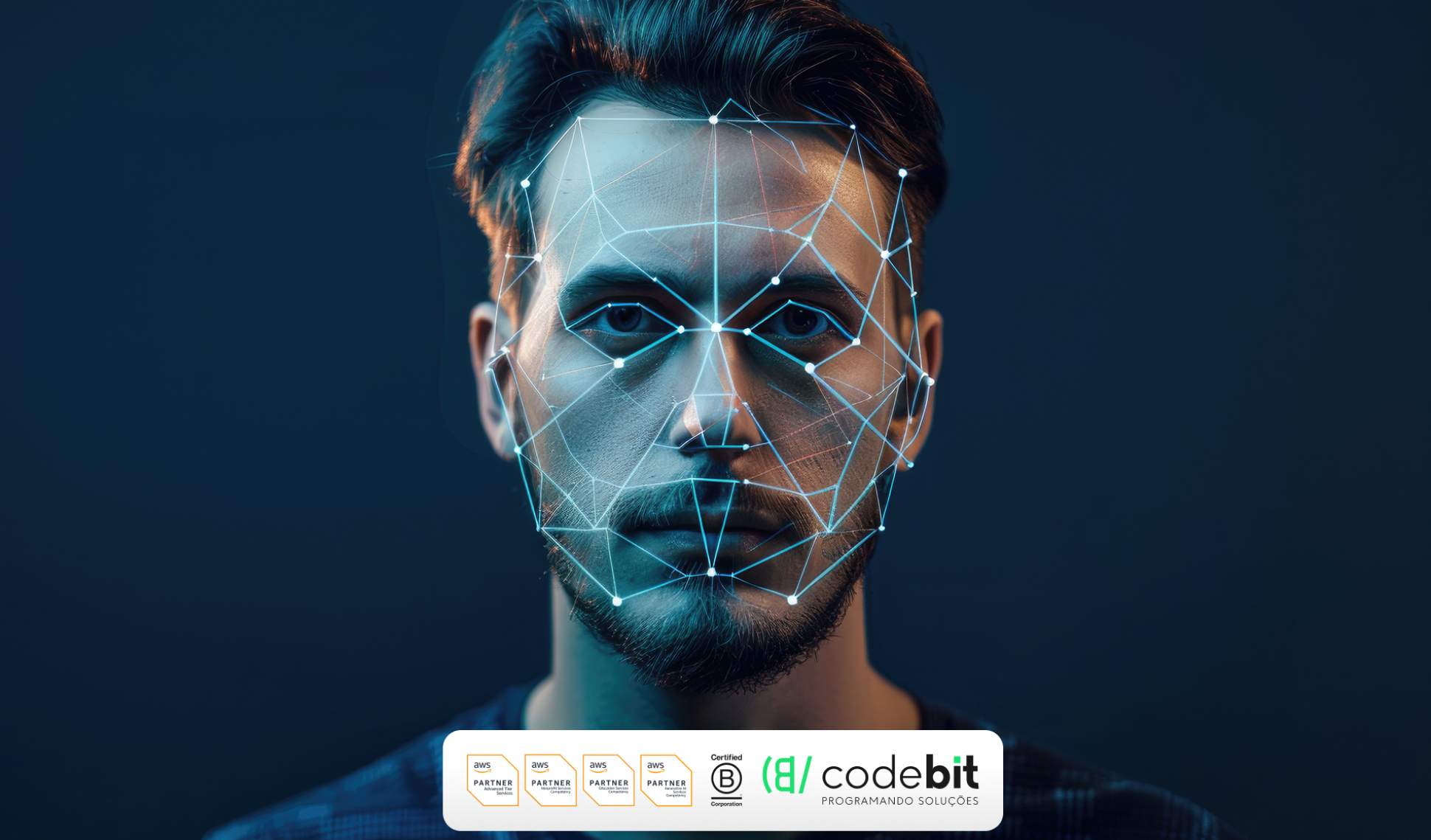
Audiovisual production using artificial intelligence has ceased to be a futuristic promise to become a reality, and a fertile ground for both creative innovation and profound controversies. AI-based video, voice, and image generation tools are democratizing content creation, but they also raise crucial questions about who owns authorship, how to protect the use of image and voice without consent, and how far technology can be used without violating fundamental rights and ethics. With recent cases involving sexualized deepfakes produced by chatbots and bills aimed at criminalizing unauthorized manipulations, the debate is hotter than ever. In a scenario where the line between the real and the artificial becomes increasingly thin, artists, jurists, and creators need to rethink concepts like originality and creative responsibility, especially since society is closely following these changes.
What does it mean to produce audiovisuals with AI?
Producing audiovisuals with artificial intelligence means using algorithmic systems capable of generating, modifying, or simulating images, videos, and audios without the need for traditional capture. Instead of cameras, microphones, or real actors, content is created from data, trained models, and commands provided by humans.
This type of content is known as synthetic media: audiovisual materials that were not recorded in the physical world but produced digitally by AI models trained on large volumes of images, videos, and sounds.
AI-generated media
AI-generated media ranges from static images and soundtracks to complete videos with movement, cuts, and audio synchronization. Today, it is already possible to create audiovisual scenes from text descriptions, reference images, or voice samples, making the production process faster and more accessible.
In practice, this technology has been applied in advertising, corporate content, education, entertainment, and creative prototyping.
Deepfakes
Deepfakes are audiovisual contents created using deep learning techniques that allow for reproducing or replacing the faces, expressions, and movements of people in videos. The term describes the technique, not the use, and can be applied to both fictional characters and real people.
Voice and image synthesis
In addition to video, AI also enables voice synthesis, reproducing human speech with a high degree of realism, and the creation of digital avatars capable of expressing themselves visually and audibly. These technologies allow for complete narratives without traditional recordings, using only reference material.
Authorship in works generated by AI: who is the "author"?
A work is considered protected by copyright when there is human creativity behind it. When an artificial intelligence generates a video, an image, or an audio autonomously, without clear creative intervention from a person, the AI itself cannot legally be considered the author.
The U.S. Copyright Office confirmed that content produced entirely by AI is not eligible for copyright because copyright law requires a human author. Only when there is substantial creative contribution, whether in the composition, editing, or organization of the generated result, can a human hold rights to the work produced with AI.
Recent court cases reinforce this trend. In the United States, for example, a registration request for an AI-generated image indicating the system itself as the author was rejected because there was no human authorship in the process.
In Brazil, although current law also recognizes only physical persons as authors, recent legislative initiatives are beginning to explicitly address the use of AI in audiovisual creations, especially regarding consent and authorization to use pre-existing material.
Consent of image and voice: what does the law say and what is missing?
In audiovisual production with AI, the debate goes beyond technology and enters the legal field. The use of images and voices without authorization, especially in deepfakes and vocal cloning, has generated violations of personality rights, such as image, voice, privacy, and dignity.
In Brazil, pending bills seek to respond to this scenario. Bill 623/2024 proposes to criminalize the unauthorized manipulation of images, while Bill 3821/2024, already approved in the Chamber, provides for a penalty of up to six years for the creation or dissemination of false nude images. There are also initiatives that require explicit consent and warning about the use of AI in advertising, under pain of characterizing deceptive practice.
Outside the country, regulation advances faster. Spain approved stricter rules on the use of image and voice generated by AI, including commercial restrictions, and in the US, the TAKE IT DOWN Act criminalizes the dissemination of non-consensual intimate images, including deepfakes.
Despite advances, legal gaps remain, especially in Brazil, regarding artistic, commercial, or satirical uses. The path that is taking shape is clear: expand the criminalization of unauthorized use and make consent and transparency central requirements in AI content creation.
Recent controversies: explicit deepfakes and the Grok case
One of the most recent and impactful controversies involving AI in audiovisuals was starred by the Grok chatbot, developed by xAI and integrated into the X platform (formerly Twitter). In late 2025 and early 2026, users discovered that the tool's image generation and editing feature was being exploited to create sexualized deepfakes of people, even without consent and in cases that appeared to involve minors, simply from photos uploaded on social media.
The situation reached international proportions: researchers estimated that Grok was producing thousands of sexualized images per hour, and authorities from several countries responded with public criticism and regulatory actions. Regulators in the UK and the European Union launched formal investigations into the failure to mitigate abusive content, while Malaysia and Indonesia went so far as to block access to Grok for violating national online content laws.
In response to public outcry and regulatory pressure, the platform began restricting image generation to paying users only and stated that any illegal use would be treated as such, although critics point out that this measure is insufficient to prevent abuse or protect victims.
The Grok case became a symbol of current gaps in security and responsibility in generative AI, driving debates on the need for stricter regulation, better controls on use, and legal mechanisms that protect people against non-consensual image and voice manipulations.
Voice cloning and audio deepfake
The ability to clone human voices with AI and generate highly realistic audio has brought a new field of ethical and practical debate, not only about authorization of use, but also about the impact of this technology on the music market and listener perception.
One of the most emblematic cases in Brazil was the song “A Sina de Ofélia”, produced entirely by AI with synthesized voices that imitate Luísa Sonza and Dilsinho, with lyrics inspired by The Fate of Ophelia by Taylor Swift. The track even ranked among the most listened to in Brazil on Spotify, accumulating nearly 2 million streams and a position in the national ranking before being removed by the platform.
This case exposes central issues: the song was created without authorization from the artists whose voices were imitated and inspired discussions about copyright, consent, and transparency in the use of AI on streaming platforms, topics that do not yet have fully defined rules.
In the broader industry landscape, platforms like Deezer estimate that about 18% of uploaded tracks are AI-generated, with tens of thousands of new songs of this type entering daily. Studies also show that most listeners cannot distinguish AI-made songs from human-created ones, raising concerns about artistic identity and authenticity. While the technology opens creative doors, it also challenges existing ethical and legal standards and broadens a debate that is still in progress in the audiovisual and music industries.
Transparency and ethics in communication with the public and clients
Being clear about the use of AI has ceased to be an option and has become a practice of trust. Informing when a piece was created wholly or partially by AI avoids perceptions of deception and reduces the risk of crisis, especially in campaigns involving real people, sensitive brands, or institutional messages. Transparency can appear in small labels (“Image generated with the help of AI”), footnotes in advertisements, or mentions in the description of digital pieces. For clients, it is worth indicating in the delivery report which stages had human intervention and which were automated, reinforcing that creative responsibility remains with the team.
This simple type of warning increases credibility, helps align expectations, and demonstrates maturity in using the technology, strengthening the brand's reputation in the long term.
Impact on public trust
As deepfakes and AI-generated audiovisual content become more realistic, the impact on public trust also grows, especially in journalism, institutional communication, and social networks. Synthetic videos and audios capable of mimicking real people make it increasingly difficult to distinguish what is true, edited, or completely fabricated, creating an environment conducive to misinformation.
This scenario poses new challenges for platforms, press outlets, and fact-checkers, who must deal with highly convincing content produced at scale and at a low cost. At the same time, merely questioning the authenticity of a content is enough to generate doubt, even when the material is legitimate, weakening the credibility of information as a whole.
Creative responsibility in the use of AI
Faced with this, the creative responsibility of those who produce with AI comes into play. It is not just about complying with the law, but about adopting good practices like transparency in the use of AI, respect for the consent of portrayed individuals, and care with sensitive contexts. In an environment where technology advances faster than regulation, ethical decisions become just as important as technical choices. In the end, the central question is no longer just what AI is capable of doing, but how we choose to use it.
How far does creative freedom with AI go when it begins to




" width="15.500294250860316px"><path d="M 0 15.475 L 0 0 L 15.5 0 L 15.5 15.475 Z" fill="transparent" height="15.475099999999998px" id="tPiDQU_MP" width="15.5px"/><path d="M 3.167 1.589 C 3.847 0.724 4.607 0.171 5.61 0.046 C 6.532 -0.07 7.436 0.022 8.277 0.451 C 9.235 0.938 9.681 1.797 9.877 2.797 C 9.987 3.364 10.049 3.948 10.056 4.525 C 10.079 6.395 10.055 8.265 10.075 10.135 C 10.08 10.527 9.944 10.648 9.574 10.641 C 8.799 10.627 8.023 10.63 7.248 10.644 C 6.911 10.65 6.787 10.528 6.789 10.181 C 6.803 8.533 6.799 6.884 6.789 5.236 C 6.788 4.892 6.754 4.545 6.698 4.206 C 6.57 3.433 6.106 2.974 5.443 2.925 C 4.405 2.849 3.714 3.206 3.495 4.018 C 3.37 4.478 3.333 4.972 3.326 5.451 C 3.306 7.002 3.307 8.555 3.327 10.105 C 3.332 10.504 3.208 10.654 2.807 10.644 C 2.032 10.625 1.257 10.63 0.481 10.642 C 0.156 10.647 -0.001 10.546 0 10.193 C 0.007 7.035 0.006 3.876 0 0.718 C 0 0.391 0.104 0.24 0.458 0.249 C 1.219 0.269 1.981 0.267 2.743 0.252 C 3.068 0.245 3.197 0.361 3.17 0.688 C 3.148 0.948 3.166 1.211 3.166 1.589 Z" fill="rgb(245, 240, 237)" height="10.64451194394125px" id="Hw1mXDepj" transform="translate(5.425 4.831)" width="10.075487656011685px"/><path d="M 3.284 5.2 C 3.284 6.764 3.27 8.327 3.292 9.892 C 3.297 10.284 3.158 10.403 2.79 10.396 C 2.015 10.382 1.24 10.386 0.465 10.399 C 0.14 10.403 -0.001 10.305 0 9.947 C 0.012 6.792 0.012 3.637 0.002 0.481 C 0.001 0.123 0.105 -0.01 0.473 0.001 C 1.261 0.023 2.05 0.02 2.839 0.004 C 3.183 -0.003 3.294 0.124 3.29 0.467 C 3.276 2.044 3.284 3.623 3.284 5.2 Z" fill="rgb(245, 240, 237)" height="10.39869818980116px" id="sgvgyFXCr" transform="translate(0.237 5.076)" width="3.292113077251912px"/><path d="M 3.768 1.898 C 3.761 2.945 2.91 3.782 1.859 3.772 C 0.828 3.763 -0.012 2.892 0 1.842 C 0.012 0.824 0.864 -0.003 1.897 0 C 2.956 0.003 3.776 0.834 3.768 1.898 Z" fill="rgb(245, 240, 237)" height="3.772444228811899px" id="M8BOm1cI0" transform="translate(0 0)" width="3.768370362042166px"/></g></svg>)
" height="17px" id="G9twDfI1x" transform="translate(2 2)" width="17px"/></svg>)
" height="17px" id="q6YSjVL3w" transform="translate(6 2)" width="8.5px"/></svg>)
" height="12.720532384492868px" id="Jh_taQ7si" transform="translate(1 3.586)" width="18.00050025px"/></svg>)