Technology
What are the benefits of biofeedback technology?
What are the benefits of biofeedback technology? Check it out on CodeBlog!
04/15/2025
Maria Clara Xavier


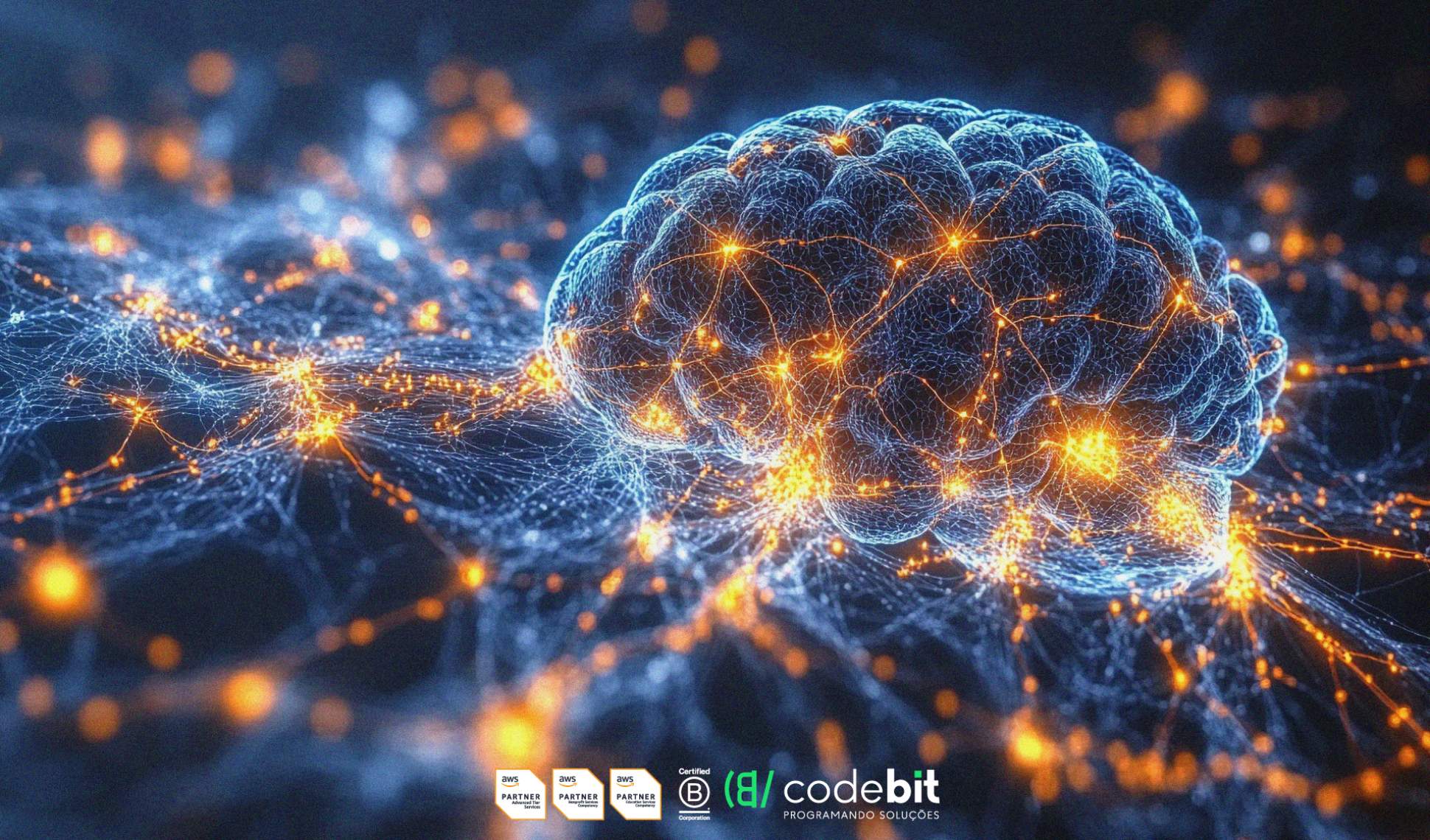
The biofeedback system offers several benefits for health and well-being, allowing users to consciously control involuntary physiological functions. In this way, its use can be effective in treating various conditions, in addition to assisting healthcare, collaborating for personal development and preventive health.
This technology has been becoming more accessible every day, and its impact on modern medicine and well-being tends to grow even more. But how far can biofeedback technology go? Will it be possible, in the future, to control even more of the functions of the body and mind? In this article, we will explore the benefits of feedback technology and its role in healthcare and personal development.
What is biofeedback technology and how does it work?
Biofeedback technology represents a significant advance in the understanding and control of the physiological processes of the human body. In this sense, it is based on the idea that certain aspects of bodily activity, which are normally involuntary, can be consciously regulated.
In this perspective, biofeedback uses advanced monitoring devices, providing real-time information about bodily functions such as heart rate, muscle tension, brain activity, and skin temperature. This feedback allows users to make conscious adjustments to improve their physical and mental well-being.
Feedback technology involves the use of sensors connected to the body with the purpose of measuring physiological data. This data is transmitted to a device, which can be a computer or a portable device, which presents it in understandable graphic formats or visual patterns. Users can observe how their bodies react to different stimuli, including thoughts, emotions, and environmental factors.
The biofeedback process involves a trained professional, who assists the individual in interpreting the data and applying techniques to improve their physiological responses. In addition, during the sessions, the sensors are strategically positioned on different parts of the body, depending on the objective of the therapy.
How can biofeedback benefit mental and emotional health?
When analyzing the current scenario, in which stress and emotional challenges are constant, biofeedback becomes a powerful tool to help people better understand their bodies and manage their actions more effectively.
It is well known that the connection with one's own body and mind is often neglected in the fast-paced daily production; however, it is essential for building emotional balance. To this end, biofeedback technology contributes precisely to re-establishing this connection, promoting greater self-awareness and well-being.
In the context of stress management, biofeedback allows the user to observe in real-time how their body reacts to stressful stimuli. In this way, the sensors capture the physiological signals and translate them into visual or audio information, facilitating the identification of emotional and physical triggers.
Based on this awareness, it is possible to apply breathing and muscle relaxation techniques and modulate these responses in order to break the cycle of stress. Biofeedback also benefits improvement in concentration and focus, since, in a world full of distractions, many people find it difficult to maintain attention for long periods.
This technology trains the brain to recognize patterns of distraction and return to a state of mindfulness; it has great relevance in the treatment of anxiety and depression disorders, being able to offer a clear representation of the physiological reactions associated with these emotional states, helping the user to interrupt automatic responses, which could be flight or paralysis, creating a space for more conscious, balanced, and controlled responses about oneself.
Biofeedback is an invitation to self-knowledge and personal transformation, encouraging the development of self-awareness and emotional self-control, essential for a balanced and healthy life. By perceiving how negative emotions directly affect the body, the user starts to look for ways to develop strategies to care for the body and mind.
How is innovation transforming the use of biofeedback in healthcare?
Innovation has played an important role in expanding the application possibilities of biofeedback in healthcare, making it an increasingly integrated tool in conventional treatments. In this context, biofeedback acts as a complementary resource that enhances the results of various therapies; however, it is far from replacing traditional approaches.
One of the ways to integrate this technological tool with conventional treatments is its application in conjunction with therapies such as cognitive-behavioral, physical therapy, and others. This technology has several applications and proven benefits, with the potential to redefine healthcare, and tends to grow increasingly more.
Furthermore, with the advancement of portable technologies, biofeedback also began to be used outside the clinical environment, becoming more accessible and encouraging patient anatomy. The patient gains self-care tools in their daily life, without relying exclusively on the doctor's office, strengthening both prevention and adherence to treatment.
Thus, this innovation facilitates the constant monitoring of physiological functions, encourages healthy practices, and reinforces prevention. In addition, biofeedback benefits traditional medicine and new demands for personalized and participatory treatments. Therefore, its ability to offer data-driven results and its flexibility of application make it one of the most promising innovations for the future of integrated healthcare.
What are the benefits of biofeedback in sports performance?
Regarding the sports field, biofeedback has been gaining ground, contributing to the improvement of athletes' physical and mental development. For this reason, by offering precise information about the body's functioning in real time, this technology allows athletes to develop greater awareness of their physiological responses to learn how to control them strategically.
When analyzing the context of competitions, for example, heart rate and breathing control is essential to maintain focus and endurance. Given this, biofeedback helps the athlete reach a state where body and mind operate in harmony, without excess tension or distraction. All of this improves the athlete's performance and provides a more complete and balanced preparation over the long term.
It is worth highlighting, in addition to these benefits, the issue of improving sleep quality. In this concept, this tool can assist in identifying physiological patterns that may be negatively impacting rest, such as hyperactivity of the nervous system, or even difficulty slowing down after intense training. Therefore, the athlete can apply relaxation techniques guided by biofeedback to reduce brain activity and muscle tension before sleeping.
What are the challenges and limitations in using feedback technology?
Despite having several benefits, both in physical and mental health, biofeedback technology can present some challenges and limitations. One challenge is the need for technical knowledge on the part of the professionals who apply the technology and the users who use it.
To avoid this issue, it is important to invest in professional training and create digital tools with clear instructions to make the data more understandable to users who do not have adequate knowledge about this technology.
When analyzing the limitations of using this tool, it is also possible to identify that some advanced biofeedback devices have high costs, limiting their use to specialized environments.
Although more affordable alternatives are available, they do not always guarantee the same accuracy, which can impact results. For this issue, one can think of the idea of supporting the development of low-cost devices with simplified sensors but with good accuracy.
What is the role of biofeedback in modern life?
Modern life has been marked by a fast pace, excess stimuli, and constant demands. In this perspective, biofeedback plays a crucial role in encouraging people in their search for self-knowledge and well-being, elements that are being increasingly valued and becoming a priority in contemporary society.
Finally, this innovation offers a practical, evidence-based approach to integrate health and self-development, seeking to collaborate for a more conscious and harmonious life, thus representing a way of reconnecting with oneself.
What will the future of biofeedback technology look like?
The future of biofeedback technology promises a revolution in health and well-being care, driven by advancements that expand its application possibilities. Regarding its recent progress, it is possible to mention the creation of portable devices, which make biofeedback more accessible and allow users to monitor their physiological conditions anywhere.
Furthermore, integration with virtual reality creates immersive experiences and makes the process more dynamic and motivating. In medicine, with the help of artificial intelligence, it will be possible to anticipate physiological patterns and adapt interventions in a more precise and personalized way.
In the future, it is expected to play an even greater role in transforming health and well-being, consolidating itself as an effective and non-invasive alternative within healthcare. Next steps may include applications in areas such as advanced neuroscience and regenerative therapies, further expanding its impact.
Stay on top of the technology universe with CodeBit!
Staying up to date is essential to make the most of the opportunities in the digital world. At CodeBlog, we bring informative content about the technology universe, helping you understand the trends and challenges of the IT sector.
Do you want to continue being informed about emerging technologies? Follow the CodeBlog and see you in the next post!




" width="15.500294250860316px"><path d="M 0 15.475 L 0 0 L 15.5 0 L 15.5 15.475 Z" fill="transparent" height="15.475099999999998px" id="tPiDQU_MP" width="15.5px"/><path d="M 3.167 1.589 C 3.847 0.724 4.607 0.171 5.61 0.046 C 6.532 -0.07 7.436 0.022 8.277 0.451 C 9.235 0.938 9.681 1.797 9.877 2.797 C 9.987 3.364 10.049 3.948 10.056 4.525 C 10.079 6.395 10.055 8.265 10.075 10.135 C 10.08 10.527 9.944 10.648 9.574 10.641 C 8.799 10.627 8.023 10.63 7.248 10.644 C 6.911 10.65 6.787 10.528 6.789 10.181 C 6.803 8.533 6.799 6.884 6.789 5.236 C 6.788 4.892 6.754 4.545 6.698 4.206 C 6.57 3.433 6.106 2.974 5.443 2.925 C 4.405 2.849 3.714 3.206 3.495 4.018 C 3.37 4.478 3.333 4.972 3.326 5.451 C 3.306 7.002 3.307 8.555 3.327 10.105 C 3.332 10.504 3.208 10.654 2.807 10.644 C 2.032 10.625 1.257 10.63 0.481 10.642 C 0.156 10.647 -0.001 10.546 0 10.193 C 0.007 7.035 0.006 3.876 0 0.718 C 0 0.391 0.104 0.24 0.458 0.249 C 1.219 0.269 1.981 0.267 2.743 0.252 C 3.068 0.245 3.197 0.361 3.17 0.688 C 3.148 0.948 3.166 1.211 3.166 1.589 Z" fill="rgb(245, 240, 237)" height="10.64451194394125px" id="Hw1mXDepj" transform="translate(5.425 4.831)" width="10.075487656011685px"/><path d="M 3.284 5.2 C 3.284 6.764 3.27 8.327 3.292 9.892 C 3.297 10.284 3.158 10.403 2.79 10.396 C 2.015 10.382 1.24 10.386 0.465 10.399 C 0.14 10.403 -0.001 10.305 0 9.947 C 0.012 6.792 0.012 3.637 0.002 0.481 C 0.001 0.123 0.105 -0.01 0.473 0.001 C 1.261 0.023 2.05 0.02 2.839 0.004 C 3.183 -0.003 3.294 0.124 3.29 0.467 C 3.276 2.044 3.284 3.623 3.284 5.2 Z" fill="rgb(245, 240, 237)" height="10.39869818980116px" id="sgvgyFXCr" transform="translate(0.237 5.076)" width="3.292113077251912px"/><path d="M 3.768 1.898 C 3.761 2.945 2.91 3.782 1.859 3.772 C 0.828 3.763 -0.012 2.892 0 1.842 C 0.012 0.824 0.864 -0.003 1.897 0 C 2.956 0.003 3.776 0.834 3.768 1.898 Z" fill="rgb(245, 240, 237)" height="3.772444228811899px" id="M8BOm1cI0" transform="translate(0 0)" width="3.768370362042166px"/></g></svg>)
" height="17px" id="G9twDfI1x" transform="translate(2 2)" width="17px"/></svg>)
" height="17px" id="q6YSjVL3w" transform="translate(6 2)" width="8.5px"/></svg>)
" height="12.720532384492868px" id="Jh_taQ7si" transform="translate(1 3.586)" width="18.00050025px"/></svg>)