Technology
Human robots on the rise: the future of advanced robotics
In this article, we explore the revolution of advanced robotics and humanoid robots: from the boom in China and Russia to discussions on ethics, labor markets, and the social future.
01/21/2026
Igor Reis


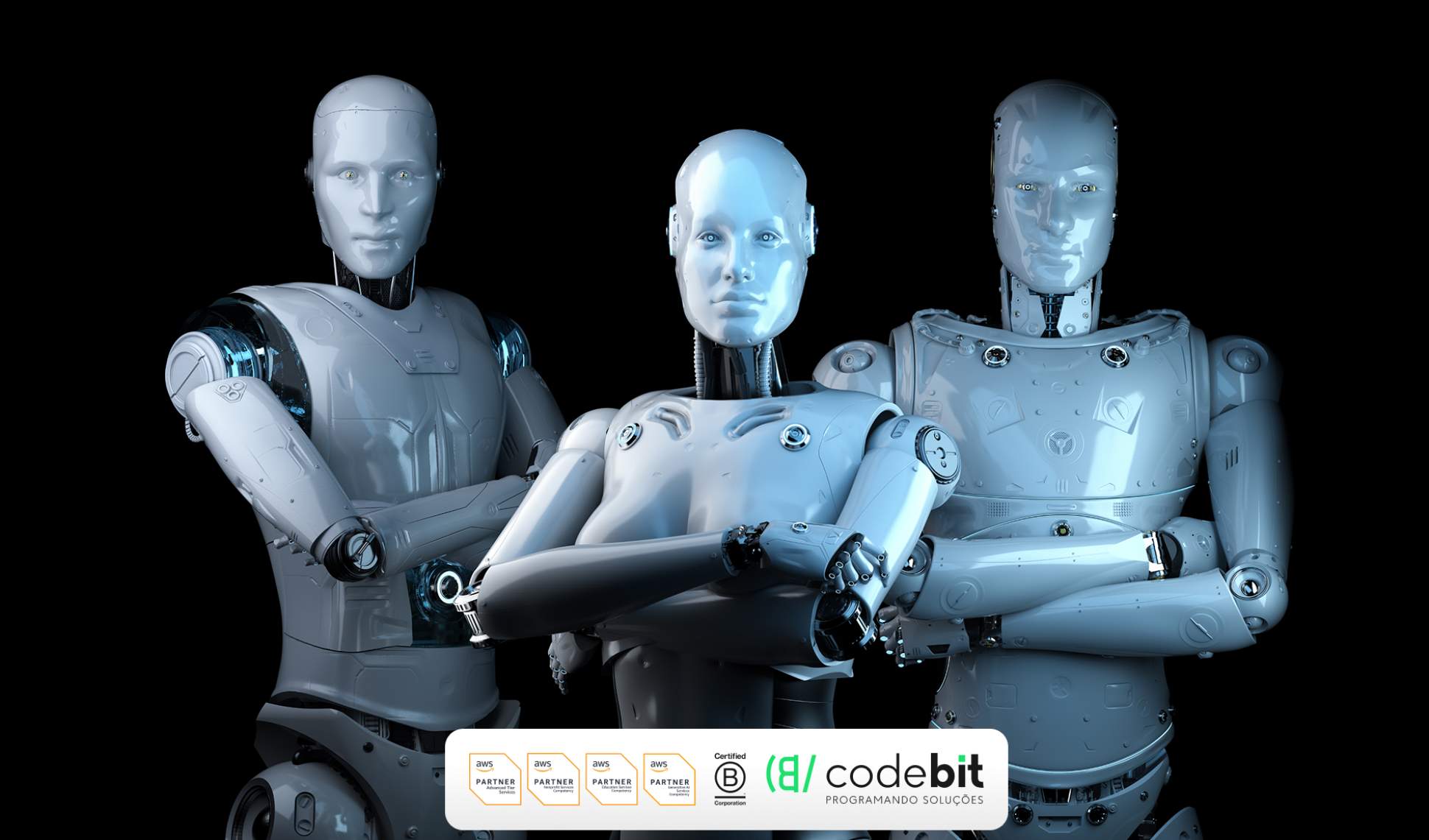
In the 21st century, what once seemed like science fiction—robots with human forms and movements—is gaining concrete ground. Companies in China, Russia, and other parts of the world have been investing heavily in humanoid robots with integrated artificial intelligence, paving the way for heated debates about the technical, ethical, and social limits of these machines. In this article, we will dive into the current landscape of advanced robotics, examine the key breakthroughs, and reflect on the implications of having "mechanical companions" so close to us.
What are humanoid robots and why has interest resurfaced
Humanoid robots are machines designed to mimic the shape and some behaviors of the human body: head, torso, arms, legs, and, in some cases, facial expressions or subtle gestures. Unlike traditional industrial robots, which usually have simpler designs (robotic arms, conveyor belts, fixed structures), humanoids pursue something much more ambitious: operating in environments made for people, using human tools, walking on standard floors, climbing stairs, interacting with everyday objects, and, above all, coexisting with humans in a natural way.
While industrial robots are specialists in hyper-focused tasks such as welding, assembling, or transporting parts on a production line, humanoids have, as their main objective, versatility. They can perform multiple functions, adapt behaviors, work in dynamic scenarios, and even incorporate AI for conversation and decision-making. It is an attempt to bring machines closer to our logic of movement and interaction.
And why has this theme returned with such force now? Because three factors erupted at the same time:
Advancements in generative AI and perception models
Current AI allows robots to understand complex commands, recognize environments, interpret context, and make decisions closer to human reasoning. This makes humanoids more useful and less "rigid."
A new technological race between countries
China, Russia, the US, and private companies are investing heavily in humanoid robots, not as futuristic experiments, but as commercial products. Recent videos of Chinese and Russian robots have gone viral, showing more natural locomotion, more fluid expressions, and AI integration, reigniting global interest.
Social fascination and controversy
The viral success of videos such as those of the robotic girlfriends, in addition to debates about ethics, psychological impact, and commercialization, has brought the topic to the center of discussions. Whenever robots get "too human," the public reacts, sometimes with curiosity, sometimes with unease, and this keeps the subject alive in the media.
Ultimately, the resurgence of interest is not just technological, but cultural. Humanoids cease to be mere machines and become mirrors: we project onto them our fears, expectations, and limits. And that is precisely what makes this field so fascinating.
Global landscape: who is leading the race?
China is leading the global humanoid robot race by a wide margin. The country has made this technology a strategic priority, backed by government support, massive investment, and an industrial supply chain capable of producing at scale. Local companies are already showcasing bipedal robots with integrated AI, advanced sensors, and a focus on real-world use, not just research. The goal is clear: to make humanoids part of everyday life in factories, services, and even domestic environments, driving a new productive revolution.
Russia is also seeking its place, although it still faces visible challenges. Its AIDOL robot gained international attention, but its disastrous debut, marked by falls on stage, showed that the country is still far from the standards of stability and refinement achieved by competitors like China. Despite this, Russia shows ambition and is trying to make progress in interaction, expressions, and locomotion, albeit without the same technological maturity or capacity for scale.
In parallel, other powers are also making moves. Europe, South Korea, and British and American companies are developing humanoids with distinct focuses, such as social interaction, assistance, and advanced AI research. Projects like Ameca or tech alliances like the K-Humanoid Alliance show that there is a growing, diverse, and competitive global ecosystem driving new capabilities for these machines.
This scenario reveals an increasingly fierce and global race. China dictates the pace with scale and ambition, Russia tries to keep up with still unstable initiatives, and several countries are betting on their own specializations. The result is clear: humanoid robots are leaving science fiction and entering the market as one of the most strategic technologies of the decade, with a direct impact on the economy, work, and how humans and machines will live together in the coming years.
Examples of impressive robots, from the lab to (almost) everyday life
Among the world's best-known humanoids, Ameca stands out for its capacity for social interaction. Its realistic facial expressions and quick responses via AI show how far we have already come in terms of presence and humanized communication, which is useful for customer service, reception, and demonstrations.
On the physical performance side, robots like Boston Dynamics' Atlas represent the limit of advanced locomotion: balance, jumps, object manipulation, and precise movements that prove the advancement of bipedal engineering. They are the showcase of extreme mobility.
On the other hand, models focused on commercial use, such as Digit (Agility Robotics) and humanoids from Figure AI, show more practical paths: operating in warehouses, handling repetitive tasks, and navigating real environments with moderate autonomy.
Today, what we actually see working are specific tasks and controlled environments. Most robots impress in demonstrations but still operate as advanced prototypes, far from the versatility needed for everyday domestic life. The transition has begun, but the "everyday robot" has not yet arrived.
Practical applications and promises: from industry to the domestic daily life
Humanoids are already starting to appear where their human shape makes a difference: production lines, warehouses, and hazardous environments, performing repetitive, heavy, or risky tasks. They are also being tested in home environments, helping with simple routines and offering support for the elderly and people with reduced mobility.
For governments and developers, these robots represent a future complementary workforce capable of reducing costs, filling labor shortages, and active in critical areas. The vision is clear: to integrate humanoids into daily routines naturally and usefully. It is still early, but the first steps show that this transition has already begun.
Technical challenges and current limitations
Despite the advances, humanoid robots still face massive challenges. The engineering required for balance, precise locomotion, arm and hand coordination, high-precision sensors, and real-time AI is extremely complex. Furthermore, batteries still heavily limit operation time, and the hardware remains expensive, heavy, and difficult to maintain.
Outside of controlled environments, the limitations become even more evident. Uneven terrain, unexpected objects, changes in lighting or sounds, and unpredictable human interactions can compromise performance and safety. Today, this prevents mass adoption: the technology works well in specific demonstrations, but despite this, it is not ready for the chaos and variability of the real world.
In summary, humanoids have made great progress, but they still have a long way to go before being truly reliable, affordable, and versatile in daily life.
Ethical, social, and psychological aspects: beyond functionality
As humanoids gain expressions, voice, and social behaviors, concerns about "dehumanization" arise. When machines begin to occupy roles of care, companionship, or emotional support, researchers warn of potential effects on how we perceive empathy and human relationships, especially among children, the elderly, and isolated people.
Another sensitive point is the attempt to assign "gender" to robots. Many projects adopt female or male traits—appearance, voice, posture—which raises socio-cultural debates about stereotypes, objectification, and how these choices influence social expectations.
In the economic field, the progress of humanoids also generates tension. They can occupy repetitive or low-skilled roles, creating gains for companies but potentially widening inequalities for workers who depend on these activities. The balance between innovation and social impact is still far from being resolved.
The future: what to expect from humanoids in the coming decades
The next decade should mark the definitive turning point for humanoids: they start as pilots in factories, logistics warehouses, and construction sites, but tend to gain space in sectors that require strength, precision, and repetition—places where machines are already useful, but still "trapped" by design limitations. As AI improves fine motor coordination and energy autonomy advances, these robots become viable tools to operate alongside human teams, adapting to the environment instead of requiring fully automated structures.
In the most optimistic scenarios, humanoids will complement, not replace, people in exhausting or risky tasks: cargo handling, infrastructure maintenance, natural disaster support, hospital care, and basic home assistance. The market projects a multi-billion dollar ecosystem driven not only by the sale of machines but also by software, updates, services, and maintenance specializations, creating new jobs and reorganizing production chains.
Even with rapid progress, the adoption of humanoid robots requires caution: reliance on connected systems increases the risk of failures, digital attacks, and inequalities between those who have or do not have access to the technology. Therefore, rules of safety, responsibility, and ethical use are essential. In the end, the future of this technology will be defined by social decisions as much as by engineering, and everything points to a hybrid scenario in which humanoids become useful in various areas, but as extensions of human capacity, not complete replacements.




" width="15.500294250860316px"><path d="M 0 15.475 L 0 0 L 15.5 0 L 15.5 15.475 Z" fill="transparent" height="15.475099999999998px" id="tPiDQU_MP" width="15.5px"/><path d="M 3.167 1.589 C 3.847 0.724 4.607 0.171 5.61 0.046 C 6.532 -0.07 7.436 0.022 8.277 0.451 C 9.235 0.938 9.681 1.797 9.877 2.797 C 9.987 3.364 10.049 3.948 10.056 4.525 C 10.079 6.395 10.055 8.265 10.075 10.135 C 10.08 10.527 9.944 10.648 9.574 10.641 C 8.799 10.627 8.023 10.63 7.248 10.644 C 6.911 10.65 6.787 10.528 6.789 10.181 C 6.803 8.533 6.799 6.884 6.789 5.236 C 6.788 4.892 6.754 4.545 6.698 4.206 C 6.57 3.433 6.106 2.974 5.443 2.925 C 4.405 2.849 3.714 3.206 3.495 4.018 C 3.37 4.478 3.333 4.972 3.326 5.451 C 3.306 7.002 3.307 8.555 3.327 10.105 C 3.332 10.504 3.208 10.654 2.807 10.644 C 2.032 10.625 1.257 10.63 0.481 10.642 C 0.156 10.647 -0.001 10.546 0 10.193 C 0.007 7.035 0.006 3.876 0 0.718 C 0 0.391 0.104 0.24 0.458 0.249 C 1.219 0.269 1.981 0.267 2.743 0.252 C 3.068 0.245 3.197 0.361 3.17 0.688 C 3.148 0.948 3.166 1.211 3.166 1.589 Z" fill="rgb(245, 240, 237)" height="10.64451194394125px" id="Hw1mXDepj" transform="translate(5.425 4.831)" width="10.075487656011685px"/><path d="M 3.284 5.2 C 3.284 6.764 3.27 8.327 3.292 9.892 C 3.297 10.284 3.158 10.403 2.79 10.396 C 2.015 10.382 1.24 10.386 0.465 10.399 C 0.14 10.403 -0.001 10.305 0 9.947 C 0.012 6.792 0.012 3.637 0.002 0.481 C 0.001 0.123 0.105 -0.01 0.473 0.001 C 1.261 0.023 2.05 0.02 2.839 0.004 C 3.183 -0.003 3.294 0.124 3.29 0.467 C 3.276 2.044 3.284 3.623 3.284 5.2 Z" fill="rgb(245, 240, 237)" height="10.39869818980116px" id="sgvgyFXCr" transform="translate(0.237 5.076)" width="3.292113077251912px"/><path d="M 3.768 1.898 C 3.761 2.945 2.91 3.782 1.859 3.772 C 0.828 3.763 -0.012 2.892 0 1.842 C 0.012 0.824 0.864 -0.003 1.897 0 C 2.956 0.003 3.776 0.834 3.768 1.898 Z" fill="rgb(245, 240, 237)" height="3.772444228811899px" id="M8BOm1cI0" transform="translate(0 0)" width="3.768370362042166px"/></g></svg>)
" height="17px" id="G9twDfI1x" transform="translate(2 2)" width="17px"/></svg>)
" height="17px" id="q6YSjVL3w" transform="translate(6 2)" width="8.5px"/></svg>)
" height="12.720532384492868px" id="Jh_taQ7si" transform="translate(1 3.586)" width="18.00050025px"/></svg>)