Technology
Technology and circular economy: the challenge of innovating without wasting
Has the linear economy come to an end? Discover why the circular model is here to stay and learn how it can transform technology.
06/30/2025
Leonardo Fróes


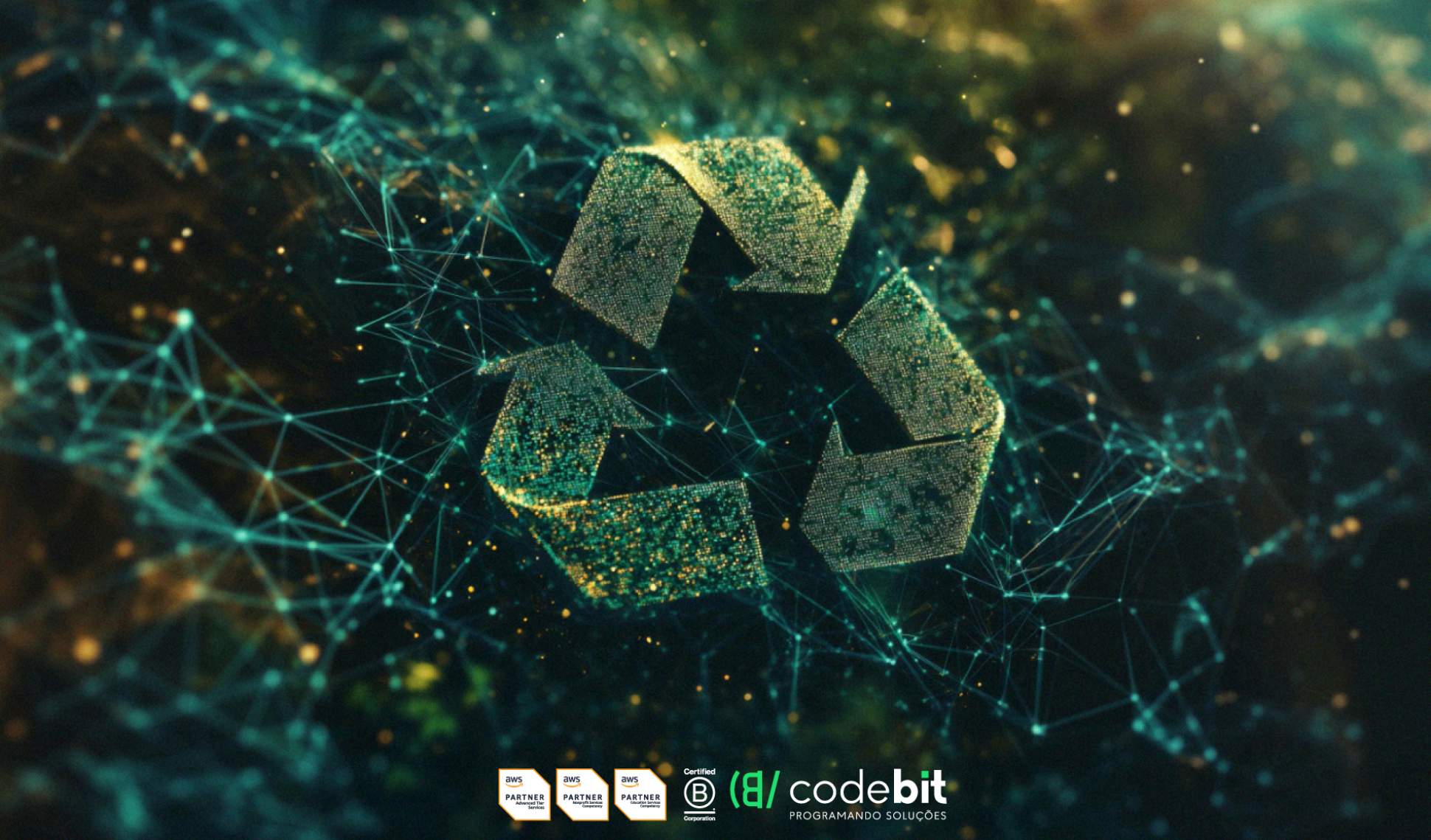
The relationship between technology and sustainability has gained new layers as digital consumption grows and natural resources become scarcer. If, on one hand, technological innovation drives smart solutions, global connectivity, and advancements in various areas, on the other, it also generates significant environmental impacts, especially with the disposal of electronic equipment, energy consumption, and the intensive extraction of raw materials. In this scenario, the circular economy emerges as a concrete and viable response to rethink how we produce, use, and dispose of technology.
The circular model proposes a structural shift in traditional industrial logic, focusing on extending the lifecycle of products, minimizing waste, and valuing the reuse of materials. For the technology sector, this shift represents both a complex challenge and a strategic opportunity, with a direct impact on how we create innovation, relate to consumers, and plan the future of the planet. This article explores these paths and points out how companies in the sector can lead a smarter, more connected, and sustainable transition.
What is a circular economy and where does it enter the technology discussion?
The circular economy is a production model that proposes a break from the linear system of "take, make, dispose." Instead, it seeks to keep resources in use for as long as possible, through strategies such as reuse, repair, recycling, and regeneration. In the technology sector, this concept gains momentum in the face of a growing paradox: the more we innovate, the more electronic waste we produce.
According to UN data, more than 50 million tons of electronic waste are generated annually worldwide. Devices with increasingly shorter lifecycles, constant upgrades, and the throwaway culture accelerate this volume. It is in this context that the circular economy emerges not only as an alternative but as a strategic necessity.
Linear vs. circular economy: an ongoing transition
The traditional industrial model — the linear economy — was efficient for decades, but it is already showing clear signs of exhaustion. It is based on intensive consumption of natural resources and frequent disposal of products that would still have value in other stages of the chain.
In a circular economy, the logic is reversed. Products are designed to last longer, be updated, shared, or reintegrated into the production cycle. Innovation, in this scenario, goes beyond the technological part and moves towards rethinking business models.
Examples of this are companies betting on electronics rental, resale platforms, reverse logistics programs, and modular design that facilitate the repair and reuse of components.
What are the 4Rs of the circular economy and how to apply them to technology?
In the technological context, the 4Rs of the circular economy (reduce, reuse, recycle, and rethink) translate into concrete practices that impact the entire production chain:
Reduce the consumption of rare materials and energy in the development of hardware and infrastructure.
Reuse components from old devices in new ones, or encourage prolonged use through software updates.
Recycle discarded materials, such as metals and plastics, safely and efficiently.
Rethink the logic of ownership, encouraging subscription, sharing, and equipment return models.
These actions extend the lifecycle of products, reduce environmental impacts, and, in many cases, bring economic benefits to both companies and consumers.
Contradictions of the digital age: innovation, consumption, and disposal
Technology plays a central role in accelerating the global economy, but it also carries contradictions. The incentive for rapid consumption, with annual releases of smartphones, smartwatches, and other devices, generates obsolescence that is difficult to keep up with.
Furthermore, producing equipment involves the intensive use of scarce natural resources, such as lithium and cobalt, and significant carbon emissions. At the same time, a large portion of electronic waste ends up untreated, often in countries without the infrastructure to handle it.
Overcoming these contradictions requires a new look at design, use, and disposal, combining technological innovation with environmental responsibility.
Opportunities for the technology sector: where does the circular economy come in?
Contrary to what many think, the circular economy is not a barrier to innovation. On the contrary, it creates new opportunities for technology companies wishing to position themselves in a sustainable and competitive way:
Development of modular hardware, which facilitates upgrades and the replacement of specific parts.
Device rental or subscription services, offering cutting-edge technology without the commitment of ownership.
Buyback and refurbishment platforms, which increase the lifecycle of products.
Software-based solutions, which extend the use of old equipment with updates, without the need for physical replacement.
Blockchain and IoT applications in component tracking and efficient circular supply chain management.
Companies that integrate circular practices strengthen their image with an increasingly conscious audience, especially among younger consumers.
How to implement a circular economy in technology?
The transition to a circular economy involves a deep review of processes, products, and mindsets. In the technology sector, this shift requires a more systemic approach, starting from design and extending to post-consumption. It is necessary to think from the beginning about how to reduce impacts and maximize the reuse of resources throughout the entire lifecycle of devices.
Some key practices include:
Product design focusing on longevity and reuse — modular, easy-to-maintain, and more durable solutions reduce the need for frequent replacement.
Choosing recyclable or sustainably sourced materials — components with lower environmental impact facilitate reuse and reduce dependence on scarce raw materials.
Creating return, repair, and reuse policies integrated into the business model — buyback, upgrade, or rental programs can extend the device lifecycle.
Partnerships with companies specialized in reverse logistics and recycling — ensuring the proper destination for electronic waste is essential to responsibly close the loop.
Educating consumers on conscious use and proper disposal — informing and engaging the end user strengthens the entire circular ecosystem.
In addition to environmental benefits, this model can also generate operational cost reductions, new source of revenue, and competitive advantage in markets increasingly attentive to sustainability. The circular economy in technology is a strategic path to innovate responsibly.
The role of digital technology in accelerating the circular model
The circular economy in the technology sector relies on physical changes in products and also on digital intelligence applied to the production chain. Solutions such as data analysis, artificial intelligence, and blockchain make it possible to track, predict, and optimize resource use in real-time.
These tools allow:
Monitoring the lifecycle of devices, anticipating maintenance, and avoiding unnecessary disposal.
Tracking the origin and destination of components, increasing transparency and reliability in supply chains.
Supporting circular design based on real data of use, disposal, and reuse.
Digital platforms facilitate the connection between different agents of the circular economy, promoting collaborative networks and more scalable solutions. Digitalization accelerates the circular transition and makes it viable on a large scale.
Brazil and the circular economy: potential and challenges
Although Brazil faces barriers such as low formal electronics recycling and a lack of incentives, there is enormous potential for the circular economy to gain scale, especially due to the population's growing interest in more conscious consumption and the urgency for sustainable solutions.
Brazilian technology companies have room to lead this movement, developing affordable, repairable solutions with lower environmental impact. The circular economy is not just an international trend: it is also a local opportunity.
Circular is the way
The circular economy does not represent a break with technological progress, but rather a necessary evolution. As the technology sector continues to grow, thinking of innovation and sustainability as integrated elements becomes essential to ensure a more balanced future.
Reducing waste, reusing resources, and reinventing business models is good for the planet and strategic for companies that want to remain relevant in an increasingly connected and conscious landscape.



" width="15.500294250860316px"><path d="M 0 15.475 L 0 0 L 15.5 0 L 15.5 15.475 Z" fill="transparent" height="15.475099999999998px" id="tPiDQU_MP" width="15.5px"/><path d="M 3.167 1.589 C 3.847 0.724 4.607 0.171 5.61 0.046 C 6.532 -0.07 7.436 0.022 8.277 0.451 C 9.235 0.938 9.681 1.797 9.877 2.797 C 9.987 3.364 10.049 3.948 10.056 4.525 C 10.079 6.395 10.055 8.265 10.075 10.135 C 10.08 10.527 9.944 10.648 9.574 10.641 C 8.799 10.627 8.023 10.63 7.248 10.644 C 6.911 10.65 6.787 10.528 6.789 10.181 C 6.803 8.533 6.799 6.884 6.789 5.236 C 6.788 4.892 6.754 4.545 6.698 4.206 C 6.57 3.433 6.106 2.974 5.443 2.925 C 4.405 2.849 3.714 3.206 3.495 4.018 C 3.37 4.478 3.333 4.972 3.326 5.451 C 3.306 7.002 3.307 8.555 3.327 10.105 C 3.332 10.504 3.208 10.654 2.807 10.644 C 2.032 10.625 1.257 10.63 0.481 10.642 C 0.156 10.647 -0.001 10.546 0 10.193 C 0.007 7.035 0.006 3.876 0 0.718 C 0 0.391 0.104 0.24 0.458 0.249 C 1.219 0.269 1.981 0.267 2.743 0.252 C 3.068 0.245 3.197 0.361 3.17 0.688 C 3.148 0.948 3.166 1.211 3.166 1.589 Z" fill="rgb(245, 240, 237)" height="10.64451194394125px" id="Hw1mXDepj" transform="translate(5.425 4.831)" width="10.075487656011685px"/><path d="M 3.284 5.2 C 3.284 6.764 3.27 8.327 3.292 9.892 C 3.297 10.284 3.158 10.403 2.79 10.396 C 2.015 10.382 1.24 10.386 0.465 10.399 C 0.14 10.403 -0.001 10.305 0 9.947 C 0.012 6.792 0.012 3.637 0.002 0.481 C 0.001 0.123 0.105 -0.01 0.473 0.001 C 1.261 0.023 2.05 0.02 2.839 0.004 C 3.183 -0.003 3.294 0.124 3.29 0.467 C 3.276 2.044 3.284 3.623 3.284 5.2 Z" fill="rgb(245, 240, 237)" height="10.39869818980116px" id="sgvgyFXCr" transform="translate(0.237 5.076)" width="3.292113077251912px"/><path d="M 3.768 1.898 C 3.761 2.945 2.91 3.782 1.859 3.772 C 0.828 3.763 -0.012 2.892 0 1.842 C 0.012 0.824 0.864 -0.003 1.897 0 C 2.956 0.003 3.776 0.834 3.768 1.898 Z" fill="rgb(245, 240, 237)" height="3.772444228811899px" id="M8BOm1cI0" transform="translate(0 0)" width="3.768370362042166px"/></g></svg>)
" height="17px" id="G9twDfI1x" transform="translate(2 2)" width="17px"/></svg>)
" height="17px" id="q6YSjVL3w" transform="translate(6 2)" width="8.5px"/></svg>)
" height="12.720532384492868px" id="Jh_taQ7si" transform="translate(1 3.586)" width="18.00050025px"/></svg>)