Technology
Screen time: what is the healthy limit for children and adolescents?
See what experts from the WHO, UNICEF, and the education sector have to say, and discover solutions that reinvent our relationship with the internet.
08/01/2025
Leonardo Fróes


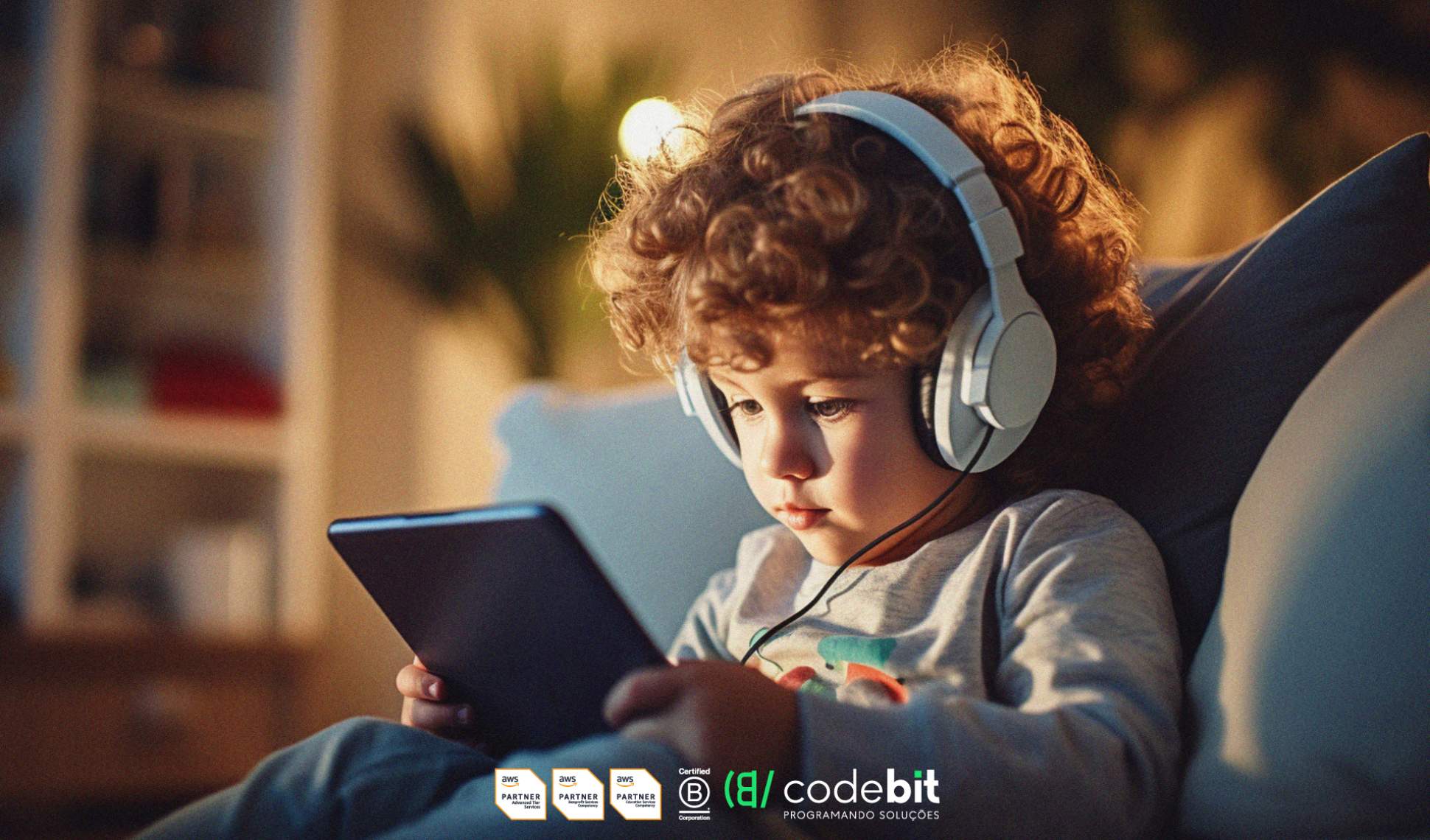
Children and adolescents have never spent so much time in front of screens. Smartphones, tablets, computers, and TVs are part of their routine, whether for studying, playing, or socializing. But where is the healthy limit? What do experts say about the effects of this habit? And how do we balance access to technology with quality of life?
Parents, educators, doctors, and researchers have been warning about the risks associated with excessive digital exposure: sleep problems, anxiety, attention deficit disorder, and difficulty socializing are just a few. At the same time, there is the challenge of ensuring that young people learn to engage with the online world in a critical, safe, and balanced way.
In this article, we explore what is considered an ideal screen time, how this topic is being addressed by experts and authorities, and how solutions like CodeWall, by CodeBit, can help implement a more mindful use of the internet in both home and educational environments.
What is screen time and why is it a concern?
Screen time is the period a person spends in front of electronic devices with screens, such as smartphones, tablets, computers, and televisions. Beyond the technical concept, it has become a central topic in debates regarding mental health, child development, and family balance.
The greatest concern is the way technology is used. Unregulated and limitless use can negatively impact behavior, sleep, attention, school performance, and even the social and emotional development of younger people.
According to the World Health Organization (WHO), screen time recommendations vary by age group:
Under 2 years old: no exposure to screens, with the exception of video calls with family members.
Children aged 2 to 5 years: a maximum of 1 hour per day, always accompanied by an adult.
From 6 years old and up: screen time should be balanced with physical activities, adequate sleep, and interactions with the real world.
Research shows that excessive screen use is associated with anxiety disorders, sleep problems, irritability, social isolation, and falling school performance. The risks increase when use is solitary, without supervision or discussion, and when the internet becomes a substitute for family interactions or healthy day-to-day activities.
Additionally, the business model of digital platforms itself — based on capturing attention for long periods — contributes to the creation of harmful habits. Screen time, in this context, ceases to be a conscious choice and becomes behavior driven by notifications, algorithms, and instant rewards.
Control or participation? The experts' view
During the FIB15 - Brazilian Internet Forum, one of the central points of debate was the balance between protecting and educating children and adolescents in the digital environment. As Fernanda Campagnucci, director of InternetLab, highlighted, "we cannot deprive young people of the internet, but prepare them to use it mindfully." This means the role of adults goes beyond blocking content; it also involves guiding, listening, and actively participating in their children's online experience.
Organizations such as UNICEF and IP.Rec emphasize that regulation must be built upon three pillars:
1. Child- and adolescent-centered design.
2. Privacy, ethics, and security.
3. Digital literacy.
The idea is to foster a digital ecosystem that is safer but also more participatory. Parental control tools are important, especially in childhood, but they do not replace constant dialogue. Educating for the mindful use of technology is the most effective way to form digital citizens prepared to handle online risks, choices, and responsibilities.
The family's role and the example set by adults
According to the Guide "Children, Adolescents and Screens", released by the Federal Government in 2025, the early and excessive use of devices is frequently linked to a lack of clear boundaries at home. Parents and guardians who spend many hours connected end up, even unintentionally, sending the message that this behavior is acceptable or even desirable.
Establishing healthy daily routines, such as having meals without cell phones, creating unplugged times as a family, and talking about what children consume online are simple actions that make a difference. Active participation by adults helps build a more balanced relationship with technology.
Consistency between words and actions is essential: there is no point in establishing strict rules for children if adults do not follow similar guidelines. Leading by example remains one of the most powerful tools in education.
Risks of excessive screen time
Excessive screen use by children and adolescents brings a series of physical, emotional, and cognitive consequences. Among the most common impacts are:
Difficulties in concentration and learning, especially when screen time replaces educational or intellectually stimulating activities.
Sedentary lifestyle and posture issues, which can worsen as they grow.
Sleep disorders, often caused by blue light exposure before bedtime.
Social isolation and anxiety, mainly when use is solitary and without interaction with the physical environment.
Exposure to inappropriate content without filters or proper monitoring.
These risks are heightened by the business model of digital platforms, structured to maximize time spent online. With sophisticated algorithms and constant stimuli, children and adolescents become easy targets for engagement strategies that do not always prioritize their well-being.
Therefore, the debate over screen time must go beyond duration: it involves the quality, context, and purpose of usage.
Protection straight from the internet source
In a scenario where screen time is a growing challenge for families, schools, and institutions, CodeWall emerges as an innovative and strategic solution. Developed by CodeBit, it acts as an intelligent barrier directly at the internet entry point through integration with a Mikrotik modem. In other words: control does not rely on devices or the good will of the user, but works on the network as a whole.
With CodeWall, it is possible to:
Block access from unauthorized devices, ensuring that only validated equipment is connected.
Establish usage routines with predefined times for study, leisure, rest, or complete disconnection.
Apply intermittent blocks, creating automatic pauses in use and encouraging healthy habits.
Track the connection time of each device on the network, with real visibility into how the internet is used at home or school.
Increase the family's digital security, preventing unauthorized connections and reinforcing network protection.
Instead of acting on the symptom, CodeWall acts at the source: the Wi-Fi connection. This allows for more effective, stable, and comprehensive control without the need to install or configure devices individually.
The solution is ideal for homes with children and adolescents, but also serves schools and small businesses looking to implement a culture of mindful internet use, promoting balance, productivity, and digital security. In this current era, where concern about screen time is growing worldwide, having a centralized management tool makes all the difference.
Find out more at: https://www.codewall.com.br/
Digital discipline is a collective value
The debate over screen time is not limited to the family sphere. Law No. 15,100/2025, for example, restricts the use of cell phones during classes, recess, and breaks in Brazilian schools. One of the main goals of the measure is to divert students' focus away from screens, leading them toward a more human and productive learning experience resulting from direct interaction between teachers and peers. Besides encouraging in-person socializing, mindfulness in class, and a more conscious use of technology, discouraging cell phone use in educational institutions promotes greater protection for the mental, emotional, and even social health of children and adolescents.
Experiences in educational institutions that have already applied the rule point to significant progress: more engaged students, improved quality of social relationships, reduced cyberbullying episodes, increased concentration, and better results in the teaching-learning process. By restricting excessive screen use in the educational environment, schools play their part in developing healthier digital habits, thereby expanding the positive impact of this discipline to the entire school community.
Building a culture of balanced technology use, therefore, depends on the engagement of everyone: families, schools, organizations, and public authorities. It is a collective effort for a safer internet and a purposeful digital life.
Paths to a safer and more mindful internet
The path to a healthy use of the internet goes through creating balanced routines, digital education in schools and families, platform transparency, and active participation from civil society. The development and use of technologies that prioritize user well-being is fundamental.
Tools like CodeWall are part of this journey. Although they do not replace the fundamental role of the family and school in education, they offer robust support, creating a safer digital environment aligned with real-life needs. CodeWall enables simple and efficient control, directly at the source of the connection, without bureaucracies.
Protecting children and adolescents on the internet is, above all, a collective challenge. The ideal screen time varies by age, but the consensus among experts is clear: it is necessary to balance digital access with family life, mental health, learning, and safety.
Technology is not the villain, but it needs to be used responsibly. For those who wish to educate, protect, and include mindfully, CodeWall represents an important step. A tool worth knowing.




" width="15.500294250860316px"><path d="M 0 15.475 L 0 0 L 15.5 0 L 15.5 15.475 Z" fill="transparent" height="15.475099999999998px" id="tPiDQU_MP" width="15.5px"/><path d="M 3.167 1.589 C 3.847 0.724 4.607 0.171 5.61 0.046 C 6.532 -0.07 7.436 0.022 8.277 0.451 C 9.235 0.938 9.681 1.797 9.877 2.797 C 9.987 3.364 10.049 3.948 10.056 4.525 C 10.079 6.395 10.055 8.265 10.075 10.135 C 10.08 10.527 9.944 10.648 9.574 10.641 C 8.799 10.627 8.023 10.63 7.248 10.644 C 6.911 10.65 6.787 10.528 6.789 10.181 C 6.803 8.533 6.799 6.884 6.789 5.236 C 6.788 4.892 6.754 4.545 6.698 4.206 C 6.57 3.433 6.106 2.974 5.443 2.925 C 4.405 2.849 3.714 3.206 3.495 4.018 C 3.37 4.478 3.333 4.972 3.326 5.451 C 3.306 7.002 3.307 8.555 3.327 10.105 C 3.332 10.504 3.208 10.654 2.807 10.644 C 2.032 10.625 1.257 10.63 0.481 10.642 C 0.156 10.647 -0.001 10.546 0 10.193 C 0.007 7.035 0.006 3.876 0 0.718 C 0 0.391 0.104 0.24 0.458 0.249 C 1.219 0.269 1.981 0.267 2.743 0.252 C 3.068 0.245 3.197 0.361 3.17 0.688 C 3.148 0.948 3.166 1.211 3.166 1.589 Z" fill="rgb(245, 240, 237)" height="10.64451194394125px" id="Hw1mXDepj" transform="translate(5.425 4.831)" width="10.075487656011685px"/><path d="M 3.284 5.2 C 3.284 6.764 3.27 8.327 3.292 9.892 C 3.297 10.284 3.158 10.403 2.79 10.396 C 2.015 10.382 1.24 10.386 0.465 10.399 C 0.14 10.403 -0.001 10.305 0 9.947 C 0.012 6.792 0.012 3.637 0.002 0.481 C 0.001 0.123 0.105 -0.01 0.473 0.001 C 1.261 0.023 2.05 0.02 2.839 0.004 C 3.183 -0.003 3.294 0.124 3.29 0.467 C 3.276 2.044 3.284 3.623 3.284 5.2 Z" fill="rgb(245, 240, 237)" height="10.39869818980116px" id="sgvgyFXCr" transform="translate(0.237 5.076)" width="3.292113077251912px"/><path d="M 3.768 1.898 C 3.761 2.945 2.91 3.782 1.859 3.772 C 0.828 3.763 -0.012 2.892 0 1.842 C 0.012 0.824 0.864 -0.003 1.897 0 C 2.956 0.003 3.776 0.834 3.768 1.898 Z" fill="rgb(245, 240, 237)" height="3.772444228811899px" id="M8BOm1cI0" transform="translate(0 0)" width="3.768370362042166px"/></g></svg>)
" height="17px" id="G9twDfI1x" transform="translate(2 2)" width="17px"/></svg>)
" height="17px" id="q6YSjVL3w" transform="translate(6 2)" width="8.5px"/></svg>)
" height="12.720532384492868px" id="Jh_taQ7si" transform="translate(1 3.586)" width="18.00050025px"/></svg>)