Health
Cell phone addiction becomes a disease, has a name, and already affects 60% of Brazilians
Meet nomophobia, a condition that has been silently growing but features many physical, psychological, and behavioral symptoms.
01/08/2026
Brenda Pimentel


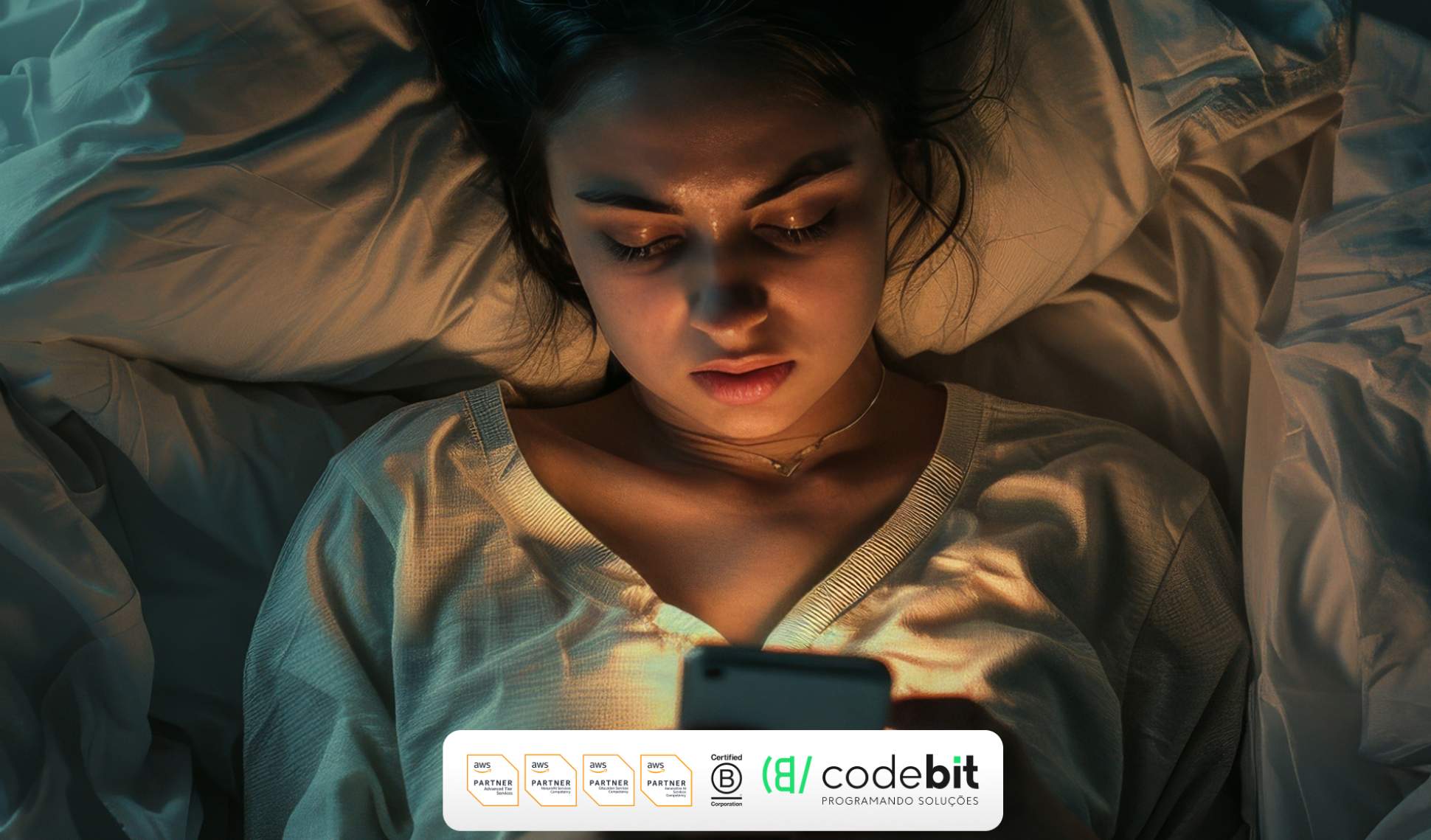
Do you feel anxiety when you cannot find your phone? Do you compulsively check your smartphone even without receiving notifications? Do you get anxious just thinking about running out of battery or internet connection? If the answer to all these questions is yes, you may be among the thousands of Brazilians suffering from nomophobia — a condition that has been growing silently and transforming our relationship with technology into a public health issue.
A study by nomophobia.com, a portal dedicated to the subject, revealed that 60% of Brazilians report anxiety when they do not have their cell phones with them. The survey, conducted with more than 3,000 Latin Americans, including Argentines, Brazilians, Chileans, Colombians, Mexicans, and Peruvians, showed that 87% of respondents consider themselves dependent on their smartphones for their daily activities.
What is nomophobia
Derived from the English expression "no mobile phone phobia", the term "nomophobia" describes the irrational fear of being without a cell phone or unable to use it. But this is not just a passing annoyance: the World Health Organization (WHO) already classifies digital dependency as a real pathology, with physical and emotional symptoms comparable to those of chemical dependency.
In Brazil, the problem takes on even more worrying dimensions. According to data from the Electronics Hub portal, the country ranks second in the world in screen time, with Brazilians spending approximately 9 hours daily in front of electronic devices, second only to South Africa. This behavior has direct consequences on the population's mental health, especially among children and adolescents.
The science behind the problem
Other scientific studies have confirmed the gravity of the situation. A study published in the Brazilian Journal of Health Review in 2024 revealed that nomophobia is directly associated with psychiatric disorders in adolescents and young adults, including symptoms of depressed mood, anhedonia (the inability to feel pleasure), sleep and appetite disturbances, as well as significant impairment in interpersonal relationships.
The COVID-19 pandemic further worsened the scenario. A study by the Oswaldo Cruz Foundation, published in the RECIIS journal in 2024, evaluated the impact of social isolation on nomophobia levels in Brazil. The results showed that confinement significantly increased indices of digital dependency, mainly among women aged 20 to 29 and 50 to 59.
Research from 2025 also demonstrated that nomophobia plays a mediating role between the intensity of technology use and Burnout syndrome in the workplace, showing that the problem transcends personal life and directly affects productivity and professional well-being.
The silent symptoms
Like any mental condition, nomophobia manifests itself in various ways and gathers psychological, physical, and behavioral symptoms. Check below some of the most frequent symptoms according to this differentiation.
Psychological symptoms:
Intense anxiety when being without the phone
Compulsive checking of the device even for no reason
Irrational fear of losing information or connections
Social isolation to remain in the virtual world
A feeling of greater happiness in the digital environment than in the real one
Physical symptoms:
Sleep disturbances caused by nighttime cell phone use
Concentration and productivity issues
Constant mental fatigue
Withdrawal symptoms similar to those of chemical dependency
Behavioral impacts:
Difficulty maintaining face-to-face conversations
Decrease in academic or professional performance
Neglect of daily responsibilities
Deterioration of personal relationships
The school as a thermometer of the problem
The severity of nomophobia is evident in the school context. In 2025, Brazil enacted Law No. 15,100, which regulates the use of portable electronic devices in basic education schools. The legislation comes as a response to the negative impact that digital dependency causes on concentration ability, academic performance, and students' social interaction.
Educators report growing difficulties in maintaining students' attention, who exhibit impulsive behaviors, low frustration tolerance, and an immediate-gratification mindset — typical characteristics of someone who has developed technology dependency. The cult of speed, marked by content accelerated at 2x, 30-second videos, and endless feeds, is forming a generation with less patience for processes that require time and reflection. This is without taking into account the algorithm itself, which works 24 hours a day to deliver only what the user likes, reinforcing preferences, concepts, and ideologies, which can sometimes be harmful, closing the internet user in a bubble that prevents them from seeing other cultures and information.
Technological solutions for a technological problem
Paradoxically, technology itself can be part of the solution. The market already offers tools developed specifically to help control excessive internet use, addressing the problem in a preventive and structural way.
One of these solutions is CodeWall, an innovative solution that features an app and a physical device that acts directly at the source of the problem: the Wi-Fi. Unlike other solutions that can be easily uninstalled or bypassed, CodeWall allows managing the internet usage time of the entire family in a centralized way, establishing healthy limits without depending on the individual cooperation of each user.
This type of approach is particularly effective because:
Removes the need for constant individual control
Establishes clear and consistent boundaries for the whole family
Cannot be easily disabled by anxious users
Allows gradually reducing usage time without abrupt cuts
Works on all devices connected to the network, whether they are smartphones, TVs, computers, laptops, tablets, or video games.
Other complementary digital tools include usage monitoring apps, website blockers during specific hours, and native smartphone features that track the time spent on each app.
The fundamental role of family and digital education
Despite being efficient, these solutions are only a support to solve the problem. Specialists are unanimous: it is necessary to establish a multidisciplinary approach, which includes conscious digital education, clear and consistent boundaries, family example, alternative activities, and, in more severe cases, monitoring with professionals specialized in behavioral dependencies.
It is necessary to teach children and adolescents about the risks of digital dependency from an early age, developing a critical eye towards technology use. Establishing screen-free times, especially before bed and during meals, is essential to developing a healthier relationship with the internet. In addition, parents and guardians need to model the behavior they wish to see in their children, encouraging hobbies, sports, and face-to-face social interactions that compete positively with cell phone use.
When the screen goes dark, what remains?
Nomophobia reveals a paradox of the digital age: we have never been so connected virtually and so disconnected emotionally. Technology was created to make our lives easier, not to dominate them. Recognizing this problem is the first step to regaining control.
With 60% of the Brazilian population already affected, and the country ranking second in the world in screen time, we can no longer ignore the signs. Nomophobia is not a character weakness or a lack of willpower — it is a real condition that demands attention, understanding, and coping strategies.
Fortunately, with the increasing recognition of the problem, increasingly sophisticated solutions are also emerging. Tools like CodeWall, combined with digital education, family support, and, when necessary, professional monitoring, can help build a healthier and more balanced relationship with technology.
After all, the cell phone should be a tool at our service, not a master we compulsively serve. It is time to turn off the screen and light up again the connections that truly matter: those made eye-to-eye, heart-to-heart.


" width="15.500294250860316px"><path d="M 0 15.475 L 0 0 L 15.5 0 L 15.5 15.475 Z" fill="transparent" height="15.475099999999998px" id="tPiDQU_MP" width="15.5px"/><path d="M 3.167 1.589 C 3.847 0.724 4.607 0.171 5.61 0.046 C 6.532 -0.07 7.436 0.022 8.277 0.451 C 9.235 0.938 9.681 1.797 9.877 2.797 C 9.987 3.364 10.049 3.948 10.056 4.525 C 10.079 6.395 10.055 8.265 10.075 10.135 C 10.08 10.527 9.944 10.648 9.574 10.641 C 8.799 10.627 8.023 10.63 7.248 10.644 C 6.911 10.65 6.787 10.528 6.789 10.181 C 6.803 8.533 6.799 6.884 6.789 5.236 C 6.788 4.892 6.754 4.545 6.698 4.206 C 6.57 3.433 6.106 2.974 5.443 2.925 C 4.405 2.849 3.714 3.206 3.495 4.018 C 3.37 4.478 3.333 4.972 3.326 5.451 C 3.306 7.002 3.307 8.555 3.327 10.105 C 3.332 10.504 3.208 10.654 2.807 10.644 C 2.032 10.625 1.257 10.63 0.481 10.642 C 0.156 10.647 -0.001 10.546 0 10.193 C 0.007 7.035 0.006 3.876 0 0.718 C 0 0.391 0.104 0.24 0.458 0.249 C 1.219 0.269 1.981 0.267 2.743 0.252 C 3.068 0.245 3.197 0.361 3.17 0.688 C 3.148 0.948 3.166 1.211 3.166 1.589 Z" fill="rgb(245, 240, 237)" height="10.64451194394125px" id="Hw1mXDepj" transform="translate(5.425 4.831)" width="10.075487656011685px"/><path d="M 3.284 5.2 C 3.284 6.764 3.27 8.327 3.292 9.892 C 3.297 10.284 3.158 10.403 2.79 10.396 C 2.015 10.382 1.24 10.386 0.465 10.399 C 0.14 10.403 -0.001 10.305 0 9.947 C 0.012 6.792 0.012 3.637 0.002 0.481 C 0.001 0.123 0.105 -0.01 0.473 0.001 C 1.261 0.023 2.05 0.02 2.839 0.004 C 3.183 -0.003 3.294 0.124 3.29 0.467 C 3.276 2.044 3.284 3.623 3.284 5.2 Z" fill="rgb(245, 240, 237)" height="10.39869818980116px" id="sgvgyFXCr" transform="translate(0.237 5.076)" width="3.292113077251912px"/><path d="M 3.768 1.898 C 3.761 2.945 2.91 3.782 1.859 3.772 C 0.828 3.763 -0.012 2.892 0 1.842 C 0.012 0.824 0.864 -0.003 1.897 0 C 2.956 0.003 3.776 0.834 3.768 1.898 Z" fill="rgb(245, 240, 237)" height="3.772444228811899px" id="M8BOm1cI0" transform="translate(0 0)" width="3.768370362042166px"/></g></svg>)
" height="17px" id="G9twDfI1x" transform="translate(2 2)" width="17px"/></svg>)
" height="17px" id="q6YSjVL3w" transform="translate(6 2)" width="8.5px"/></svg>)
" height="12.720532384492868px" id="Jh_taQ7si" transform="translate(1 3.586)" width="18.00050025px"/></svg>)