Information Security
7 new privacy tools for those working from home
How to protect data, devices, and your home network without slowing down your computer
05/19/2025
Leonardo Fróes


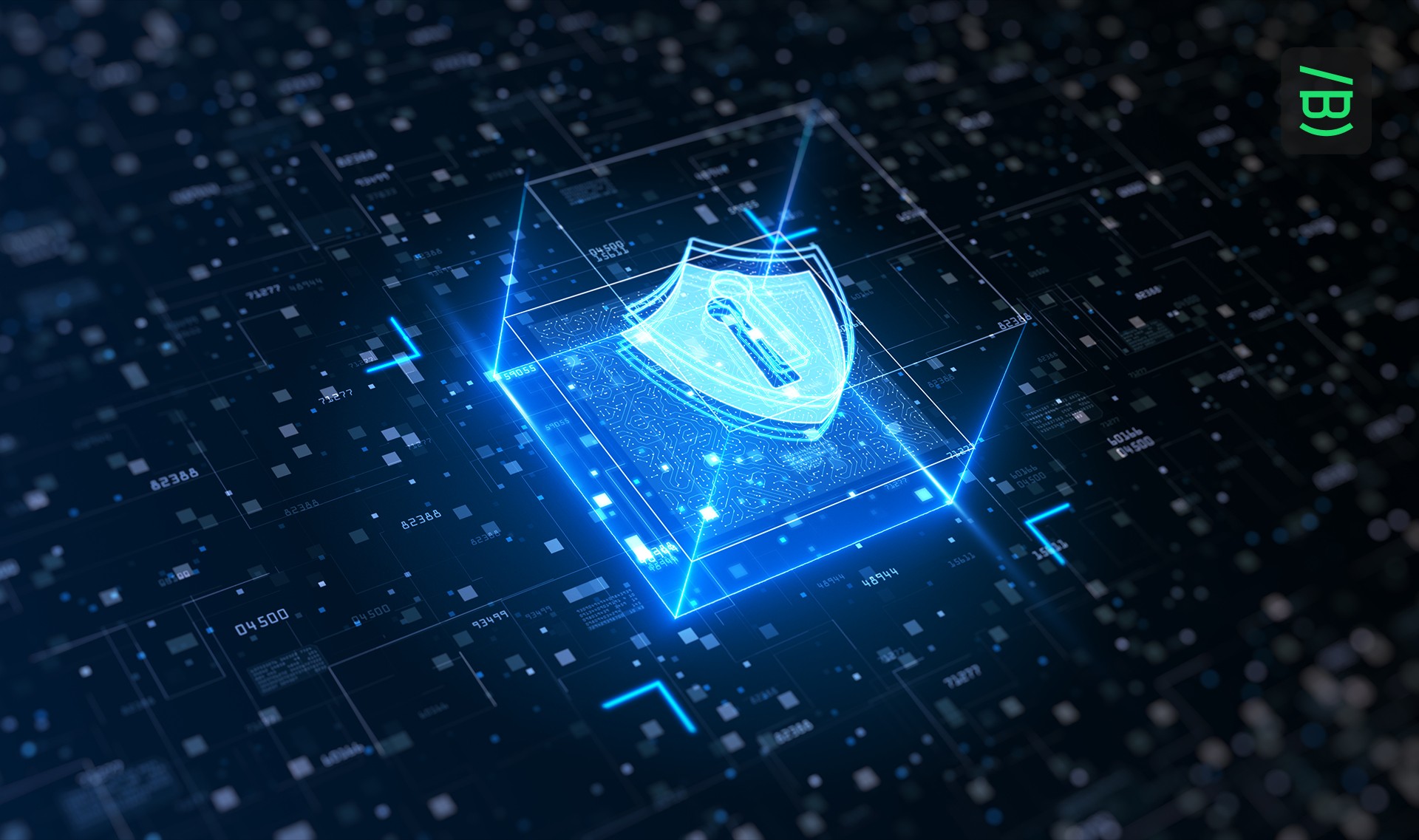
Home office is no longer the exception. Recent market research indicates that a large portion of companies have permanently adopted hybrid or fully remote models.
A survey by consulting firm Cushman & Wakefield, for example, showed that more than 70% of evaluated organizations plan to maintain some level of remote work in the long term.
Flexibility is here to stay. But with it, new vulnerability points have emerged.
The home network, previously used basically for streaming and social networks, now carries contracts, client data, corporate system access, and strategic information. The personal laptop became a workstation. The living room Wi-Fi became an extension of the company's infrastructure.
The question is no longer "is it worth investing in security?" and is now: which tools actually protect without compromising performance, usability, and productivity?
1- Home VPN
The VPN (Virtual Private Network) is already well-known in the corporate environment, but its residential use has grown significantly in recent years.
In the context of home office, it serves three main functions:
Encrypts data traffic end-to-end.
Reduces risk on public or untrusted Wi-Fi networks.
Makes interception, Man-in-the-Middle (MitM) attacks, and digital spying difficult.
The problem with traditional VPNs is the impact on performance. Older models can generate noticeable lag, especially during video calls or uploading heavy files.
The new generations of VPN use more efficient protocols (like WireGuard) and offer:
Optimized routing.
Lower CPU consumption.
Automatic connection on insecure networks.
For those who work with sensitive data or access corporate systems outside the company's internal network, a home VPN is no longer a differentiator and has become a baseline layer of protection.
2- Family password managers
According to public data from Microsoft, thousands of password-based attacks happen per second worldwide. In the remote environment, the risk increases because the employee accesses multiple platforms from a single device.
Weak or reused passwords continue to be one of the main security gaps.
Password managers have evolved. Today, family and corporate versions offer:
Encrypted vaults.
Automatic strong password generation.
Secure autofill.
Real-time breach alerts.
Secure credential sharing.
For those who share devices at home, this type of tool also helps separate personal and professional environments, reducing the risk of accidental exposure.
Furthermore, the impact on system performance is practically zero, as most operate as lightweight browser extensions or apps with low resource consumption.
3- Multi-factor authentication (MFA)
Multi-factor authentication requires something beyond the traditional password: it could be a temporary code generated in an authenticator app, biometrics, or a physical security key.
In the context of home office, this layer is especially relevant for:
Accessing corporate emails.
Financial platforms.
CRMs.
Internal systems and sensitive environments.
Even if a credential is compromised in a phishing attack, the attacker would still need the second validation to enter the system. This drastically reduces the risk of successful intrusions.
Another important point is that MFA is lightweight. It barely interferes with machine performance and can be implemented easily.
4- Intelligent network monitoring
With the changes brought by remote work, the home has started to concentrate a much larger number of connected devices, from computers and cell phones to televisions, cameras, and virtual assistants. Every new connected point expands the attack surface.
It is in this scenario that intelligent network monitoring solutions, like CodeWall, come in.
The proposal is to make visible what usually goes unnoticed: who is connected, what kind of traffic is flowing, and if there are suspicious behaviors.
With real-time monitoring, identification of unknown devices, and the creation of smart routines, the user can act quickly in the face of any anomaly. The idea is not to turn the home into a complex technical environment, but to allow control and predictability with just a few clicks.
In addition to professional protection, there is a positive side effect: more digital organization and more security for everyone using the network, including family members.
With just a few clicks, the user can visualize network behavior and act quickly.
The indirect benefit is relevant: in addition to professional security, there is a positive impact on the family environment, with more predictability and less risk of external intrusions.
Read also: Screen time: what is the healthy limit for children and teenagers?
5- Virtual firewall and WAF
During the migration to home office, many companies realized that relying solely on a traditional physical firewall was not enough.
The virtual firewall emerged as a more flexible alternative, allowing the creation of secure connections and enforcement of access policies even with distributed teams. It adapts better to the growth in the number of remote users and reduces the need for additional physical infrastructure.
The WAF (Web Application Firewall) has become a key piece for businesses that operate web applications, especially:
E-commerces.
SaaS platforms.
Online service systems.
Portals with large traffic volumes.
It acts in protection against attacks such as SQL Injection, Cross-Site Scripting (XSS), exploitation of known vulnerabilities, automated bots, and Denial of Service (DoS/DDoS) attacks.
Since many of these solutions already operate in the cloud, the impact on end-user performance tends to be minimal, especially because the protection happens in the application layer, without overloading the home computer.
6- AI-powered email security
Email continues to be the main gateway for cyberattacks. In remote work, this exposure is even greater, since much of the communication happens through electronic messages.
Phishing campaigns have evolved. They use personalized language, simulate internal communications, and exploit urgency to induce clicks.
Modern email protection solutions utilize artificial intelligence to analyze behavior patterns, check sender reputations, and block suspicious attachments before the user has to make any decision.
When this protection is concentrated in the cloud or on the corporate server, the impact on the employee's computer performance is practically nonexistent. Filtering happens before the message reaches the inbox, reducing risk without compromising productivity.
7- DLP and data control
Data Loss Prevention (DLP) monitors the movement of sensitive information and identifies behaviors that deviate from the expected pattern. This is especially relevant when the work device shares space with personal activities, or when corporate files travel through home networks.
Instead of relying solely on user goodwill, DLP acts as a preventive mechanism. It can block unauthorized transfers, log events for auditing, and alert those responsible in case of risk.
For companies subject to the LGPD, this layer is technical, legal, and reputational.
Bonus: culture, training, and productivity tools
Collaboration and management tools (such as task platforms, workflow automation, or document management) have made remote work viable on a large scale. They organize processes, record history of decisions, and allow remote tracking of teams.
However, no technology solves the security problem on its own.
It is fundamental to have clear policies about the use of personal devices, file sharing, and cloud storage. Periodic training on digital scams and best practices helps reduce human errors, which remain one of the main causes of incidents.
Maturity in digital security is born from the balance between appropriate technology and conscious behavior. A healthy remote environment depends on both.
Today, protecting data does not only depend on the IT department, but also on the quality of the home network, the tools used, and the practices adopted daily.
Lighter VPNs, password managers, multi-factor authentication, intelligent network monitoring, and solutions like CodeWall show that it is possible to increase protection without turning the computer into a slow and overloaded machine.
In the consolidating hybrid model, privacy and productivity go hand in hand.



" width="15.500294250860316px"><path d="M 0 15.475 L 0 0 L 15.5 0 L 15.5 15.475 Z" fill="transparent" height="15.475099999999998px" id="tPiDQU_MP" width="15.5px"/><path d="M 3.167 1.589 C 3.847 0.724 4.607 0.171 5.61 0.046 C 6.532 -0.07 7.436 0.022 8.277 0.451 C 9.235 0.938 9.681 1.797 9.877 2.797 C 9.987 3.364 10.049 3.948 10.056 4.525 C 10.079 6.395 10.055 8.265 10.075 10.135 C 10.08 10.527 9.944 10.648 9.574 10.641 C 8.799 10.627 8.023 10.63 7.248 10.644 C 6.911 10.65 6.787 10.528 6.789 10.181 C 6.803 8.533 6.799 6.884 6.789 5.236 C 6.788 4.892 6.754 4.545 6.698 4.206 C 6.57 3.433 6.106 2.974 5.443 2.925 C 4.405 2.849 3.714 3.206 3.495 4.018 C 3.37 4.478 3.333 4.972 3.326 5.451 C 3.306 7.002 3.307 8.555 3.327 10.105 C 3.332 10.504 3.208 10.654 2.807 10.644 C 2.032 10.625 1.257 10.63 0.481 10.642 C 0.156 10.647 -0.001 10.546 0 10.193 C 0.007 7.035 0.006 3.876 0 0.718 C 0 0.391 0.104 0.24 0.458 0.249 C 1.219 0.269 1.981 0.267 2.743 0.252 C 3.068 0.245 3.197 0.361 3.17 0.688 C 3.148 0.948 3.166 1.211 3.166 1.589 Z" fill="rgb(245, 240, 237)" height="10.64451194394125px" id="Hw1mXDepj" transform="translate(5.425 4.831)" width="10.075487656011685px"/><path d="M 3.284 5.2 C 3.284 6.764 3.27 8.327 3.292 9.892 C 3.297 10.284 3.158 10.403 2.79 10.396 C 2.015 10.382 1.24 10.386 0.465 10.399 C 0.14 10.403 -0.001 10.305 0 9.947 C 0.012 6.792 0.012 3.637 0.002 0.481 C 0.001 0.123 0.105 -0.01 0.473 0.001 C 1.261 0.023 2.05 0.02 2.839 0.004 C 3.183 -0.003 3.294 0.124 3.29 0.467 C 3.276 2.044 3.284 3.623 3.284 5.2 Z" fill="rgb(245, 240, 237)" height="10.39869818980116px" id="sgvgyFXCr" transform="translate(0.237 5.076)" width="3.292113077251912px"/><path d="M 3.768 1.898 C 3.761 2.945 2.91 3.782 1.859 3.772 C 0.828 3.763 -0.012 2.892 0 1.842 C 0.012 0.824 0.864 -0.003 1.897 0 C 2.956 0.003 3.776 0.834 3.768 1.898 Z" fill="rgb(245, 240, 237)" height="3.772444228811899px" id="M8BOm1cI0" transform="translate(0 0)" width="3.768370362042166px"/></g></svg>)
" height="17px" id="G9twDfI1x" transform="translate(2 2)" width="17px"/></svg>)
" height="17px" id="q6YSjVL3w" transform="translate(6 2)" width="8.5px"/></svg>)
" height="12.720532384492868px" id="Jh_taQ7si" transform="translate(1 3.586)" width="18.00050025px"/></svg>)