Technology
The Importance of Ethics in the Use of Artificial Intelligence
The Importance of Ethics in Using Artificial Intelligence. Learn more on CodeBlog!
07/22/2024
Ana Elisa Alqualo


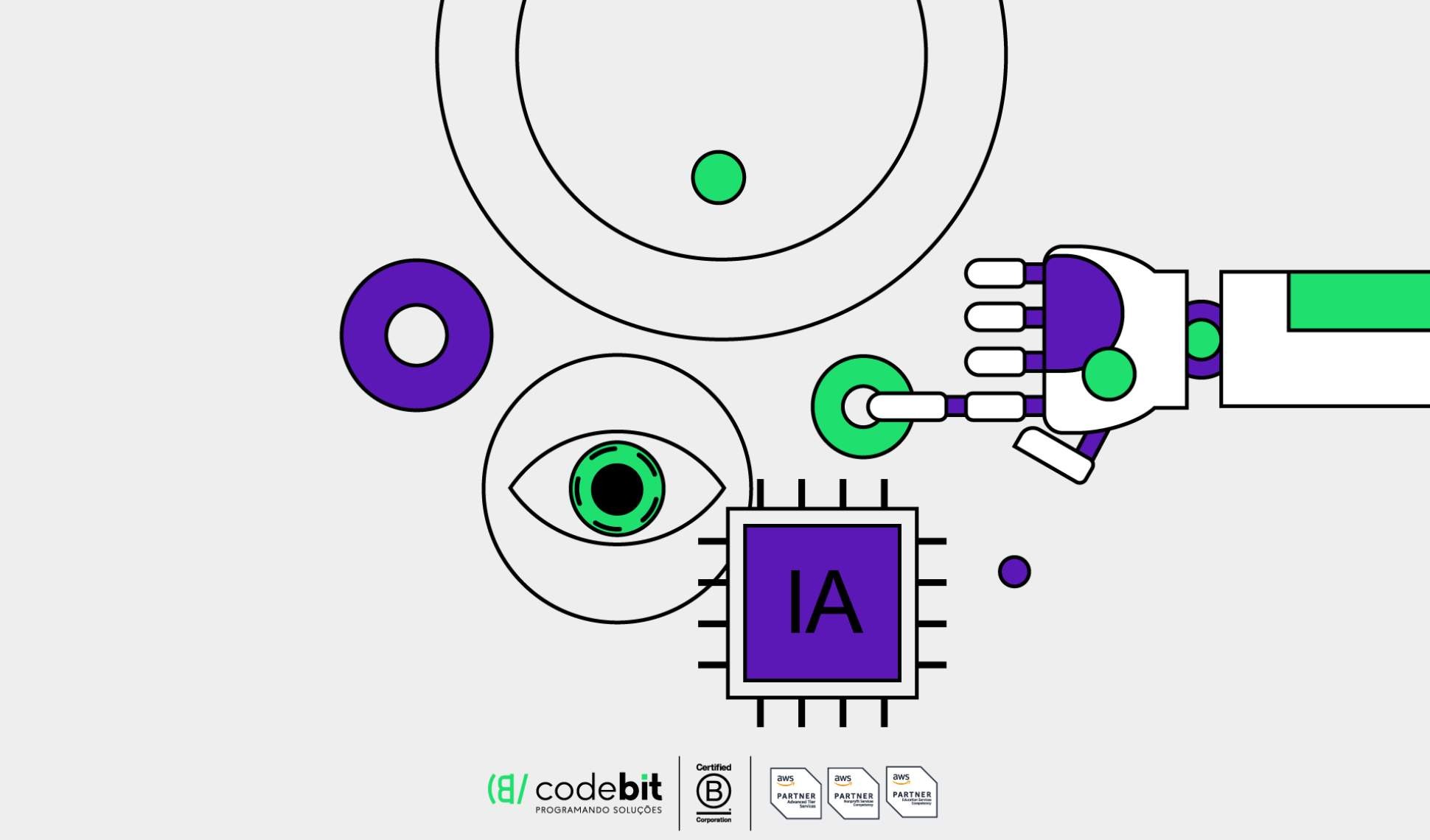
Artificial intelligence is a revolutionary technology that is transforming the world we live in. It has the power to automate complex tasks, predict behaviors, and even make decisions. But with all this power comes the responsibility to use it ethically.
According to research, Brazil is the leader in the adoption of artificial intelligence in Latin America, with 98% of companies experimenting with and applying the technology in their marketing channels. Therefore, faced with such a significant percentage, it is extremely important that these users utilize it in accordance with the ethical standards that govern human conduct.
Even with many benefits, AI brings with it some significant questions and challenges for technology professionals and society as a whole.
In the current context, it is essential to develop systems responsibly, taking into account not only efficiency and performance, but also the ethical and social implications of these tools that interact with and directly impact people's lives.
Faced with this, it is essential for us to reflect on these issues and think of actions that seek to minimize the risks of AI. In this way, we will promote technological advancement in an inclusive manner without violating the values dictated by the culture in which we are inserted.
The Importance of Ethics in the Use of Artificial Intelligence
Artificial Intelligence, known by the acronym AI, is an area of computer science that studies, analyzes, and develops devices with the ability to simulate the human capacity for reasoning.
And this is possible through the development of algorithms and systems (symbolic logic, artificial neural networks, genetic algorithms, and expert systems) that can perform tasks carried out by human intelligence, such as reasoning, recognizing patterns, making decisions, among other activities.
Furthermore, another major characteristic of AI is its potential for continuous improvement, which occurs in accordance with the collection of new information.
The recent popularization of AI was essential for the automation of tasks, gaining efficiency in corporate operations, and optimizing quality in the delivery of products and services.
The Importance of Ethics in AI
Artificial Intelligence systems are trained based on large data sets, which can reflect and amplify existing prejudices in society. If this data contains racial, gender bias or other forms of discrimination, AI systems can perpetuate and expand these inequalities.
Another ethical issue is privacy and security, as a High volume of data is used to train and feed Artificial Intelligence systems. The use of sensitive personal data can result in privacy violations and potentially be exploited by malicious actors.
AI systems are highly complex, making it difficult to attribute responsibility for their actions. When an Artificial Intelligence system makes an incorrect or harmful decision, who is responsible? Developers, manufacturers, users, or the AI itself? In many AI systems, it becomes difficult to understand certain decisions and conclusions.
There is also an ethical issue regarding employability, as artificial intelligence has the potential to automate many tasks previously performed by humans, which generates concerns about the impact on the labor market.
Another concern is that AI can also be used to spread misinformation and manipulate opinions. Recommendation algorithms on social media platforms can create information bubbles and reinforce pre-existing beliefs. In addition, the ability to create realistic fake content, known as deep fakes, raises concerns.
But, to what extent can personal information be used without causing harm to people's image or dignity?
The answer to this question is to use artificial intelligence ethically, which involves considering moral aspects and human values when designing, developing, and using AI systems. It is a principle that seeks to ensure that AI systems are used in a responsible, fair, transparent manner that respects the rights and privacy of citizens.
Given this new, widely accessible - and dangerous - perspective, government entities worldwide are seeking the implementation of laws aimed at protecting sensitive information, as well as the prior authorization of data that can be used, both for and against its holders, such as the LGPD.
The General Data Protection Law (LGPD) brought with it the promotion of greater awareness regarding the importance of privacy and the rights of data subjects.
Since then, the National Data Protection Authority (ANPD) has observed an increase in the demand for transparency and responsibility in the corporate landscape.
As a consequence, many companies have begun to redouble their attention when dealing with the personal data of customers, employees, partners, and suppliers.
In addition, there was also an increase in the adoption of new practices and technologies to facilitate business compliance with the LGPD, such as, for example, the implementation of privacy policies and procedures, employee training and capacity building, and the application of new resources focused on information security, such as cloud computing, artificial intelligence, and machine learning.
However, it is necessary to highlight that ethics in the use of Artificial Intelligence goes far beyond complying with laws.
The concept also involves raising awareness about recognizing potential dangers (such as invasion of privacy, algorithmic discrimination, and information manipulation) and adopting practices that prioritize integrity and respect for individual rights.
In this context, organizations have the responsibility to ensure that AI is used in a fair and secure manner, promoting trust and transparency in all of their operations.
Why are Ethics and Artificial Intelligence Inseparable?
According to data published by the World Economic Forum report in 2023, it is expected that, in the future, this resource will be applied in nearly 75% of the companies surveyed.
The numbers indicate a considerable increase in corporate turnover, since, in this regard, opinions are divided: - while 50% of organizations expect AI to contribute to job growth, 25% expect it to lead to job losses.
In this sense, one of the main pillars of digital ethics is to create and enable mechanisms so that AI does not directly impact unemployment. To achieve this, the most urgent action would be to train and qualify professionals for the new markets that will emerge.
The need for professionals to know how to deal with machines, and consequently, extract all the possibilities they have to offer is unquestionable. For this, they need, above all, expertise and training.
Consequently, qualification, as well as the continuous preparation of human resources, is a decisive strategy for implementing and maintaining ethics during the application of artificial intelligence.
It is therefore up to companies to invest in a culture of learning, with meetings, dialogues, and training programs, to ensure that their employees keep up with and adapt to technological evolution.
This is the only viable path to certify the proper development and use of AI, taking into account factors such as privacy, transparency, protection, and algorithmic bias.
After all, in addition to an obligation, maintaining ethics is also an indispensable competitive advantage for businesses to win the credibility of customers.
A Clear Example of the Impact of Ethics on AI
Artificial Intelligence resources are independent and can improve on their own, and it is this lack of control and monitoring that allows them to make mistakes. The only alternative to prevent disastrous failures is through ethics.
A clear example occurred in 2016, when Microsoft released machine learning using the Twitter platform (now X) as a data source. What the company did not foresee is that, in less than 24 hours, the robot would become racist. The case gained global repercussion and reinforced the warning about the importance of keeping systems properly trained and updated with reliable data sources.
It is worth remembering that this process involves, above all, human skills and expertise, to validate whether the information is true and whether the codes are being executed properly.
Certainly, technology also challenges professionals to deal with numerous ethical factors, such as data security issues, privacy, digital inequality, and all the social impact caused by automation.
It is necessary for companies and their professionals to consider all these implications while developing and implementing new technological solutions. Above all, the most important thing is to find a balance between progress and ethics to ensure a sustainable and equitable corporate future.
The social and economic impact of AI must also be carefully evaluated, seeking to minimize inequalities and maximize benefits for society as a whole. By considering an ethical approach to AI, promoting a continuous dialogue between professionals, researchers, governments, and communities to ensure that its potential is explored in an ethical and beneficial way for everyone, technology professionals are building a fairer, more transparent, and trustworthy digital future – where AI is used to improve people's lives and drive progress in a responsible manner.
Although it is clear that technology is shaping the landscape of work in a complex way, offering opportunities and challenges simultaneously, one thing is certain: adaptability, continuous learning, and understanding the ethical and social implications are key elements for those who wish to thrive.
Therefore, an ethical posture regarding the use of AI helps businesses adapt to digital transformation and grow responsibly. Want to implement smart tools in your company safely? Get in touch with CodeBit and discover our AI solutions!




" width="15.500294250860316px"><path d="M 0 15.475 L 0 0 L 15.5 0 L 15.5 15.475 Z" fill="transparent" height="15.475099999999998px" id="tPiDQU_MP" width="15.5px"/><path d="M 3.167 1.589 C 3.847 0.724 4.607 0.171 5.61 0.046 C 6.532 -0.07 7.436 0.022 8.277 0.451 C 9.235 0.938 9.681 1.797 9.877 2.797 C 9.987 3.364 10.049 3.948 10.056 4.525 C 10.079 6.395 10.055 8.265 10.075 10.135 C 10.08 10.527 9.944 10.648 9.574 10.641 C 8.799 10.627 8.023 10.63 7.248 10.644 C 6.911 10.65 6.787 10.528 6.789 10.181 C 6.803 8.533 6.799 6.884 6.789 5.236 C 6.788 4.892 6.754 4.545 6.698 4.206 C 6.57 3.433 6.106 2.974 5.443 2.925 C 4.405 2.849 3.714 3.206 3.495 4.018 C 3.37 4.478 3.333 4.972 3.326 5.451 C 3.306 7.002 3.307 8.555 3.327 10.105 C 3.332 10.504 3.208 10.654 2.807 10.644 C 2.032 10.625 1.257 10.63 0.481 10.642 C 0.156 10.647 -0.001 10.546 0 10.193 C 0.007 7.035 0.006 3.876 0 0.718 C 0 0.391 0.104 0.24 0.458 0.249 C 1.219 0.269 1.981 0.267 2.743 0.252 C 3.068 0.245 3.197 0.361 3.17 0.688 C 3.148 0.948 3.166 1.211 3.166 1.589 Z" fill="rgb(245, 240, 237)" height="10.64451194394125px" id="Hw1mXDepj" transform="translate(5.425 4.831)" width="10.075487656011685px"/><path d="M 3.284 5.2 C 3.284 6.764 3.27 8.327 3.292 9.892 C 3.297 10.284 3.158 10.403 2.79 10.396 C 2.015 10.382 1.24 10.386 0.465 10.399 C 0.14 10.403 -0.001 10.305 0 9.947 C 0.012 6.792 0.012 3.637 0.002 0.481 C 0.001 0.123 0.105 -0.01 0.473 0.001 C 1.261 0.023 2.05 0.02 2.839 0.004 C 3.183 -0.003 3.294 0.124 3.29 0.467 C 3.276 2.044 3.284 3.623 3.284 5.2 Z" fill="rgb(245, 240, 237)" height="10.39869818980116px" id="sgvgyFXCr" transform="translate(0.237 5.076)" width="3.292113077251912px"/><path d="M 3.768 1.898 C 3.761 2.945 2.91 3.782 1.859 3.772 C 0.828 3.763 -0.012 2.892 0 1.842 C 0.012 0.824 0.864 -0.003 1.897 0 C 2.956 0.003 3.776 0.834 3.768 1.898 Z" fill="rgb(245, 240, 237)" height="3.772444228811899px" id="M8BOm1cI0" transform="translate(0 0)" width="3.768370362042166px"/></g></svg>)
" height="17px" id="G9twDfI1x" transform="translate(2 2)" width="17px"/></svg>)
" height="17px" id="q6YSjVL3w" transform="translate(6 2)" width="8.5px"/></svg>)
" height="12.720532384492868px" id="Jh_taQ7si" transform="translate(1 3.586)" width="18.00050025px"/></svg>)