Health
Electronic Signature in healthcare: a basic guide on the topic
Electronic Signature in healthcare: a basic guide on the topic
06/23/2023


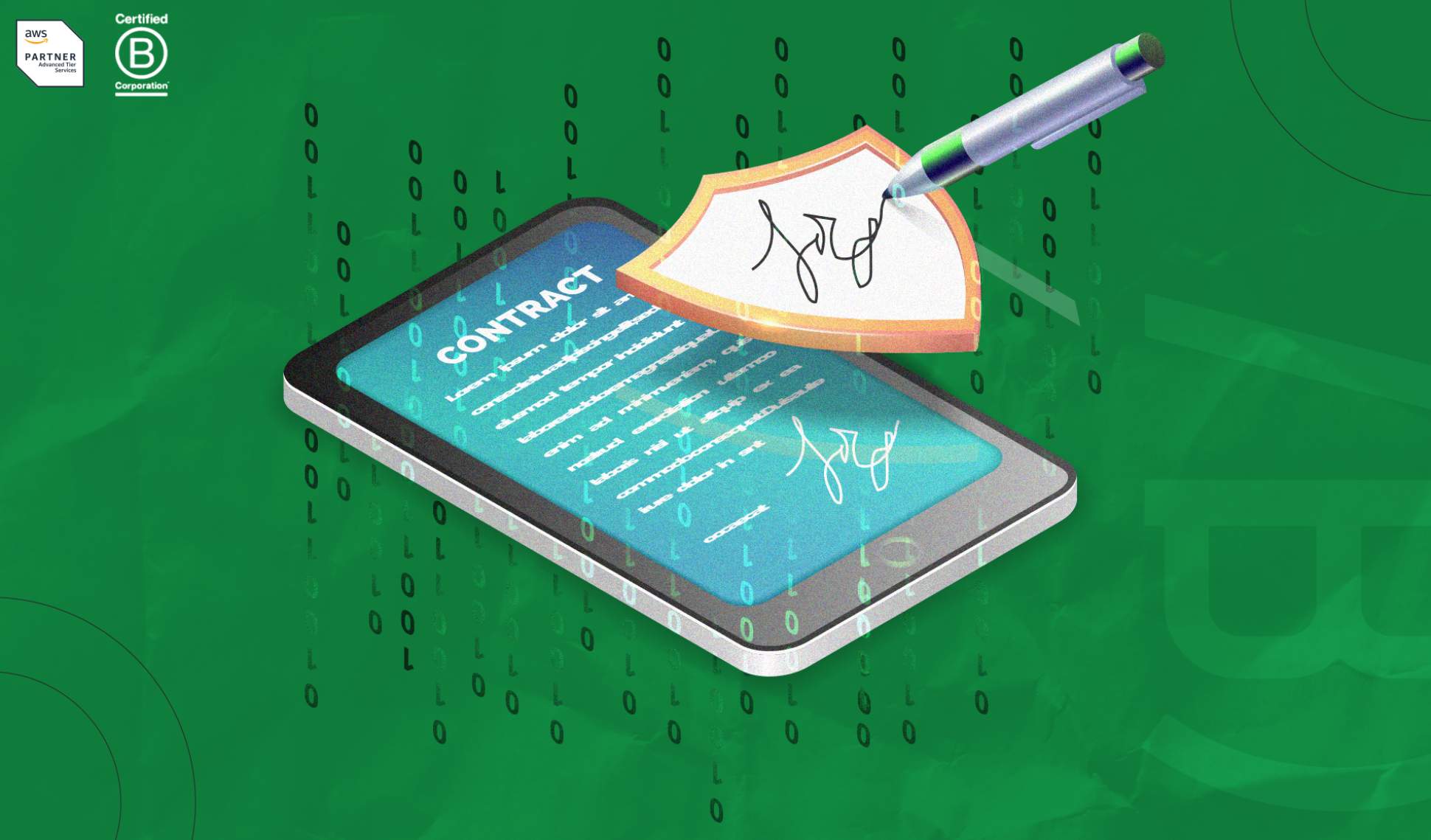
Have you ever stopped to think about the amount of paper that is daily printed and signed in hospitals? Medication prescriptions, medical records, patient histories, health insurance requests, and various other documents that, when in physical format, involve bureaucratic processes and even hinder the time of healthcare professionals, who sometimes end up delaying patient care.
A study conducted back in 2018 in the United States found that nurses spend, on average, a quarter of their shift managing paperwork, while doctors can spend up to 49.2% of their working hours filling out documents.
It is worth remembering that this analysis was conducted before the pandemic, meaning it did not cover the period when medical consultations and appointments intensified exponentially.
Currently, the reality of hospitals involves pressure for deliveries, overloaded systems, and, projects mainly, great difficulty in managing documents. But the good news is that there are solutions to optimize these processes: the digitization of documents and electronic signatures. Together, these tools free professionals from bureaucratic tasks, reduce the chances of errors, and contribute to a more efficient healthcare service.
Do you want to discover how electronic signatures work and what advantages they can offer to your institutions?
Keep reading and check out the basic guide that the CodeBlog team has prepared for you.
Is it possible to have an electronic signature in the healthcare sector?
Yes. The use of electronic signatures in healthcare is supported by Law No. 14,063, of September 23, 2020, which provides for the use of digital signatures in interactions with public entities, including health bodies.
The legislation recognizes the validity and authenticity of digitally signed documents and guarantees the security and integrity of the information.
What are the types of electronic signatures in the healthcare sector?
Electronic signatures aimed at the healthcare sector are classified into three most common types. Check them out in the following topics:
Simple Electronic Signature
Ideal for low-risk transactions, it only requires the CPF (taxpayer registry) number.
Advanced Electronic Signature
Indicated for transactions involving the public sector that do not present confidential information. To be viable, it requires some certificates not issued by ICP-Brasil.
Qualified Electronic Signature
Uses a digital certificate, under the terms of § 1 of art. 10 of Provisional Measure No. 2,200-2, of August 24, 2001. It is widely used for medical prescriptions.
Which documents can be electronically signed in the healthcare sector?
► Medical Reports.
►Certificates.
►Medical Records.
►Service contract agreements.
►Internal forms.
►Medical prescriptions.
►Other documents.
It is worth mentioning that among these documents, some require a digital certificate issued by ICP-Brasil.
Electronic signature in healthcare: why invest?
Greater ease in online service
There is no doubt that the pandemic greatly intensified online consultations. But did you know that without electronic signatures, this type of service would not be possible?
After all, this digital solution allows various documents to be signed electronically, promoting more security, agility, and directly benefiting the professionals and patients involved.
Savings
By signing a document electronically, there is no need to print sheets of paper or use printer cartridges, which in itself already promotes cost reduction.
In addition, online medical care is also a great ally for savings in healthcare institutions. After all, with it, there is no need to rent or allocate an environment for the physical storage of documents, such as servers or physical archives.
Administrative optimization
According to the legislation, all medical documents must be stored, but the question is: where? Indeed, keeping this paperwork in boxes, in addition to taking up a lot of space, still consumes time and makes the operation difficult for the team responsible for the task.
On the other hand, digital storage promotes much more practicality, availability, security, and time optimization.
Security
It is certain that documents, when in physical format, are more susceptible to loss, theft, and other incidents such as, for example, natural disasters.
On the other hand, when electronic signatures are stored in a cloud environment, they become more secure, thanks to the use of firewalls, security groups, and zones that are organized in layers.
In addition, the surveillance and monitoring of data become the responsibility of the cloud computing provider.
The best cloud servers, such as AWS, from Amazon, offered by CodeBit, provide a range of resources to keep their data centers free of vulnerabilities, apply internationally recognized methodologies to prevent data breaches, and gather highly qualified professionals to deal with this theme.
In other words, it is possible to state that regarding data security and sensitive patient information, cloud computing is an excellent ally.
And is your healthcare institution already reaping the fruits of all these benefits?
If you want to discover how electronic signatures and cloud computing can revolutionize the processes of your clinic, practice, or hospital, click here, access the CodeBit website, learn about the services, and discover personalized solutions to meet your demands.
Furthermore, keep an eye on CodeBlog. Soon, we will have news here.
A big hug, and see you in the next post!
text post!




" width="15.500294250860316px"><path d="M 0 15.475 L 0 0 L 15.5 0 L 15.5 15.475 Z" fill="transparent" height="15.475099999999998px" id="tPiDQU_MP" width="15.5px"/><path d="M 3.167 1.589 C 3.847 0.724 4.607 0.171 5.61 0.046 C 6.532 -0.07 7.436 0.022 8.277 0.451 C 9.235 0.938 9.681 1.797 9.877 2.797 C 9.987 3.364 10.049 3.948 10.056 4.525 C 10.079 6.395 10.055 8.265 10.075 10.135 C 10.08 10.527 9.944 10.648 9.574 10.641 C 8.799 10.627 8.023 10.63 7.248 10.644 C 6.911 10.65 6.787 10.528 6.789 10.181 C 6.803 8.533 6.799 6.884 6.789 5.236 C 6.788 4.892 6.754 4.545 6.698 4.206 C 6.57 3.433 6.106 2.974 5.443 2.925 C 4.405 2.849 3.714 3.206 3.495 4.018 C 3.37 4.478 3.333 4.972 3.326 5.451 C 3.306 7.002 3.307 8.555 3.327 10.105 C 3.332 10.504 3.208 10.654 2.807 10.644 C 2.032 10.625 1.257 10.63 0.481 10.642 C 0.156 10.647 -0.001 10.546 0 10.193 C 0.007 7.035 0.006 3.876 0 0.718 C 0 0.391 0.104 0.24 0.458 0.249 C 1.219 0.269 1.981 0.267 2.743 0.252 C 3.068 0.245 3.197 0.361 3.17 0.688 C 3.148 0.948 3.166 1.211 3.166 1.589 Z" fill="rgb(245, 240, 237)" height="10.64451194394125px" id="Hw1mXDepj" transform="translate(5.425 4.831)" width="10.075487656011685px"/><path d="M 3.284 5.2 C 3.284 6.764 3.27 8.327 3.292 9.892 C 3.297 10.284 3.158 10.403 2.79 10.396 C 2.015 10.382 1.24 10.386 0.465 10.399 C 0.14 10.403 -0.001 10.305 0 9.947 C 0.012 6.792 0.012 3.637 0.002 0.481 C 0.001 0.123 0.105 -0.01 0.473 0.001 C 1.261 0.023 2.05 0.02 2.839 0.004 C 3.183 -0.003 3.294 0.124 3.29 0.467 C 3.276 2.044 3.284 3.623 3.284 5.2 Z" fill="rgb(245, 240, 237)" height="10.39869818980116px" id="sgvgyFXCr" transform="translate(0.237 5.076)" width="3.292113077251912px"/><path d="M 3.768 1.898 C 3.761 2.945 2.91 3.782 1.859 3.772 C 0.828 3.763 -0.012 2.892 0 1.842 C 0.012 0.824 0.864 -0.003 1.897 0 C 2.956 0.003 3.776 0.834 3.768 1.898 Z" fill="rgb(245, 240, 237)" height="3.772444228811899px" id="M8BOm1cI0" transform="translate(0 0)" width="3.768370362042166px"/></g></svg>)
" height="17px" id="G9twDfI1x" transform="translate(2 2)" width="17px"/></svg>)
" height="17px" id="q6YSjVL3w" transform="translate(6 2)" width="8.5px"/></svg>)
" height="12.720532384492868px" id="Jh_taQ7si" transform="translate(1 3.586)" width="18.00050025px"/></svg>)