Cloud Computing
Consequences of choosing an inadequate cloud
Consequences of choosing an inadequate cloud: discover the main ones in the article that the CodeBlog team has prepared for you
11/27/2023


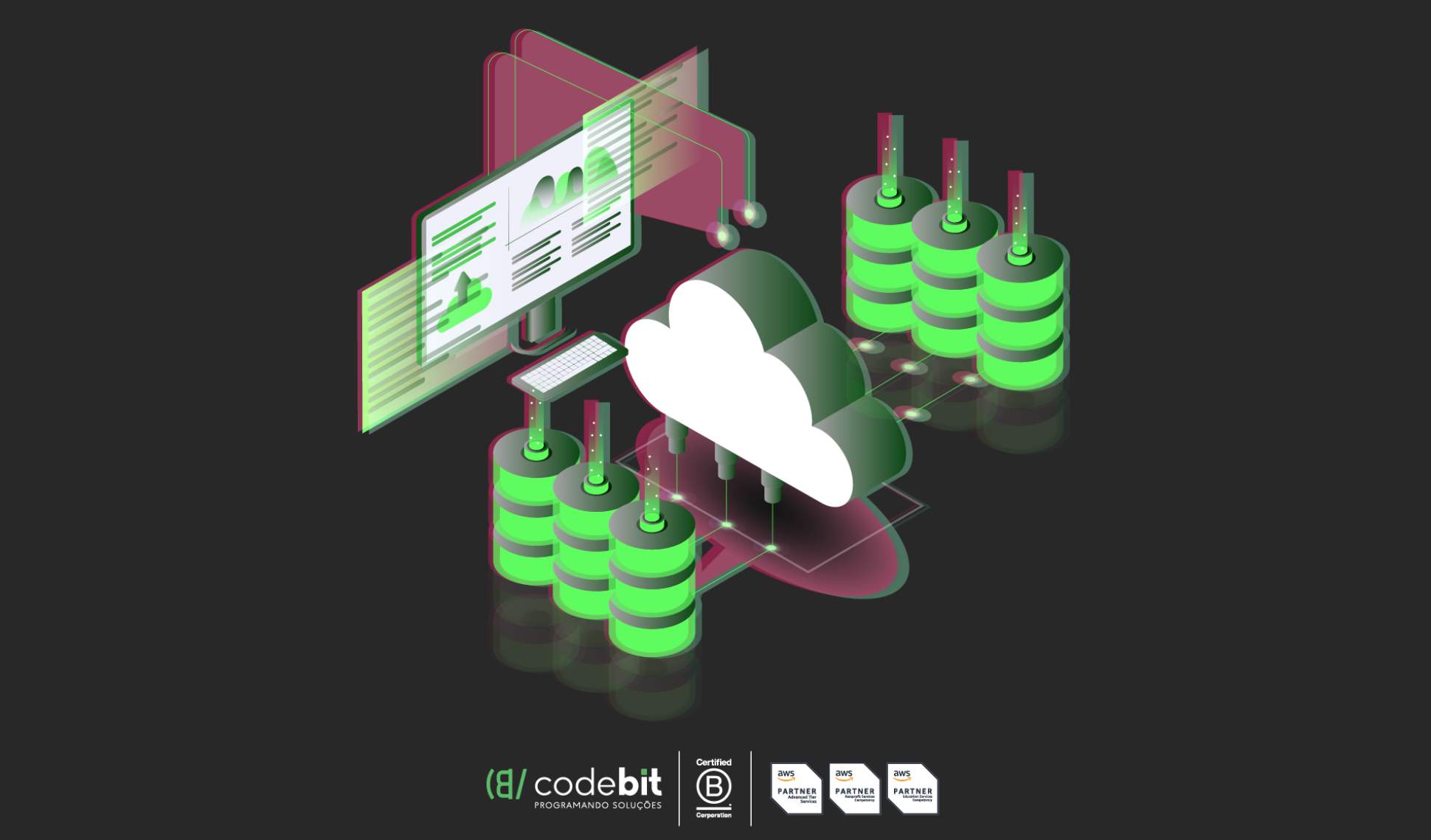
If, until recently, the cloud was the future of business, today, the reality has changed, and this solution is already part of the present of many organizations that wish to optimize their processes and ensure scalable and sustainable development.
The internet-based computing service synthesizes the greatest corporate demands by storing data and application networks in shared environments. In addition to keeping files secure without compromising equipment memory capacity, it also guarantees user access at any time or place, relying only on a device with an internet connection, whether through mobile data or Wi-Fi networks.
According to Gartner (an American consulting firm), by 2025, commercial investments directed towards cloud computing are expected to reach 51% of Information Technology budgets.
But what not everyone knows is that, as much as the cloud offers countless facilities and advantages, to exploit the full potential of the tool and, above all, ensure that the migration process is successful, some care is required, such as, for example, discovering how to choose the most suitable provider to meet the demand of each business.
To help you with this mission, in today's blog post, we from the CodeBlog team present some of the main consequences of hiring an inadequate cloud. Read on to find out more!
Consequences of choosing an inadequate cloud
Each organization has its own products, services, target audience, goals, pain points, and needs. Given this fact, when finding the best cloud computing provider, it is necessary to take each of these factors into account to carry out studies, analysis, and good planning, thereby ensuring that the solution is implemented with due attention, alignment, and monitoring.
Check below some of the impacts that choosing an inadequate cloud can cause:
Security failures:
By migrating an organization's data to a trusted cloud like AWS, which features advanced information security technologies such as multiple protection protocols, backup routines, and constant updates, it is possible to enhance information security.
On the other hand, by hiring a provider that does not offer all security and compliance measures, besides risking system intrusions, a company can also have its sensitive data stolen or lost, suffering various types of losses regarding brand reputation and credibility.
To avoid any type of inconvenience, it is important to observe if the cloud environment provider features functionalities such as: restricting management access to private links, restricting access to source IPs, encryption in network communications, and more.
Financial losses:
When choosing a secure and reliable cloud, like the one developed by AWS and sold by CodeBit, the user only pays for the resources they use.
Furthermore, there is no need to bear the costs of hardware installation, thereby reducing the need to purchase new equipment. On the other hand, when choosing servers that do not offer payment options in the local currency, or work with variable payment types instead of fixed ones, price fluctuations, as well as exchange rate fluctuations, can cause considerable financial losses to companies.
Frustrated expectations:
Last but not least, it must be highlighted that choosing ineffective solutions is a consequence of a lack of study and planning by the contracting company and a lack of support from the service provider company.
In these cases, the result of the sum is frustrated expectations.
Therefore, it is important to rely on recognized, certified providers and always check the type of technology offered, the scalability possibilities, the tools used as support, the expertise level of the professional team, the methodology applied in the migration process, and, mainly, the level of involvement of the supplier in the operation's planning.
How to choose the best cloud for your business?
To choose the best cloud management to meet your needs, it is necessary to analyze all the processes developed by your team and compare service options available on the market.
To help you with this issue, we list below some questions that may be useful during your research:
► Will the company responsible for the provider guide you throughout the implementation process?
► Does the company validate what you really need?
► Can the provider offer a positive return on investment?
► Does the company offer full support to your business and users?
It is worth noting that the best providers are those that offer customer support and explain exactly their responsibilities during and after a potential disaster.
Amazon Web Services (AWS) is considered the most widely adopted and comprehensive cloud platform today. And this is no coincidence; after all, this solution offers over 200 fully featured services from data centers globally. Millions of customers, including fast-growing startups, large enterprises, and government agencies use AWS to reduce their costs and ensure greater agility and innovation.
The global infrastructure of AWS is established through AZs (Availability Zones) which, in practice, involves multiple availability zones and regions, physically separated and isolated to offer users an easier way to design and operate applications and databases.
With high availability, fault tolerance, and full scalability, this infrastructure, unlike traditional ones (which use only one data center), offers users the ability to replicate data and applications across large geographical distances with complete efficiency.
It is a fact that, by migrating to the cloud, in addition to more innovation in processes, organizations can enable new opportunities. But, for this, it is necessary to make an assertive choice and identify a provider capable of completely meeting your demand.
If you intend to adapt your company to a cloud computing environment with reliability and security, rely on CodeBit.
Click here to access the website and check all the services offered by a team of specialists, fully available to support and assist your organization in the implementation and maintenance processes of the cloud model.
Moreover, keep an eye on Codeblog. Soon, we will have a lot of news here.
A big hug and see you in the next post.




" width="15.500294250860316px"><path d="M 0 15.475 L 0 0 L 15.5 0 L 15.5 15.475 Z" fill="transparent" height="15.475099999999998px" id="tPiDQU_MP" width="15.5px"/><path d="M 3.167 1.589 C 3.847 0.724 4.607 0.171 5.61 0.046 C 6.532 -0.07 7.436 0.022 8.277 0.451 C 9.235 0.938 9.681 1.797 9.877 2.797 C 9.987 3.364 10.049 3.948 10.056 4.525 C 10.079 6.395 10.055 8.265 10.075 10.135 C 10.08 10.527 9.944 10.648 9.574 10.641 C 8.799 10.627 8.023 10.63 7.248 10.644 C 6.911 10.65 6.787 10.528 6.789 10.181 C 6.803 8.533 6.799 6.884 6.789 5.236 C 6.788 4.892 6.754 4.545 6.698 4.206 C 6.57 3.433 6.106 2.974 5.443 2.925 C 4.405 2.849 3.714 3.206 3.495 4.018 C 3.37 4.478 3.333 4.972 3.326 5.451 C 3.306 7.002 3.307 8.555 3.327 10.105 C 3.332 10.504 3.208 10.654 2.807 10.644 C 2.032 10.625 1.257 10.63 0.481 10.642 C 0.156 10.647 -0.001 10.546 0 10.193 C 0.007 7.035 0.006 3.876 0 0.718 C 0 0.391 0.104 0.24 0.458 0.249 C 1.219 0.269 1.981 0.267 2.743 0.252 C 3.068 0.245 3.197 0.361 3.17 0.688 C 3.148 0.948 3.166 1.211 3.166 1.589 Z" fill="rgb(245, 240, 237)" height="10.64451194394125px" id="Hw1mXDepj" transform="translate(5.425 4.831)" width="10.075487656011685px"/><path d="M 3.284 5.2 C 3.284 6.764 3.27 8.327 3.292 9.892 C 3.297 10.284 3.158 10.403 2.79 10.396 C 2.015 10.382 1.24 10.386 0.465 10.399 C 0.14 10.403 -0.001 10.305 0 9.947 C 0.012 6.792 0.012 3.637 0.002 0.481 C 0.001 0.123 0.105 -0.01 0.473 0.001 C 1.261 0.023 2.05 0.02 2.839 0.004 C 3.183 -0.003 3.294 0.124 3.29 0.467 C 3.276 2.044 3.284 3.623 3.284 5.2 Z" fill="rgb(245, 240, 237)" height="10.39869818980116px" id="sgvgyFXCr" transform="translate(0.237 5.076)" width="3.292113077251912px"/><path d="M 3.768 1.898 C 3.761 2.945 2.91 3.782 1.859 3.772 C 0.828 3.763 -0.012 2.892 0 1.842 C 0.012 0.824 0.864 -0.003 1.897 0 C 2.956 0.003 3.776 0.834 3.768 1.898 Z" fill="rgb(245, 240, 237)" height="3.772444228811899px" id="M8BOm1cI0" transform="translate(0 0)" width="3.768370362042166px"/></g></svg>)
" height="17px" id="G9twDfI1x" transform="translate(2 2)" width="17px"/></svg>)
" height="17px" id="q6YSjVL3w" transform="translate(6 2)" width="8.5px"/></svg>)
" height="12.720532384492868px" id="Jh_taQ7si" transform="translate(1 3.586)" width="18.00050025px"/></svg>)