Companies
It's official: WhatsApp, Instagram, and Facebook will have paid versions with paid subscriptions.
Meta is testing paid versions of WhatsApp, Instagram, and Facebook. Understand the premium plans, the role of AI, and the impact on users.
03/02/2026
Leonardo Fróes


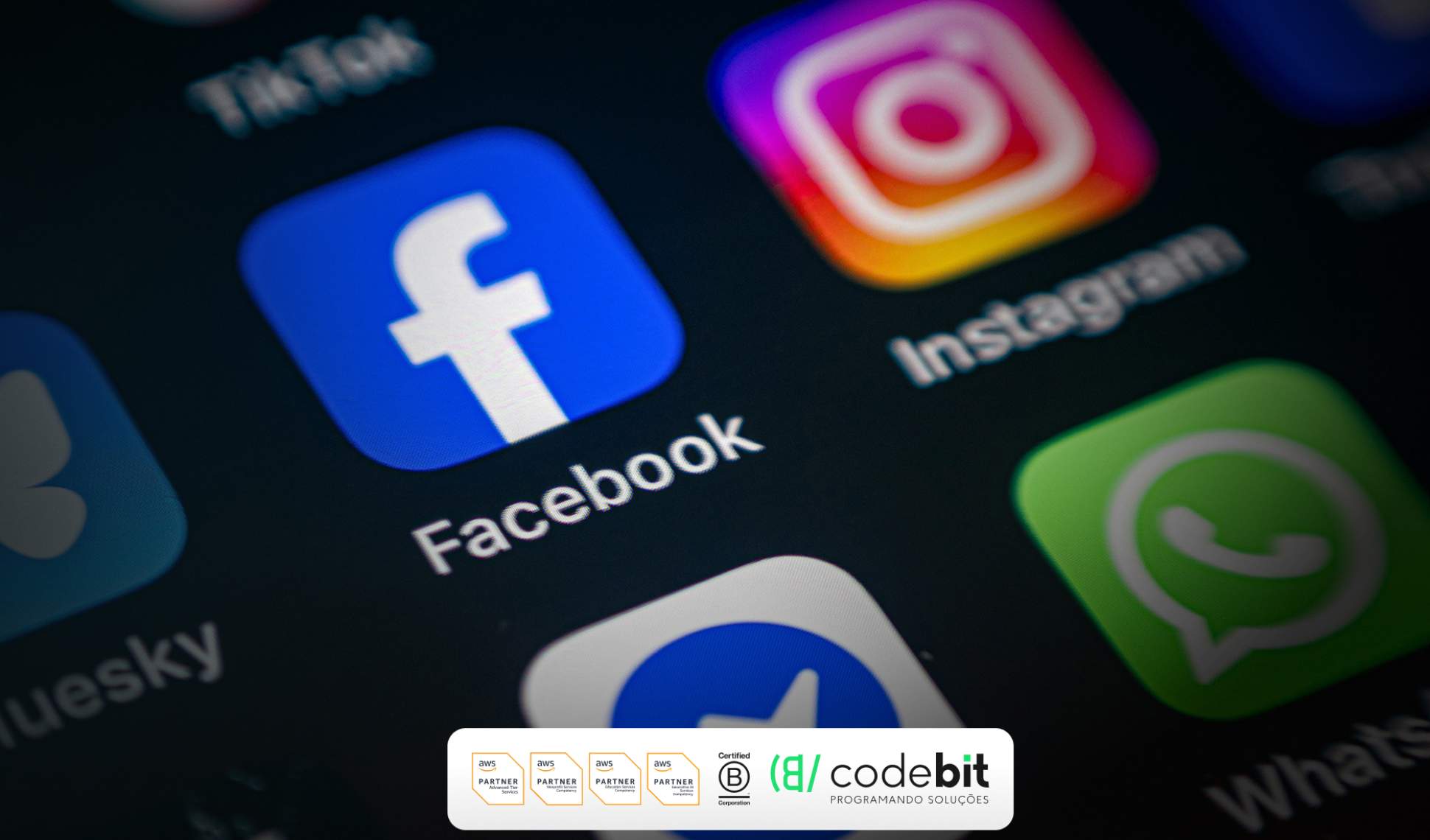
For years, WhatsApp, Instagram, and Facebook were synonymous with free and easy access. In exchange, users "paid" with attention, data, and exposure to advertising. A model that sustained the growth of social networks in recent decades and today is at the center of debates about privacy, conscious use, and the attention economy.
Read also: Cell phone addiction becomes a disease, has a name, and already affects 60% of Brazilians
Meta confirmed that it is testing paid versions of its main applications, focusing on exclusive features, personalization, productivity, and artificial intelligence.
Initially, the proposal does not eliminate free access, but it signals an important change in the way the company thinks about its products and its relationship with users, creators, and businesses.
See what is already known about the subscriptions and what could change, in practice, in your daily life.
New announcement from Meta
Confirmed by the tech-specialized website TechCrunch, Meta will test premium subscription plans on WhatsApp, Instagram, and Facebook.
The proposal is to unlock additional features through a monthly payment, keeping the free versions active for all users.
According to the company, tests should start in the coming months, with no global timeline set yet. Each app will have its own package of features, avoiding a one-size-fits-all solution and allowing subscriptions to cater to different profiles and uses.
Key points so far:
Subscriptions will be optional.
Basic use of the apps will remain free.
Paid plans are expected to focus on advanced features and greater control over usage.
Features based on AI and automation are part of the strategy, at different levels for each platform.
Initial information indicates that Meta is adopting a gradual and experimental approach.
Why start charging now?
The decision to create paid versions may arise from a combination of economic, operational, and behavioral pressures that have been building up in recent years.
Historical dependence on advertising. Although the model remains relevant and profitable, it faces increasingly evident limits: greater ad saturation, regulatory restrictions in different markets, changes in privacy policies, and growing user resistance to constant exposure to advertising.
Increasing operational costs. Maintaining global platforms like WhatsApp, Instagram, and Facebook involves billions in investments in cloud infrastructure, development and training of artificial intelligence models, content moderation, and security. As products become more complex, the cost of operating them at scale grows consistently.
A shift in user behavior. Part of the audience has come to accept paying for digital services when they perceive direct and tangible value, as occurs with streaming, cloud storage, productivity tools, and even social networks with additional features.
In this context, the subscription emerges as an alternative to diversify revenues, reduce exclusive dependence on advertising, and test new relationship models with users, without giving up the free access that sustains the platforms' user base.
What changes in the paid version of WhatsApp?
WhatsApp Premium is the one with the most details shown so far, thanks to analyses of beta versions done by the WABetaInfo website in January.
The identified features include:
Exclusive sticker packs.
Extra themes for interface customization.
Options to change the application icon.
Increase in the limit of pinned chats.
Exclusive notification sounds.
Meta states that the paid version will maintain the same privacy protections and encryption as the free version. The focus is on convenience, organization, and personalization, not on removing ads, especially since WhatsApp still displays advertising in a limited way.
Find out more: Is WhatsApp's encryption really trustworthy?
What will the paid version of Instagram be like?
On Instagram, tests indicate a greater focus on control, analysis, and privacy, especially for the platform's hard users, such as content creators, marketing professionals, and profiles that use the network strategically.
Possible new features:
Unlimited creation of audience lists, allowing for more detailed segmentation.
View of followers who do not follow the profile back.
Option to view Stories anonymously.
Additional organization tools and access to more comprehensive metrics.
The expectation is that part of these tools will be integrated with features based on artificial intelligence, expanding possibilities for creation, analysis, and decision-making within the platform itself, without requiring the use of external solutions.
What could be included in the Facebook paid package?
On Facebook, Meta is still releasing few details about the subscription. So far, there is no official list of features, but industry analysts indicate that the premium plan should prioritize management, organization, and control tools, especially for those who manage communities, pages, or large brands.
New paths could include:
Advanced tools for group administrators.
Extra features for moderation and organization.
Better visibility and control of metrics.
AI integrations for content analysis and recommendations.
Facebook has a more diverse audience profile, which could make designing the premium plan more complex.
The influence of artificial intelligence
More than an additional feature, AI appears as one of the main differentiating elements between the free and paid versions of the apps.
Meta confirmed that it intends to scale the use of the Manus agent, acquired in 2025, integrating it into different products. The idea is for these agents to act as support layers for creation, organization, analysis, and decision-making within the platforms.
Learn more about: Meta buys Manus AI: what lies ahead?
In addition, the company is considering:
Specific subscriptions for advanced AI features.
Monthly usage limits on text, image, and video generation tools.
Freemium models, with basic free access and paid expansion.
An example already in testing is Vibes, a video creation and remixing tool using AI. Although it is currently free, Meta plans to offer paid tiers that expand the number of monthly creations and access to additional features.
The more users depend on these artificial intelligence tools to create, organize, or work, the greater the incentive tends to be to migrate to paid plans.
The new social media market
Meta is not alone. The market is already showing signs that some users are willing to pay for additional features on social networks, provided the perceived value is clear.
One of the main examples is Snapchat+, launched for $3.99 per month. In 2025, the service surpassed the milestone of 16 million subscribers, driven by exclusive features, advanced personalization, and early access to new features.
This growth indicates that there is room for subscriptions when the value proposition is clear and well-defined.
By testing subscriptions at scale, Meta signals that social networks may move toward a hybrid model: open access, supported by ads, combined with paid tiers for those seeking more control and features.
Is it worth paying?
The answer depends, primarily, on the usage profile.
For the user who accesses social networks occasionally to chat, catch up on content, and entertain themselves, the free version tends to continue serving them well. Essential features remain available, and the basic experience is not expected to change significantly.
On the other hand, for creators, professionals, companies, and heavier users, paid plans can represent concrete gains. Extra organization, control, analysis, and automation features can save time, facilitate decisions, and expand the strategic use of platforms in everyday life.
Meta's main challenge will be to find the balance between price, benefits, and clarity of value.
In a scenario marked by so-called "subscription fatigue," convincing users to add another service to their monthly bill will require objective, useful, and easy-to-understand offerings.
Market on the move
The paid versions of WhatsApp, Instagram, and Facebook do not represent the end of free access, but they make it clear that Meta is starting to reorganize the value of its products.
This movement raises important questions. If part of the experience becomes paid, will daily use tend to decrease or concentrate even more on power users?
To what extent can freemium models sustain themselves without compromising the perceived value of free access?
How does the technology market, especially artificial intelligence, which demands increasingly larger investments, react when growth stops being just about expansion and begins to require profitable returns?
There are still many uncertainties regarding prices, dates, and final formats. What is already clear is that Meta is testing new paths to sustain its business in a more competitive, regulated, and profitable environment.
For users, creators, and businesses, the next step will be to evaluate whether these subscriptions make sense in their day-to-day lives.




" width="15.500294250860316px"><path d="M 0 15.475 L 0 0 L 15.5 0 L 15.5 15.475 Z" fill="transparent" height="15.475099999999998px" id="tPiDQU_MP" width="15.5px"/><path d="M 3.167 1.589 C 3.847 0.724 4.607 0.171 5.61 0.046 C 6.532 -0.07 7.436 0.022 8.277 0.451 C 9.235 0.938 9.681 1.797 9.877 2.797 C 9.987 3.364 10.049 3.948 10.056 4.525 C 10.079 6.395 10.055 8.265 10.075 10.135 C 10.08 10.527 9.944 10.648 9.574 10.641 C 8.799 10.627 8.023 10.63 7.248 10.644 C 6.911 10.65 6.787 10.528 6.789 10.181 C 6.803 8.533 6.799 6.884 6.789 5.236 C 6.788 4.892 6.754 4.545 6.698 4.206 C 6.57 3.433 6.106 2.974 5.443 2.925 C 4.405 2.849 3.714 3.206 3.495 4.018 C 3.37 4.478 3.333 4.972 3.326 5.451 C 3.306 7.002 3.307 8.555 3.327 10.105 C 3.332 10.504 3.208 10.654 2.807 10.644 C 2.032 10.625 1.257 10.63 0.481 10.642 C 0.156 10.647 -0.001 10.546 0 10.193 C 0.007 7.035 0.006 3.876 0 0.718 C 0 0.391 0.104 0.24 0.458 0.249 C 1.219 0.269 1.981 0.267 2.743 0.252 C 3.068 0.245 3.197 0.361 3.17 0.688 C 3.148 0.948 3.166 1.211 3.166 1.589 Z" fill="rgb(245, 240, 237)" height="10.64451194394125px" id="Hw1mXDepj" transform="translate(5.425 4.831)" width="10.075487656011685px"/><path d="M 3.284 5.2 C 3.284 6.764 3.27 8.327 3.292 9.892 C 3.297 10.284 3.158 10.403 2.79 10.396 C 2.015 10.382 1.24 10.386 0.465 10.399 C 0.14 10.403 -0.001 10.305 0 9.947 C 0.012 6.792 0.012 3.637 0.002 0.481 C 0.001 0.123 0.105 -0.01 0.473 0.001 C 1.261 0.023 2.05 0.02 2.839 0.004 C 3.183 -0.003 3.294 0.124 3.29 0.467 C 3.276 2.044 3.284 3.623 3.284 5.2 Z" fill="rgb(245, 240, 237)" height="10.39869818980116px" id="sgvgyFXCr" transform="translate(0.237 5.076)" width="3.292113077251912px"/><path d="M 3.768 1.898 C 3.761 2.945 2.91 3.782 1.859 3.772 C 0.828 3.763 -0.012 2.892 0 1.842 C 0.012 0.824 0.864 -0.003 1.897 0 C 2.956 0.003 3.776 0.834 3.768 1.898 Z" fill="rgb(245, 240, 237)" height="3.772444228811899px" id="M8BOm1cI0" transform="translate(0 0)" width="3.768370362042166px"/></g></svg>)
" height="17px" id="G9twDfI1x" transform="translate(2 2)" width="17px"/></svg>)
" height="17px" id="q6YSjVL3w" transform="translate(6 2)" width="8.5px"/></svg>)
" height="12.720532384492868px" id="Jh_taQ7si" transform="translate(1 3.586)" width="18.00050025px"/></svg>)