Cloud Computing
Future of the cloud: 5 promising trends
Future of the cloud: 5 promising trends. Check it out on CodeBlog
11/17/2023


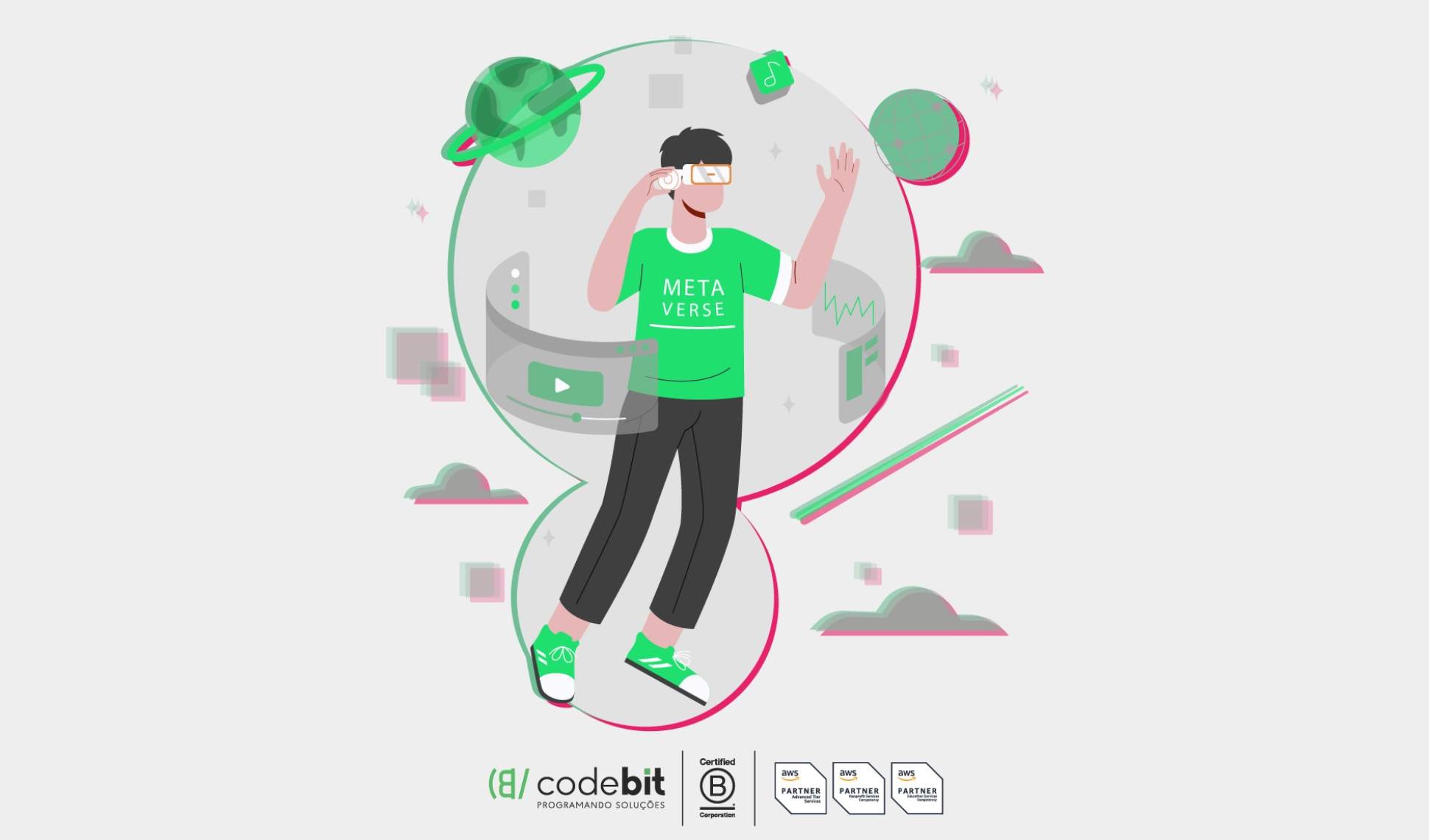
Cloud computing, also known as cloud computing, is a technology that has transformed the way companies store, manage, and access data, applications, and even complete systems.
With scalability, flexibility, availability, and practicality, since its arrival, the solution has been expanding rapidly and conquering the most diverse types of markets.
Future trends are promising and indicate the arrival of new features, functionalities, and integrations that promise to make the tool even more robust and comprehensive.
Today, we at CodeBlog present some of them to you. Read on and check them out:
Cloud computing: the definition:
Cloud computing is nothing more than an internet-based computing service capable of synthesizing the greatest personal or corporate demands through data storage and application networks in shared environments.
In other words, besides storing files securely without compromising equipment memory capacity, users can still access them at any time or place, depending only on a device connected to the internet, whether through mobile data or Wi-Fi networks.
Unlike common models, the cloud integrates a series of servers that represent a broad data storage and processing device, allowing total elasticity in all provided resources.
In this way, it is possible to allocate resources from interconnected servers for their use and customize processing capacity according to demand, with appropriate security and without the need for frequent reinstalls or maintenance.
Future of the cloud: 5 promising trends:
Increased adoption of hybrid cloud
The hybrid cloud is the combination of public and private cloud and aims to extract the best of both models to meet all business needs. To do this, it operates with exclusive servers, which in addition to ensuring the storage of the most sensitive, confidential, or important data, also feature some shared software to store less sensitive information. In short, the hybrid model is capable of promoting a high level of information security at relatively lower costs. After all, not all data is kept on servers with reinforced protection.
In practice, this approach provides more flexibility and enables organizations to choose where to store their information according to all compliance, security, and performance requirements.
For the future, the trend is for companies to turn to hybrid models to intensify the advantages offered by cloud computing without interfering with the protection of their sensitive data.
Security reinforcement
As the volume of critical data stored in the cloud environment intensifies, concern about security and protection measures becomes even greater.
Although some providers already have effective strategies, such as AWS (provided by Amazon Web Services and marketed by CodeBit) which covers a series of features to keep its data centers free from vulnerabilities and applies internationally recognized methodologies to prevent information breaches; in the future, the trend is for these resources to become even more robust and improved.
Solutions such as optimized encryption, multi-factor authentication, and potential real-time threat detection are just a few examples of features that will emerge to reinforce the preservation of digital asset security.
Edge Computing expansion
Edge Computing (also known as "edge computing") is an emerging technology, characterized as a network structure based on the cloud, which promotes data processing as close to its source as possible, improving performance and reducing process latency.
With the growing adoption of IoT (Internet of Things) devices and the demand from companies to increasingly handle large data loads and deliver real-time results, everything indicates that in the near future there will be a considerable increase in the adoption of Edge Computing structures, precisely to ensure that organizations can process information with more agility and make more assertive decisions instantly.
AI in the clouds
Undoubtedly, the use of Artificial Intelligence stands among the main discussions of the corporate market in recent years; after all, its application has revolutionized various sectors of industry, commerce, and technology.
Due to its great processing power and availability of large datasets, when integrated into the cloud, AI can multiply the efficiency, customization, security, and data analysis capabilities in the cloud environment, ensuring significant upgrades to the solution.
In the coming years, this joining of forces is expected to be fuel for the continuous evolution and strengthening of cloud computing, helping to make the tool even more sophisticated, complete, and fundamental to the digital transformation process of companies, boosting scientific discoveries, improving efficiency, and enhancing user experience.
Sustainability
In recent years, sustainability has starred in agendas and discussions involving the corporate universe. This occurs because of the consumer profile (who have become more conscious), the imminent need to save natural resources, and also because of the managers themselves, who understand that adopting sustainable measures is an excellent way to reduce costs and ensure more operational efficiency.
For this reason, although the cloud is already a much more sustainable alternative than physical servers due to lower power and natural resource consumption, it is expected that in the future this subject will be addressed with greater intensity within the cloud environment, encouraging providers to reinforce the development of sustainable and eco-friendly strategies even further.
So, dear reader, did you enjoy discovering the 5 trends about the future of the cloud? In your opinion, which of them is the most promising?
If this article was interesting to you, keep an eye on the CodeBit blog; soon we will have plenty of news here.
A big hug, and see you in the next post!




" width="15.500294250860316px"><path d="M 0 15.475 L 0 0 L 15.5 0 L 15.5 15.475 Z" fill="transparent" height="15.475099999999998px" id="tPiDQU_MP" width="15.5px"/><path d="M 3.167 1.589 C 3.847 0.724 4.607 0.171 5.61 0.046 C 6.532 -0.07 7.436 0.022 8.277 0.451 C 9.235 0.938 9.681 1.797 9.877 2.797 C 9.987 3.364 10.049 3.948 10.056 4.525 C 10.079 6.395 10.055 8.265 10.075 10.135 C 10.08 10.527 9.944 10.648 9.574 10.641 C 8.799 10.627 8.023 10.63 7.248 10.644 C 6.911 10.65 6.787 10.528 6.789 10.181 C 6.803 8.533 6.799 6.884 6.789 5.236 C 6.788 4.892 6.754 4.545 6.698 4.206 C 6.57 3.433 6.106 2.974 5.443 2.925 C 4.405 2.849 3.714 3.206 3.495 4.018 C 3.37 4.478 3.333 4.972 3.326 5.451 C 3.306 7.002 3.307 8.555 3.327 10.105 C 3.332 10.504 3.208 10.654 2.807 10.644 C 2.032 10.625 1.257 10.63 0.481 10.642 C 0.156 10.647 -0.001 10.546 0 10.193 C 0.007 7.035 0.006 3.876 0 0.718 C 0 0.391 0.104 0.24 0.458 0.249 C 1.219 0.269 1.981 0.267 2.743 0.252 C 3.068 0.245 3.197 0.361 3.17 0.688 C 3.148 0.948 3.166 1.211 3.166 1.589 Z" fill="rgb(245, 240, 237)" height="10.64451194394125px" id="Hw1mXDepj" transform="translate(5.425 4.831)" width="10.075487656011685px"/><path d="M 3.284 5.2 C 3.284 6.764 3.27 8.327 3.292 9.892 C 3.297 10.284 3.158 10.403 2.79 10.396 C 2.015 10.382 1.24 10.386 0.465 10.399 C 0.14 10.403 -0.001 10.305 0 9.947 C 0.012 6.792 0.012 3.637 0.002 0.481 C 0.001 0.123 0.105 -0.01 0.473 0.001 C 1.261 0.023 2.05 0.02 2.839 0.004 C 3.183 -0.003 3.294 0.124 3.29 0.467 C 3.276 2.044 3.284 3.623 3.284 5.2 Z" fill="rgb(245, 240, 237)" height="10.39869818980116px" id="sgvgyFXCr" transform="translate(0.237 5.076)" width="3.292113077251912px"/><path d="M 3.768 1.898 C 3.761 2.945 2.91 3.782 1.859 3.772 C 0.828 3.763 -0.012 2.892 0 1.842 C 0.012 0.824 0.864 -0.003 1.897 0 C 2.956 0.003 3.776 0.834 3.768 1.898 Z" fill="rgb(245, 240, 237)" height="3.772444228811899px" id="M8BOm1cI0" transform="translate(0 0)" width="3.768370362042166px"/></g></svg>)
" height="17px" id="G9twDfI1x" transform="translate(2 2)" width="17px"/></svg>)
" height="17px" id="q6YSjVL3w" transform="translate(6 2)" width="8.5px"/></svg>)
" height="12.720532384492868px" id="Jh_taQ7si" transform="translate(1 3.586)" width="18.00050025px"/></svg>)