Companies
Lean Method and Cloud Computing: a strategic match for business efficiency
Lean Method and Cloud Computing: a strategic match for business efficiency.
10/30/2023


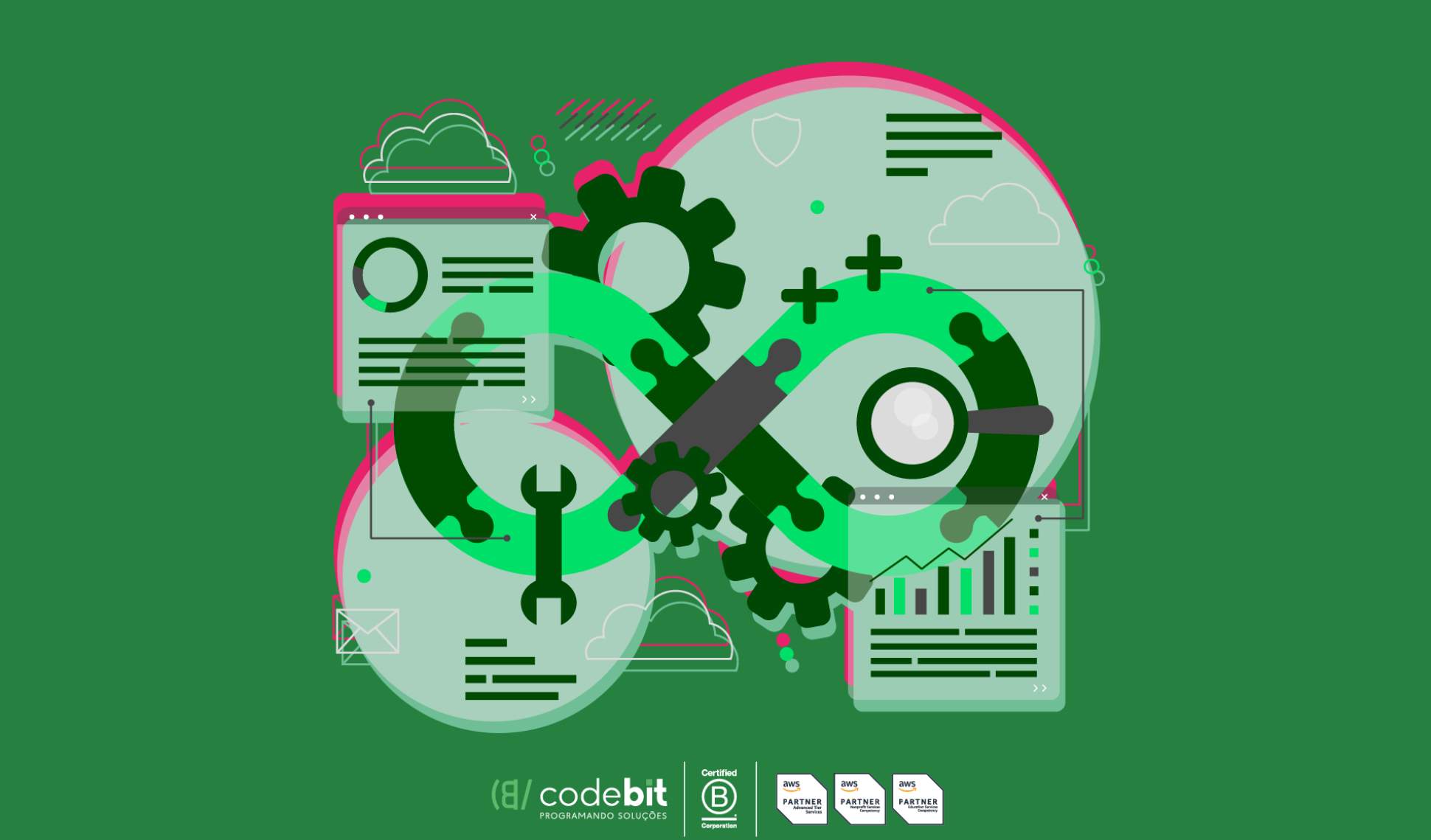
Agile methodologies involve a set of business practices and behaviors that promote greater agility and flexibility, steering the teams' focus toward customer experience and satisfaction.
In this context, one of the most well-known methods is the so-called Lean, which emerged in the 1950s as a management philosophy directly from the Toyota factory (the Japanese car manufacturer) and, since then, has been recognized for its efficiency and versatility, since it can be replicated by companies in various niches and across multiple processes.
Want to know more about the Lean Method and discover why its integration with cloud computing is a strategic match for business efficiency? Then, continue reading and check out the article that we, from the CodeBlog team, have prepared for you.
Inside the Lean method
The central objective of the Lean methodology is to eliminate waste, reduce costs, increase productivity, and ensure maximum quality delivery to the end customer.
Translating the concept into one word, the best term to define it would be "lean" (enxuto). In practice, Lean is an extremely important tool in the arsenal of project management practices and IT processes. After all, it allows for a more efficient, data-driven approach, which is essential in a highly dynamic sector driven by constant innovation.
The method is supported by different principles such as:
Value identification
Understanding the customer's demand and pain points, and then directing the team's efforts so that everyone focuses on what matters most: deliveries and results.
Value stream mapping
Identifying processes and analyzing where time and resource wastes are concentrated.
Creation of continuous flows
Eliminating bottlenecks and optimizing process efficiency
Implementing pull production systems
Pull production systems determine that workflow remains stable at all times. To achieve this, it is necessary to ensure that teams transition their task assignments more quickly and with less effort.
In addition, a new work item should only be started if there is demand, precisely to reduce overhead and optimize storage costs.
Pursuit of continuous improvement
Because it is not a static methodology, Lean requires constant effort and monitoring to promote the improvement of deliveries.
For this reason, all employees must be involved in adopting the method. To facilitate measurement and evaluations, there is a series of techniques that identify what the team has already done, what it needs to do, what challenges may arise, and how members can optimize their work processes.
How cloud computing drives the Lean method:
1. Uninterrupted and remote access to internal networks and programs
Cloud computing provides constant access to applications, files, and systems from anywhere in the world, requiring only an internet connection and an authorized login.
This availability is essential for companies looking to implement Lean. After all, with this solution, an organization's employees can collaborate effectively, even in remote locations, allowing for better project management and eliminating communication delays.
2. Broad data storage capacity
Cloud storage offers an almost unlimited capacity for data storage, and this is fundamental for companies that need to collect and analyze information to improve their processes.
In addition, it eliminates the need to invest in local storage infrastructure, increasing resource savings.
3. Reduction of software, hardware, and server costs
Without a doubt, one of the greatest advantages of cloud computing is cost reduction. By adopting the cloud, companies no longer need to invest heavily in expensive software, hardware, and servers. Everything is managed remotely by the cloud service provider.
4. Technology, availability, scalability, and innovation:
Cloud computing offers cutting-edge technology, enabling organizations to always be up-to-date with the latest innovations.
Adding to this fact, it is also a solution guided by scalability, so users can scale resources up or down according to their needs. These and many other benefits of the cloud contribute to creating and maintaining an appropriate environment for the successful adoption of Lean, considering the search for waste reduction, cost reduction, and operational efficiency that guide the concept.
The combination of a lean management philosophy with the flexibility and technology of cloud computing is the key to maximizing deliveries, results, and business success.
Are you already experiencing this union to achieve maximum efficiency and deliver value to customers?
Want to discover everything the cloud can do for your business and how to implement a secure and optimized migration?
Then click here and talk to the team of specialists at CodeBit - one of the few Brazilian AWS Advanced Tier Services Partners - Amazon Web Services: the most secure and widely used cloud in the world.
In the meantime, keep an eye on CodeBlog. We will have news here very soon.
A big hug, and see you in the next post!




" width="15.500294250860316px"><path d="M 0 15.475 L 0 0 L 15.5 0 L 15.5 15.475 Z" fill="transparent" height="15.475099999999998px" id="tPiDQU_MP" width="15.5px"/><path d="M 3.167 1.589 C 3.847 0.724 4.607 0.171 5.61 0.046 C 6.532 -0.07 7.436 0.022 8.277 0.451 C 9.235 0.938 9.681 1.797 9.877 2.797 C 9.987 3.364 10.049 3.948 10.056 4.525 C 10.079 6.395 10.055 8.265 10.075 10.135 C 10.08 10.527 9.944 10.648 9.574 10.641 C 8.799 10.627 8.023 10.63 7.248 10.644 C 6.911 10.65 6.787 10.528 6.789 10.181 C 6.803 8.533 6.799 6.884 6.789 5.236 C 6.788 4.892 6.754 4.545 6.698 4.206 C 6.57 3.433 6.106 2.974 5.443 2.925 C 4.405 2.849 3.714 3.206 3.495 4.018 C 3.37 4.478 3.333 4.972 3.326 5.451 C 3.306 7.002 3.307 8.555 3.327 10.105 C 3.332 10.504 3.208 10.654 2.807 10.644 C 2.032 10.625 1.257 10.63 0.481 10.642 C 0.156 10.647 -0.001 10.546 0 10.193 C 0.007 7.035 0.006 3.876 0 0.718 C 0 0.391 0.104 0.24 0.458 0.249 C 1.219 0.269 1.981 0.267 2.743 0.252 C 3.068 0.245 3.197 0.361 3.17 0.688 C 3.148 0.948 3.166 1.211 3.166 1.589 Z" fill="rgb(245, 240, 237)" height="10.64451194394125px" id="Hw1mXDepj" transform="translate(5.425 4.831)" width="10.075487656011685px"/><path d="M 3.284 5.2 C 3.284 6.764 3.27 8.327 3.292 9.892 C 3.297 10.284 3.158 10.403 2.79 10.396 C 2.015 10.382 1.24 10.386 0.465 10.399 C 0.14 10.403 -0.001 10.305 0 9.947 C 0.012 6.792 0.012 3.637 0.002 0.481 C 0.001 0.123 0.105 -0.01 0.473 0.001 C 1.261 0.023 2.05 0.02 2.839 0.004 C 3.183 -0.003 3.294 0.124 3.29 0.467 C 3.276 2.044 3.284 3.623 3.284 5.2 Z" fill="rgb(245, 240, 237)" height="10.39869818980116px" id="sgvgyFXCr" transform="translate(0.237 5.076)" width="3.292113077251912px"/><path d="M 3.768 1.898 C 3.761 2.945 2.91 3.782 1.859 3.772 C 0.828 3.763 -0.012 2.892 0 1.842 C 0.012 0.824 0.864 -0.003 1.897 0 C 2.956 0.003 3.776 0.834 3.768 1.898 Z" fill="rgb(245, 240, 237)" height="3.772444228811899px" id="M8BOm1cI0" transform="translate(0 0)" width="3.768370362042166px"/></g></svg>)
" height="17px" id="G9twDfI1x" transform="translate(2 2)" width="17px"/></svg>)
" height="17px" id="q6YSjVL3w" transform="translate(6 2)" width="8.5px"/></svg>)
" height="12.720532384492868px" id="Jh_taQ7si" transform="translate(1 3.586)" width="18.00050025px"/></svg>)