Health
EHR: What it is and how the Electronic Health Record works
E
06/14/2023


EHR: What is it and how does the Electronic Health Record work
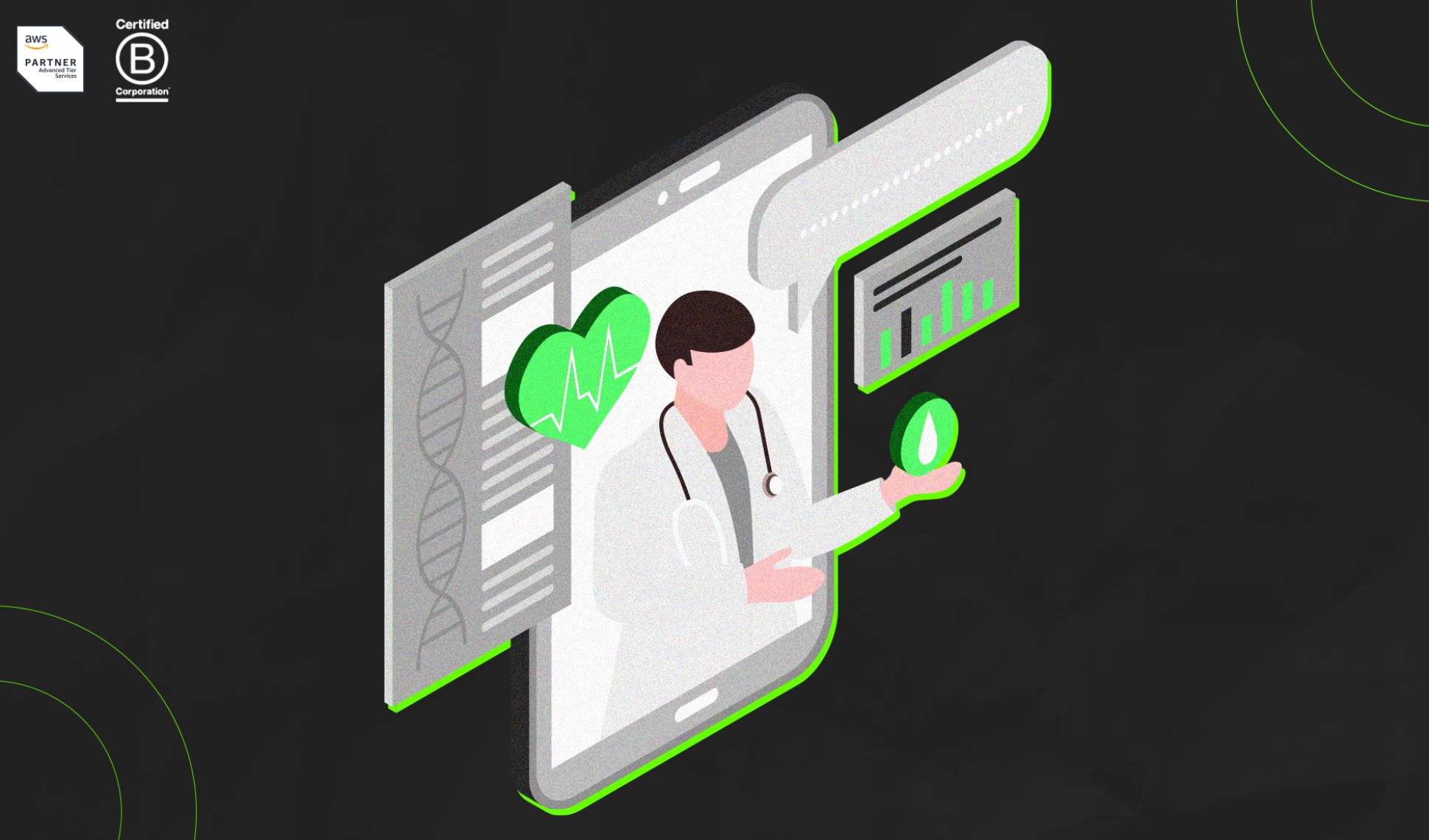
Healthcare and technology are inseparable terms, and the pandemic can prove this. After all, during the period, it was necessary, more than ever, to ensure that patients had access to treatments, even from a distance, which intensified the creation and application of technological resources, such as, for example, the EHR (Electronic Health Record) - a tool that centralizes and updates information quickly.
Want to know more about it and discover its importance for hospitals, clinics, and offices? Then, read on and check out the article that the CodeBlog team prepared for you.
What is the EHR (Electronic Health Record)?
Before the expansion of technological resources, when a patient began a consultation with a doctor, a physical medical record was opened, printed on paper, which acted as a file and gathered important data, such as the user's health history.
In summary, the EHR is the digital version of this document. Its objective is to summarize the information and present doctors with an overview of the patient's health status, allowing them to prescribe medications or suggest treatments with greater assertiveness.
As it is completely digital and hosted in the cloud, the EHR is updated, edited, and shared more quickly, as it can be accessed by computers, tablets, and smartphones, without any geographical limitation.
In addition to practicality, the EHR also provides greater savings to hospitals, because it reduces not only paper expenses, but also the amount of physical space required to store files.
EHR: how is the implementation?
If until recently, the implementation of the EHR was a challenging process, the good news is that now, thanks to the advancement of technology and qualified labor, it is possible to guarantee an uncomplicated and optimized migration.
In fact, many healthcare institutions have some resistance to abandoning paper documents, whether out of fear, uncertainty, or even lack of resources.
But, the truth is that the EHR arrives as an excellent alternative to store medical records with more protection, security, and efficiency. Nowadays, there are several softwares that automate work, reduce bureaucratic processes, integrate systems, and perform the exchange of data and information with total effectiveness.
Therefore, it is important for clinics, offices, and hospitals to keep up to date with future trends in order to remain competitive in the market and provide service with more speed and agility.
However, first of all, it is necessary to ensure that the teams are prepared and trained to handle and operate the tools that involve a new work dynamic.
To this end, it is important to implement training and simulations aimed at using the EHR, to ensure that everyone feels comfortable and confident during the transition.
In addition, the EHR must be made in accordance with various guidelines, updated according to the deliberations of the Federal Council of Medicine.
The authority established resolution 1,821/2007 to define the "technical standards concerning the digitalization and use of computerized systems for the storage and handling of patient medical record documents, authorizing the elimination of paper and the exchange of identified health information."
According to the regulations, it is necessary for the electronic health record to contain the same data present in the original documents, be monitored by the EDMS (Electronic Document Management System), have the capacity to store digitalized files, and be in compliance with the requirements set forth in the Certification Manual for Electronic Registration and Health Systems.
What data must be included in the EHR
Taking into account that the Electronic Health Record interface is customizable to meet the demands and preferences of each institution, it is certain that the information contained in the EHR may vary.
However, according to the Federal Council of Medicine, it is necessary for the document to present, at least, the patient's basic data (such as full name, sex, date of birth, full address, place of birth, and mother's name), in addition to the summary of the consultation and the identification of the professionals who provided the last assistances and generated the latest updates in the document.
The Anamnesis must also be present in the EHR. In practice, it involves an interview that the doctor conducts with the patient to understand what the complaints and symptoms are that may point to the presence of some disease.
Generally, the Anamnesis is the first step of a clinical evaluation and initiates the entire journey of diagnosis and treatment.
There are also other details that make the EHR more complete, such as, for example:
► vaccination history;
► hospitalization history;
► medical procedure history;
► family health history;
► history of medications used and their dosages;
► presence of chronic diseases;
► presence of allergies;
► adverse reactions to certain medications;
► imaging reports;
► laboratory test results;
► lifestyle habits.
EHR: the importance
In addition to making care more agile by facilitating healthcare professionals' access to patient data, the Electronic Health Record makes service delivery more dynamic, ensuring more information, assertiveness, and support. In practice, the use of the EHR allows the clinical conditions of patients in high-risk groups to be monitored more easily, avoiding complications arising from medical emergencies.
Another interesting point is that the EHR helps in organizing a waiting list for exams, transplants, and other procedures, favoring patients who need care with greater urgency.
In general, the EHR can optimize management, internal processes, and the entire service of clinics, offices, and hospitals.
Technology and Health
Even though technological resources are already being widely used in the healthcare sector, this is just the beginning. The trend is that, from now on, with advances in Artificial Intelligence, in conjunction with other innovations, there will be a true revolution in the way some diseases are treated and how laboratory tests are performed. In this context, the EHR is one of the technological tools that help make healthcare more integrated and smart.
Anyway, did you enjoy discovering what the EHR is and how it can positively impact the processes of healthcare institutions? If you want to optimize the service of your clinic, office, or hospital, have access to diagnoses more quickly, spend less, and count on more protection for sensitive information, click here, talk to the team of specialists at Codebit, and find out which of the services is best suited to meet your needs.
For more, keep an eye on the Codeblog. Soon, we will have news here. A big hug and see you in the next post!




" width="15.500294250860316px"><path d="M 0 15.475 L 0 0 L 15.5 0 L 15.5 15.475 Z" fill="transparent" height="15.475099999999998px" id="tPiDQU_MP" width="15.5px"/><path d="M 3.167 1.589 C 3.847 0.724 4.607 0.171 5.61 0.046 C 6.532 -0.07 7.436 0.022 8.277 0.451 C 9.235 0.938 9.681 1.797 9.877 2.797 C 9.987 3.364 10.049 3.948 10.056 4.525 C 10.079 6.395 10.055 8.265 10.075 10.135 C 10.08 10.527 9.944 10.648 9.574 10.641 C 8.799 10.627 8.023 10.63 7.248 10.644 C 6.911 10.65 6.787 10.528 6.789 10.181 C 6.803 8.533 6.799 6.884 6.789 5.236 C 6.788 4.892 6.754 4.545 6.698 4.206 C 6.57 3.433 6.106 2.974 5.443 2.925 C 4.405 2.849 3.714 3.206 3.495 4.018 C 3.37 4.478 3.333 4.972 3.326 5.451 C 3.306 7.002 3.307 8.555 3.327 10.105 C 3.332 10.504 3.208 10.654 2.807 10.644 C 2.032 10.625 1.257 10.63 0.481 10.642 C 0.156 10.647 -0.001 10.546 0 10.193 C 0.007 7.035 0.006 3.876 0 0.718 C 0 0.391 0.104 0.24 0.458 0.249 C 1.219 0.269 1.981 0.267 2.743 0.252 C 3.068 0.245 3.197 0.361 3.17 0.688 C 3.148 0.948 3.166 1.211 3.166 1.589 Z" fill="rgb(245, 240, 237)" height="10.64451194394125px" id="Hw1mXDepj" transform="translate(5.425 4.831)" width="10.075487656011685px"/><path d="M 3.284 5.2 C 3.284 6.764 3.27 8.327 3.292 9.892 C 3.297 10.284 3.158 10.403 2.79 10.396 C 2.015 10.382 1.24 10.386 0.465 10.399 C 0.14 10.403 -0.001 10.305 0 9.947 C 0.012 6.792 0.012 3.637 0.002 0.481 C 0.001 0.123 0.105 -0.01 0.473 0.001 C 1.261 0.023 2.05 0.02 2.839 0.004 C 3.183 -0.003 3.294 0.124 3.29 0.467 C 3.276 2.044 3.284 3.623 3.284 5.2 Z" fill="rgb(245, 240, 237)" height="10.39869818980116px" id="sgvgyFXCr" transform="translate(0.237 5.076)" width="3.292113077251912px"/><path d="M 3.768 1.898 C 3.761 2.945 2.91 3.782 1.859 3.772 C 0.828 3.763 -0.012 2.892 0 1.842 C 0.012 0.824 0.864 -0.003 1.897 0 C 2.956 0.003 3.776 0.834 3.768 1.898 Z" fill="rgb(245, 240, 237)" height="3.772444228811899px" id="M8BOm1cI0" transform="translate(0 0)" width="3.768370362042166px"/></g></svg>)
" height="17px" id="G9twDfI1x" transform="translate(2 2)" width="17px"/></svg>)
" height="17px" id="q6YSjVL3w" transform="translate(6 2)" width="8.5px"/></svg>)
" height="12.720532384492868px" id="Jh_taQ7si" transform="translate(1 3.586)" width="18.00050025px"/></svg>)