Technology
What is the advantage of 5G technology?
Discover the greatest advantages of 5G technology. Join us and check out the overview that the CodeBlog team has prepared about 5G. Access now!
12/07/2021


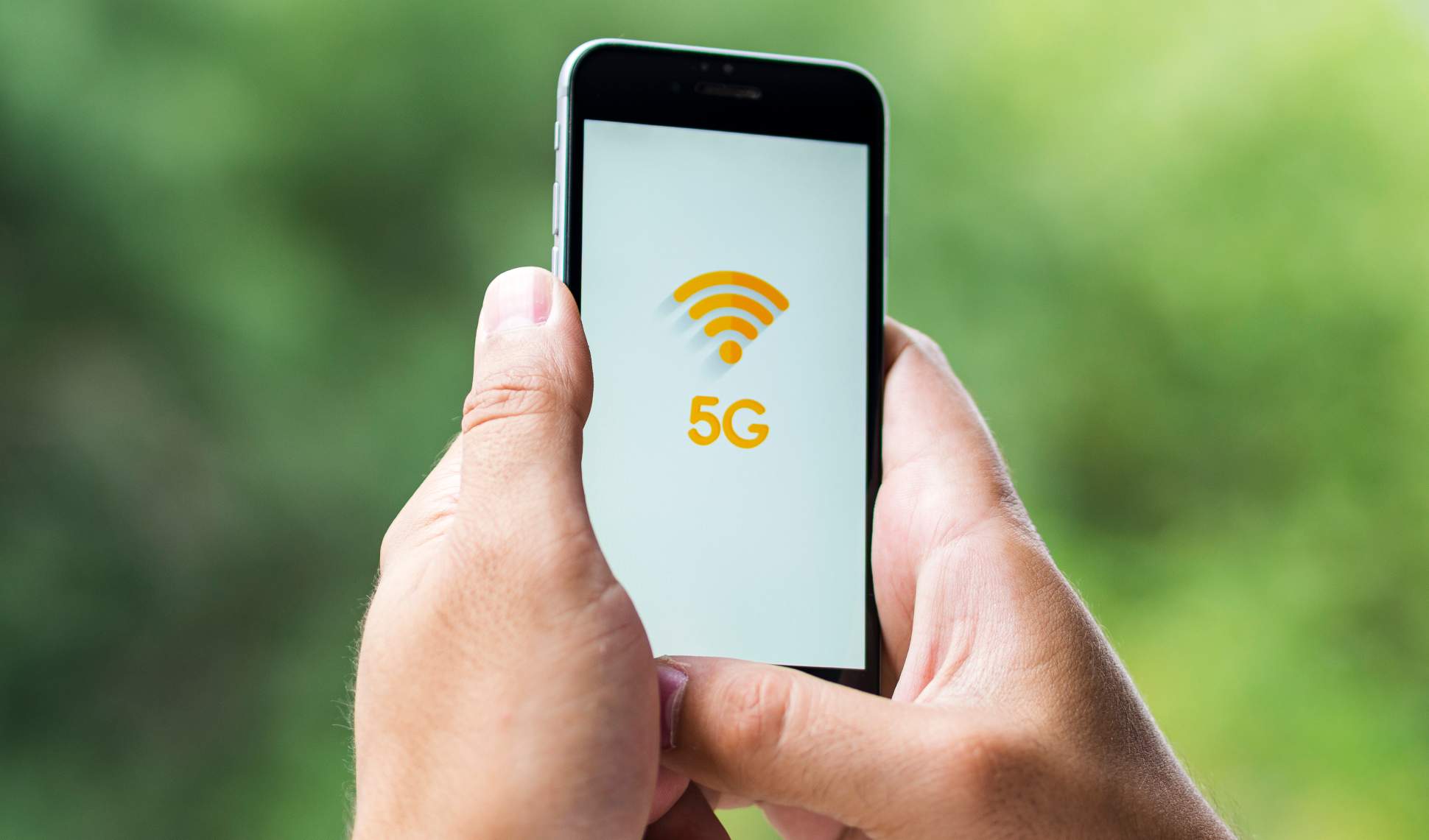
5G: much is said, little is known. The technology has aroused the curiosity of users and entrepreneurs who want to know what its impact will actually be.
After all, in an increasingly connected society, technological advances shape the way we live, consume, and relate to one another.
Considered the fifth generation of mobile networks, 5G technology aims to accommodate a growing volume of information exchanged daily between mobile devices around the world.
Want to discover the greatest advantages and what they have to offer? Join us and check out the overview that the CodeBlog team has prepared about 5G.
After all, what is 5G?
In short, 5G is the acronym for the fifth generation of cellular communication. Thus, the letter G is designated to identify the generations of cellular device communication technology that have already been or will be introduced.
The main highlight of 5G is that this technology is capable of operating in the millimeter wave band (a very high frequency spectrum ranging from 24 to 100 GHz). This allows data transfer much faster than the current ones and promises to optimize the browsing speed of mobile devices, such as tablets and cell phones.
As it becomes more popular, 5G could directly impact the implementation of so-called “smart cities” by offering new products, services, and possibilities.
In practice, 5G will be able to contribute broadly to a more connected world and to the expansion of the Internet of Things, since the solution allows devices to establish a connection with each other. So-called smart refrigerators, for example, will be able to list and even purchase missing items.
Differences between 5G and 4G
It is no secret that technology develops faster and more surprisingly every day. In this context, it is impossible to deny that 4G already offers adequate internet speed and quality for main daily activities. However, the latest generation of the network, besides infinite possibilities, deserves highlight for reliability never experienced before.
Basically, the difference between the 4th and 5th generation of communication is that 5G will arrive with a speed upgrade 20 times faster than that of 4G. Besides competing with fixed broadband services, the service will ensure more stability for users, who will have access to a more reliable and fluid connection.
The main advantages offered by 5G
Assuming that Society 5.0 is already a reality, the tendency is for digital transformation to keep pace with other technologies. For this and many other reasons, the development of 5G, in Brazil and worldwide, is no longer just an innovation but has become a true urgency.
Check out below the greatest benefits provided by this technology:
Stability
5G promises to end signal drops and ensure full stability to users, especially in real-time operations.
Capacity
Due to its high power, 5G allows more people to connect simultaneously without generating instability or dropping internet speeds.
Speed
Without a doubt, one of the most significant and, consequently, most anticipated changes of the new technology is that the speed of 5G is expected to increase considerably. With this, it will be possible to watch videos and movies with faster loading times and also play games on mobile devices without lagging, in addition to improving all online activities already performed regularly.
Battery
With the upgrade from 4G to 5G, mobile devices will consume less battery power. The reduction in consumption, besides being beneficial for the environment, can also be felt in the pocket, through resulting financial savings.
Forecasts for the arrival of 5G in Brazil
Even though numerous tests are being carried out, according to the Ministry of Science, Technology, Innovations and Communications, the 5G connection is expected to arrive in Brazil only by late 2021 or early 2022. Among the greatest difficulties for implementation is the interference in the 3.5 GHz frequency, which would be used for transmitting 5G in the country, but is currently occupied with transmitting the free-to-air TV signal to satellite dishes.
The global impact
Although it is not yet fully present in Brazil, 5G is already a reality in countries like China, the United States, the Philippines, Canada, Spain, Italy, and many others.
In the US, for example, the 5G signal speed was approximately 2.7 times faster than 4G. Other countries, such as Switzerland and South Korea, also showed evolution in browsing speed.
4 sectors that will be directly optimized with the help of 5G
1. Logistics
The logistics sector will be able to plan and track routes in real time more easily thanks to the speed, security, and stability of 5G.
2. Telephony
Videoconference meetings and video calls will become much more stable and professional. Thus, it will be possible to increase the number of remote workers without compromising their interactions with clients and suppliers.
3. Agribusiness
With 5G properly installed and operating in Brazil, stability is expected to increase in rural areas. This solution could directly influence agribusiness productivity.
4. Health
In the healthcare area, remote monitoring will be optimized, and besides more efficient care to patients, new business opportunities may also arise, such as the creation of apps, innovations in the pharmaceutical industry, customized health insurance, and plans.
And you, did you already know about all the advantages and impacts provided by 5G? If this article was interesting to you, keep an eye on CodeBlog and the social networks (Facebook, Instagram, and LinkedIn) of CodeBit so you don't miss any news about the technology universe.
Warm regards, and see you in the next post.




" width="15.500294250860316px"><path d="M 0 15.475 L 0 0 L 15.5 0 L 15.5 15.475 Z" fill="transparent" height="15.475099999999998px" id="tPiDQU_MP" width="15.5px"/><path d="M 3.167 1.589 C 3.847 0.724 4.607 0.171 5.61 0.046 C 6.532 -0.07 7.436 0.022 8.277 0.451 C 9.235 0.938 9.681 1.797 9.877 2.797 C 9.987 3.364 10.049 3.948 10.056 4.525 C 10.079 6.395 10.055 8.265 10.075 10.135 C 10.08 10.527 9.944 10.648 9.574 10.641 C 8.799 10.627 8.023 10.63 7.248 10.644 C 6.911 10.65 6.787 10.528 6.789 10.181 C 6.803 8.533 6.799 6.884 6.789 5.236 C 6.788 4.892 6.754 4.545 6.698 4.206 C 6.57 3.433 6.106 2.974 5.443 2.925 C 4.405 2.849 3.714 3.206 3.495 4.018 C 3.37 4.478 3.333 4.972 3.326 5.451 C 3.306 7.002 3.307 8.555 3.327 10.105 C 3.332 10.504 3.208 10.654 2.807 10.644 C 2.032 10.625 1.257 10.63 0.481 10.642 C 0.156 10.647 -0.001 10.546 0 10.193 C 0.007 7.035 0.006 3.876 0 0.718 C 0 0.391 0.104 0.24 0.458 0.249 C 1.219 0.269 1.981 0.267 2.743 0.252 C 3.068 0.245 3.197 0.361 3.17 0.688 C 3.148 0.948 3.166 1.211 3.166 1.589 Z" fill="rgb(245, 240, 237)" height="10.64451194394125px" id="Hw1mXDepj" transform="translate(5.425 4.831)" width="10.075487656011685px"/><path d="M 3.284 5.2 C 3.284 6.764 3.27 8.327 3.292 9.892 C 3.297 10.284 3.158 10.403 2.79 10.396 C 2.015 10.382 1.24 10.386 0.465 10.399 C 0.14 10.403 -0.001 10.305 0 9.947 C 0.012 6.792 0.012 3.637 0.002 0.481 C 0.001 0.123 0.105 -0.01 0.473 0.001 C 1.261 0.023 2.05 0.02 2.839 0.004 C 3.183 -0.003 3.294 0.124 3.29 0.467 C 3.276 2.044 3.284 3.623 3.284 5.2 Z" fill="rgb(245, 240, 237)" height="10.39869818980116px" id="sgvgyFXCr" transform="translate(0.237 5.076)" width="3.292113077251912px"/><path d="M 3.768 1.898 C 3.761 2.945 2.91 3.782 1.859 3.772 C 0.828 3.763 -0.012 2.892 0 1.842 C 0.012 0.824 0.864 -0.003 1.897 0 C 2.956 0.003 3.776 0.834 3.768 1.898 Z" fill="rgb(245, 240, 237)" height="3.772444228811899px" id="M8BOm1cI0" transform="translate(0 0)" width="3.768370362042166px"/></g></svg>)
" height="17px" id="G9twDfI1x" transform="translate(2 2)" width="17px"/></svg>)
" height="17px" id="q6YSjVL3w" transform="translate(6 2)" width="8.5px"/></svg>)
" height="12.720532384492868px" id="Jh_taQ7si" transform="translate(1 3.586)" width="18.00050025px"/></svg>)