Technology
Zero trust: what is it and why adopt the strategy?
Zero trust: what is it and why adopt the strategy? Discover on the CodeBlog!
04/01/2024


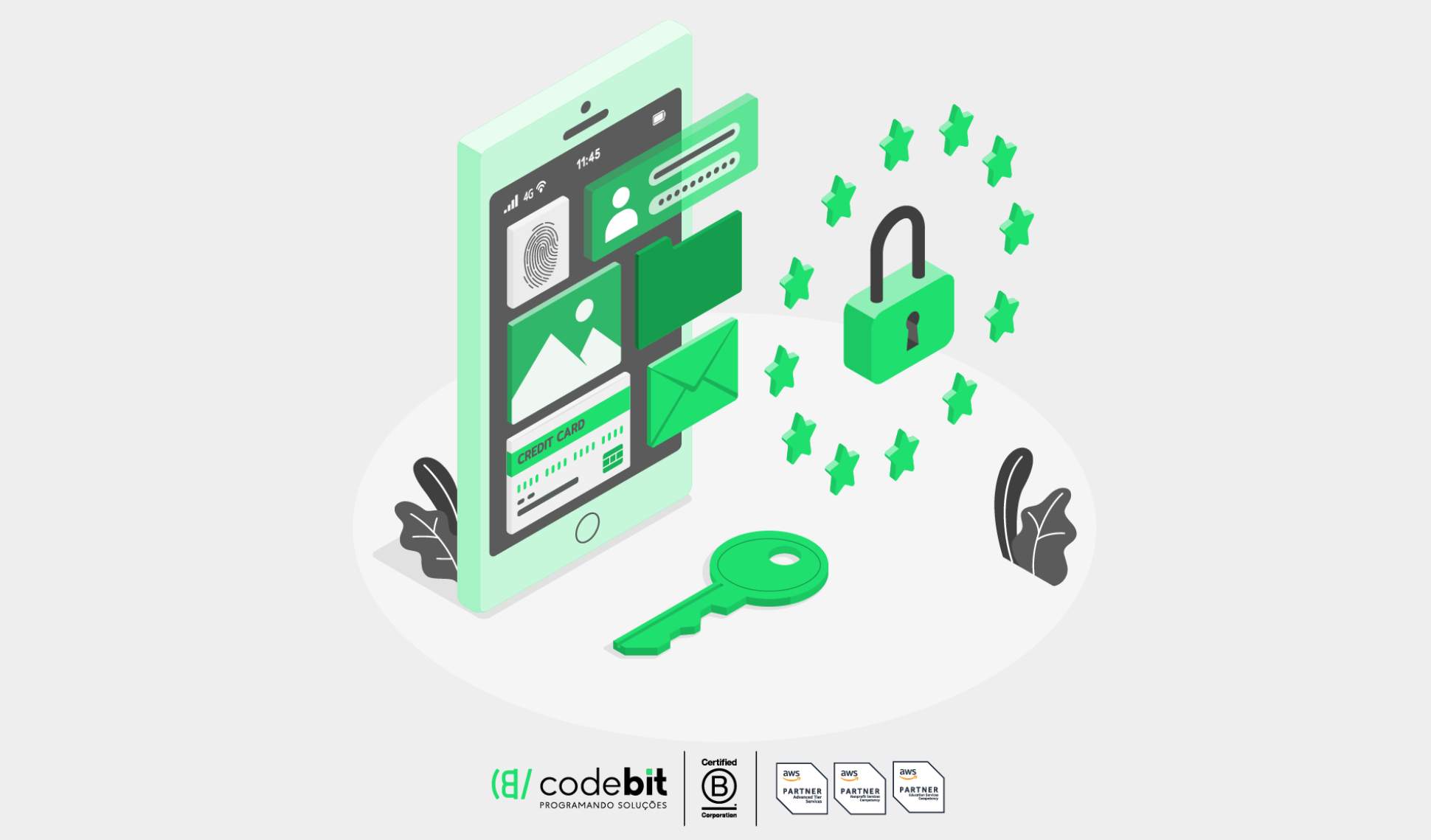
If you value your company's digital security, you need to know the Zero Trust security model.
Also called Zero Trust Architecture, the strategy involves a set of practices and measures that help protect corporate data and systems against cyber threats.
Want to know more about it? Then, you are in the right place! Read on and check out the article that we, the CodeBlog team, have prepared for you.
What is Zero Trust?
In practice, the Zero Trust model is a security model based on the principle that, within an organization, no person or device is trusted by default. Therefore, it determines that all access requests must be previously verified before being granted, regardless of their origin.
The model is based on three basic principles:
- not trusting any person or entity by default;
- establishing minimum access and privilege;
- constant security monitoring.
Unlike more popular methodologies, which allow users free access to a business's internal network after passing through authentication steps, Zero Trust adds extra layers of protection, requiring verification and approval of access before it is actually granted.
These actions help prevent an organization's sensitive data from being made available to hackers or people with malicious intent.
Why adopt the strategy?
Without a doubt, the main reason to adopt Zero Trust is that this methodology strengthens business security against the actions of cybercriminals, providing a series of advantages that help intensify protection measures.
Below, we list some of them:
Real-time visibility:
Zero Trust allows teams to have constant and real-time visibility of all corporate networks and systems.
As a result, professionals can identify and monitor suspicious activities, such as potential cyber threats, with more speed and assertiveness, and then act preventively to eliminate or neutralize them.
Additionally, the model also helps reduce the risks of data breaches, contributing to the protection of a business's reputation as a whole.
Multiple security measures:
As technological resources advance, cyber threats become even more sophisticated.
Therefore, it is important for companies to adapt their security strategies to recognize and combat them.
The good news is that with multiple security measures integrated into Zero Trust, such as multi-factor authentication, data encryption, and granular access control, this mission becomes easier.
Layered approach for advanced protection:
The Zero Trust model operates with a layered security methodology designed to detect and block threats in real time.
This way, data and systems have more robust protection against malware attacks, phishing, ransomware, and other threats.
Another advantage is that, having a user-centric approach, each access attempt is authenticated and authorized individually to help prevent social engineering attacks or other digital crimes based on users.
Risk reduction:
Sometimes, internal data can be threatened by malicious or inattentive employees, which is why it is important to find strategies to reduce or avoid potential human errors that can harm processes and even a business's reputation.
With the adoption of Zero Trust, it is possible to control and monitor access to corporate data in real time, in addition to ensuring that only authorized users can access certain information.
Improved user experience:
Last but not least, the strategy also contributes to optimizing the user experience, allowing them to access their data and information more securely and easily – at any time, from any place, and from any authorized device.
Another advantage of the methodology is that it also works to simplify identity and access management, enabling the administration of all user credentials in one place. Thus, it becomes much easier to reduce the time and costs associated with these processes.
How to adopt the model?
Before starting to adopt the Zero Trust strategy in your business, it is important to follow a structured planning, so that the transition occurs smoothly, fluidly, and, most importantly, effectively.
Check out some tips in the next sections:
Plan:
Before starting to implement Zero Trust, it is vital to have a clear view of expectations and balance factors such as productivity, risk, and investment. In this way, it becomes easier to ensure that the chosen approach meets the proposed goals and is aligned with the company's resources.
Define technologies:
Selecting the right technological resources is a crucial point to ensure the efficiency of Zero Trust.
To do this, you must study the solutions and identify which of them best meets the organization's demands.
Challenges:
It is important to mention that, as much as Zero Trust is an excellent ally for corporate security, its implementation also involves some challenges, especially in the case of businesses with already established structures and security measures.
Therefore, developing a solid migration model is essential for the team to overcome potential adversities that may arise along the way and ensure a successful transition.
Prioritize:
Finally, when drawing up a schedule for the implementation of Zero Trust, it is necessary to list priorities clearly.
This includes identifying high, medium, or low priority areas.
With phased and focused strategies, it is possible to enhance even further the benefits provided by this security model.
Anyway, dear reader, we hope this article has helped you understand what Zero Trust is and how this strategy, when well applied, can boost the security of your business.
If you found this content interesting, keep an eye on CodeBlog and stay up to date with all the tips, news, and trends in the tech world.
A big hug and see you in the next post!




" width="15.500294250860316px"><path d="M 0 15.475 L 0 0 L 15.5 0 L 15.5 15.475 Z" fill="transparent" height="15.475099999999998px" id="tPiDQU_MP" width="15.5px"/><path d="M 3.167 1.589 C 3.847 0.724 4.607 0.171 5.61 0.046 C 6.532 -0.07 7.436 0.022 8.277 0.451 C 9.235 0.938 9.681 1.797 9.877 2.797 C 9.987 3.364 10.049 3.948 10.056 4.525 C 10.079 6.395 10.055 8.265 10.075 10.135 C 10.08 10.527 9.944 10.648 9.574 10.641 C 8.799 10.627 8.023 10.63 7.248 10.644 C 6.911 10.65 6.787 10.528 6.789 10.181 C 6.803 8.533 6.799 6.884 6.789 5.236 C 6.788 4.892 6.754 4.545 6.698 4.206 C 6.57 3.433 6.106 2.974 5.443 2.925 C 4.405 2.849 3.714 3.206 3.495 4.018 C 3.37 4.478 3.333 4.972 3.326 5.451 C 3.306 7.002 3.307 8.555 3.327 10.105 C 3.332 10.504 3.208 10.654 2.807 10.644 C 2.032 10.625 1.257 10.63 0.481 10.642 C 0.156 10.647 -0.001 10.546 0 10.193 C 0.007 7.035 0.006 3.876 0 0.718 C 0 0.391 0.104 0.24 0.458 0.249 C 1.219 0.269 1.981 0.267 2.743 0.252 C 3.068 0.245 3.197 0.361 3.17 0.688 C 3.148 0.948 3.166 1.211 3.166 1.589 Z" fill="rgb(245, 240, 237)" height="10.64451194394125px" id="Hw1mXDepj" transform="translate(5.425 4.831)" width="10.075487656011685px"/><path d="M 3.284 5.2 C 3.284 6.764 3.27 8.327 3.292 9.892 C 3.297 10.284 3.158 10.403 2.79 10.396 C 2.015 10.382 1.24 10.386 0.465 10.399 C 0.14 10.403 -0.001 10.305 0 9.947 C 0.012 6.792 0.012 3.637 0.002 0.481 C 0.001 0.123 0.105 -0.01 0.473 0.001 C 1.261 0.023 2.05 0.02 2.839 0.004 C 3.183 -0.003 3.294 0.124 3.29 0.467 C 3.276 2.044 3.284 3.623 3.284 5.2 Z" fill="rgb(245, 240, 237)" height="10.39869818980116px" id="sgvgyFXCr" transform="translate(0.237 5.076)" width="3.292113077251912px"/><path d="M 3.768 1.898 C 3.761 2.945 2.91 3.782 1.859 3.772 C 0.828 3.763 -0.012 2.892 0 1.842 C 0.012 0.824 0.864 -0.003 1.897 0 C 2.956 0.003 3.776 0.834 3.768 1.898 Z" fill="rgb(245, 240, 237)" height="3.772444228811899px" id="M8BOm1cI0" transform="translate(0 0)" width="3.768370362042166px"/></g></svg>)
" height="17px" id="G9twDfI1x" transform="translate(2 2)" width="17px"/></svg>)
" height="17px" id="q6YSjVL3w" transform="translate(6 2)" width="8.5px"/></svg>)
" height="12.720532384492868px" id="Jh_taQ7si" transform="translate(1 3.586)" width="18.00050025px"/></svg>)