Developer
Clean Code: what is it and what are the best practices?
Clean Code: what is it and what are the best practices? Discover in the article that the CodeBlog team has prepared for you!
12/18/2023


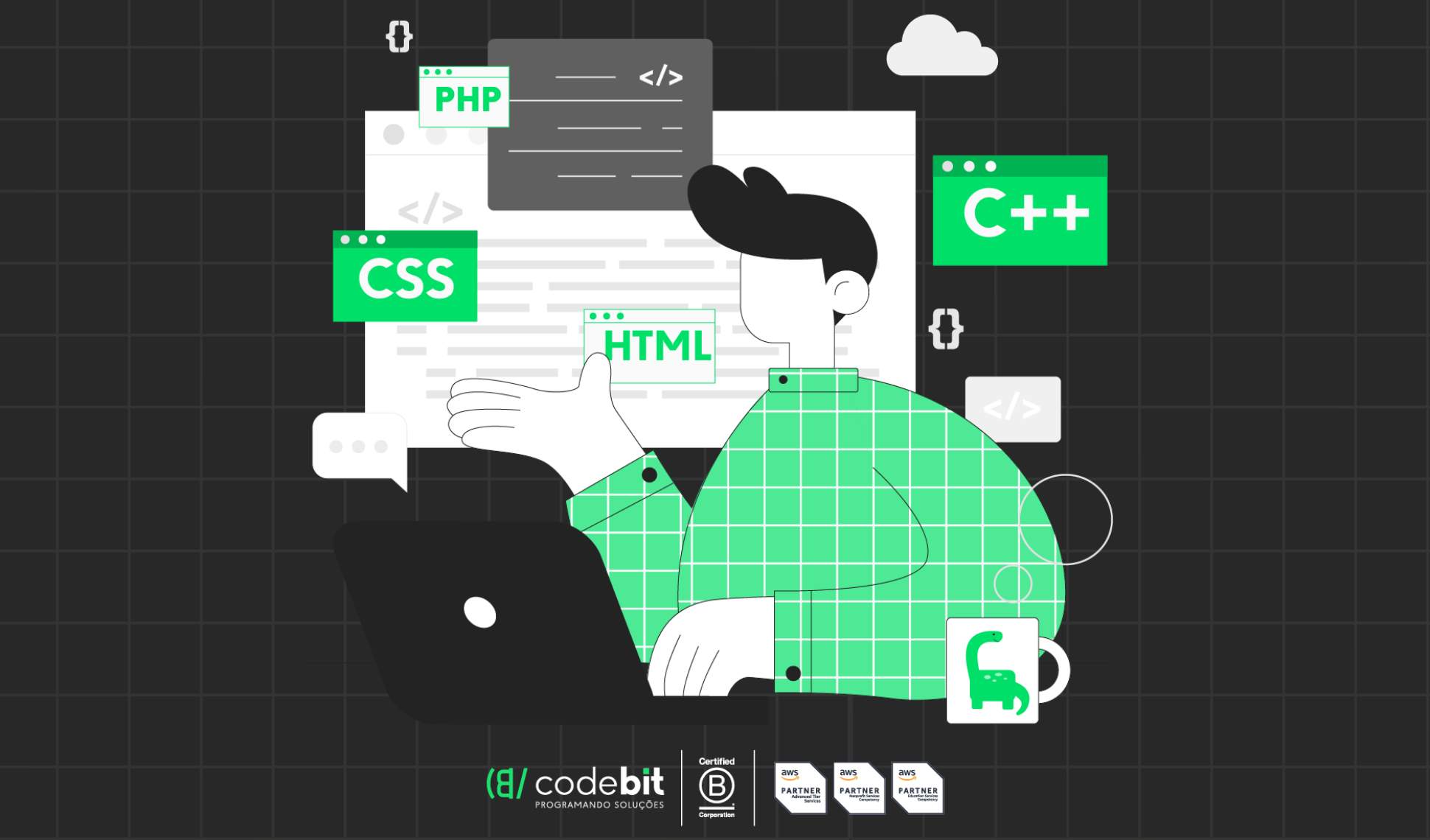
Essential for software development, the so-called Clean Code is a set of techniques applied to make codes clearer and more efficient.
The term was popularized in the book “A Handbook of Agile Software Craftsmanship", written in 2008 by Robert C. Martin. The author, besides presenting the importance of clean code, also addressed the main practices for developing qualified codes.
The concept emerged as a way to resolve conflicts generated by poorly written codes. As software systems became more comprehensive and complex, understanding them became increasingly difficult, as did maintenance and expansion.
These and other reasons justify the imminent need to write codes that are easy to read, understand, test, and debug, which can be continuously optimized.
The clean code proposal has been adopted by various types of organizations, and the good news is that it is not limited to a specific type of language or programming, and can be applied to the most varied types of architecture.
Want to know more about Clean Code and discover the best practices to introduce it? Then you are in the right place! Read on and check out the article that we, from the CodeBlog team, have prepared for you.
What is Clean Code?
One of the biggest misconceptions of programmers is centered on the belief that, once the code is ready and operating, it does not need further revisions.
Taking into consideration that a system is never fully finished, it is important to continuously update it and apply new features. It is also necessary to highlight that, over time, the code becomes obsolete.
In this scenario, Clean Code is a philosophy that emerged with the mission of making both the development and adaptation of codes simpler and uncomplicated, avoiding unnecessary spending on maintenance or complete reworks.
In practice, by applying Clean Code techniques, developers can simplify a series of processes, such as executing tests and verifying the correctness of the logic used.
Benefits of Clean Code
Briefly, Clean Code techniques, when applied, provide numerous advantages to the software development process. After all, the concept helps facilitate reading, understanding, and maintenance, which saves time and resources in the long run.
Another great advantage is that Clean Code helps IT professionals work more efficiently in software production and delivery, increasing customer satisfaction. Another relevant point is that, because it is highly reusable and scalable, Clean Code can be applied by more than one user, simultaneously, without operational failures or performance-related issues.
Clean Code: inside best practices
Clean Code is a cyclical and continuous process that demands an effective culture of feedback, review, and improvement. It is not just about writing a code that is simple to read, but also about writing code that is simple to test, debug, and maintain.
Below, we list some of the best practices of the concept:
Naming patterns:
Use of clear and self-explanatory names for variables, functions, and classes.
Formatting:
Uniform style of indentation, spacing, and formatting in general, to facilitate reading and understanding the code.
Adding comments:
To explain and facilitate the understanding of each code objective and functionality.
Simplicity:
Involves objectivity and simplicity, without unnecessary complications.
Modularity:
Division of code into small, reusable parts, such as functions and modules.
Error handling:
Identification and proper documentation regarding any error conditions.
Test-Driven Development (TDD):
Determines that the test is written before the implementation of a new feature, as a way to ensure that the code passes all tests before its implementation.
Refactoring:
Involves continuous code improvement, reorganizing it to make it more readable, maintainable, and efficient.
Pair programming:
Involves code review, as well as continuous integration and continuous deployment (CI/CD) — to ensure that the code is always in a releasable state.
Clean Code: how to apply
Now that you know what Clean Code is and why the concept is so important for software development, you must be wondering how to apply it in practice.
To help you in this mission, we have created a simple step-by-step guide. Check it out below:
The first step to applying Clean Code in a project is to establish a coding standard. To do this, you need to define a set of rules and best practices for writing clean code. It is also important to work so that all team members are properly familiar with the standard. This way, it is much easier to save valuable time and resources.
Next, it is necessary to reinforce the importance of writing comprehensive tests for any and all code, as this is the only way to ensure they work according to expectations. Practices aimed at naming standards, consistent formatting, and adopting functional design patterns for problem-solving must also be followed to make the code more organized.
Shortly after, the time comes to optimize code and reduce complexity to optimize performance. This can be done by refactoring the code to make it more readable and efficient.
Finally, it is also important to use abstraction to hide implementation details and present only the necessary information to other parts of the code.
Anyway, dear reader, did you enjoy learning what Clean Code is, its importance, and the best practices for implementing the concept?
If this blog post was interesting to you, take the opportunity to share the information with other colleagues in the field.
Furthermore, keep an eye on CodeBlog and follow all the tech news, tips, and trends to come.
A big hug, and see you in the next post!




" width="15.500294250860316px"><path d="M 0 15.475 L 0 0 L 15.5 0 L 15.5 15.475 Z" fill="transparent" height="15.475099999999998px" id="tPiDQU_MP" width="15.5px"/><path d="M 3.167 1.589 C 3.847 0.724 4.607 0.171 5.61 0.046 C 6.532 -0.07 7.436 0.022 8.277 0.451 C 9.235 0.938 9.681 1.797 9.877 2.797 C 9.987 3.364 10.049 3.948 10.056 4.525 C 10.079 6.395 10.055 8.265 10.075 10.135 C 10.08 10.527 9.944 10.648 9.574 10.641 C 8.799 10.627 8.023 10.63 7.248 10.644 C 6.911 10.65 6.787 10.528 6.789 10.181 C 6.803 8.533 6.799 6.884 6.789 5.236 C 6.788 4.892 6.754 4.545 6.698 4.206 C 6.57 3.433 6.106 2.974 5.443 2.925 C 4.405 2.849 3.714 3.206 3.495 4.018 C 3.37 4.478 3.333 4.972 3.326 5.451 C 3.306 7.002 3.307 8.555 3.327 10.105 C 3.332 10.504 3.208 10.654 2.807 10.644 C 2.032 10.625 1.257 10.63 0.481 10.642 C 0.156 10.647 -0.001 10.546 0 10.193 C 0.007 7.035 0.006 3.876 0 0.718 C 0 0.391 0.104 0.24 0.458 0.249 C 1.219 0.269 1.981 0.267 2.743 0.252 C 3.068 0.245 3.197 0.361 3.17 0.688 C 3.148 0.948 3.166 1.211 3.166 1.589 Z" fill="rgb(245, 240, 237)" height="10.64451194394125px" id="Hw1mXDepj" transform="translate(5.425 4.831)" width="10.075487656011685px"/><path d="M 3.284 5.2 C 3.284 6.764 3.27 8.327 3.292 9.892 C 3.297 10.284 3.158 10.403 2.79 10.396 C 2.015 10.382 1.24 10.386 0.465 10.399 C 0.14 10.403 -0.001 10.305 0 9.947 C 0.012 6.792 0.012 3.637 0.002 0.481 C 0.001 0.123 0.105 -0.01 0.473 0.001 C 1.261 0.023 2.05 0.02 2.839 0.004 C 3.183 -0.003 3.294 0.124 3.29 0.467 C 3.276 2.044 3.284 3.623 3.284 5.2 Z" fill="rgb(245, 240, 237)" height="10.39869818980116px" id="sgvgyFXCr" transform="translate(0.237 5.076)" width="3.292113077251912px"/><path d="M 3.768 1.898 C 3.761 2.945 2.91 3.782 1.859 3.772 C 0.828 3.763 -0.012 2.892 0 1.842 C 0.012 0.824 0.864 -0.003 1.897 0 C 2.956 0.003 3.776 0.834 3.768 1.898 Z" fill="rgb(245, 240, 237)" height="3.772444228811899px" id="M8BOm1cI0" transform="translate(0 0)" width="3.768370362042166px"/></g></svg>)
" height="17px" id="G9twDfI1x" transform="translate(2 2)" width="17px"/></svg>)
" height="17px" id="q6YSjVL3w" transform="translate(6 2)" width="8.5px"/></svg>)
" height="12.720532384492868px" id="Jh_taQ7si" transform="translate(1 3.586)" width="18.00050025px"/></svg>)