Technology
Technology and autism: how do resources help people on the ASD spectrum?
Blue April: Technology and autism: how resources help people with ASD?
04/17/2024


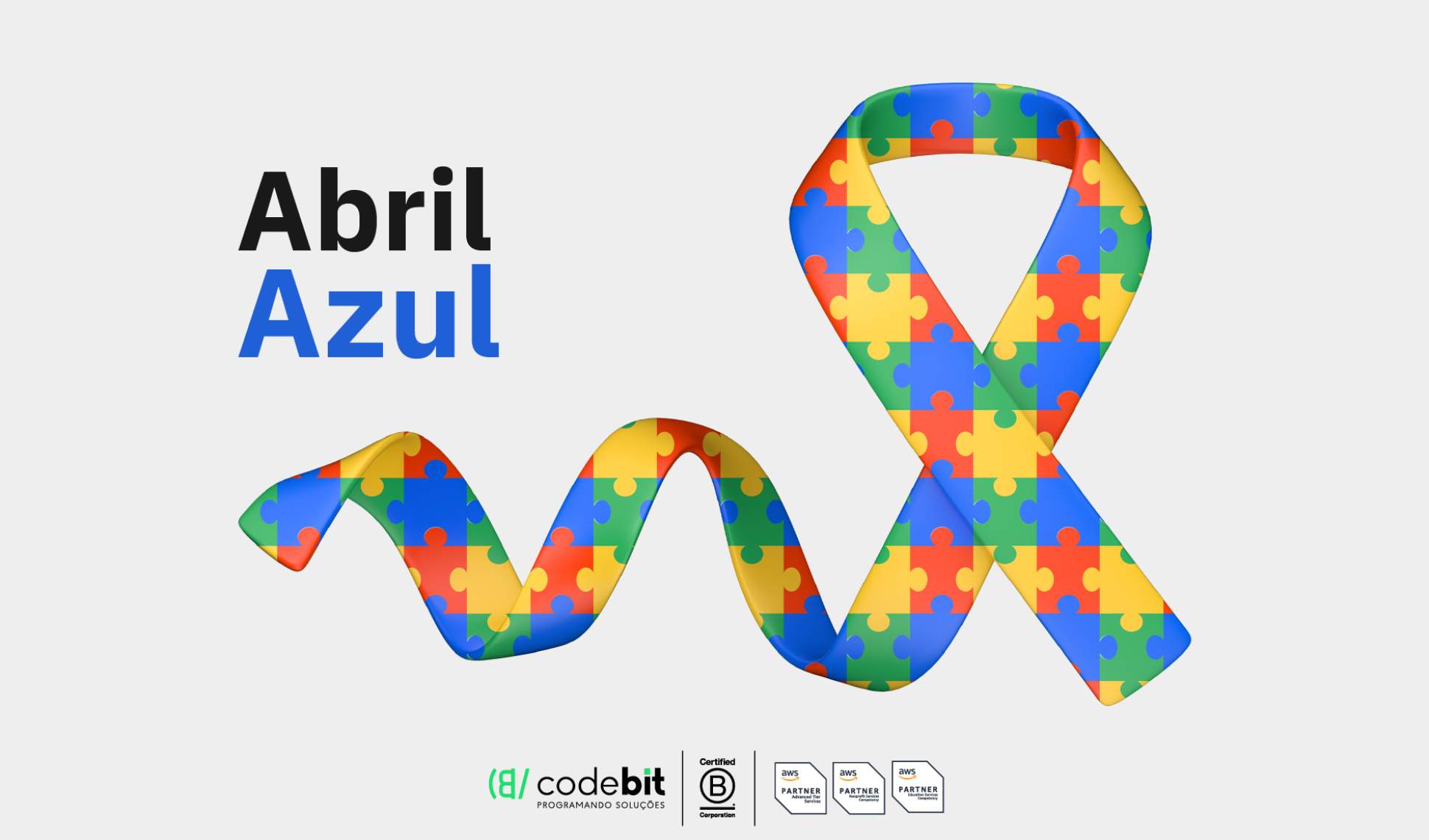
Isn't it true that technology has transformed the way we live, consume, and relate to one another?
After all, in addition to breaking physical barriers and making daily life more practical, technological tools can even contribute to the health and inclusion of the neurodivergent population.
We at CodeBit are taking advantage of Blue April, Autism Awareness Month, to present some resources that can benefit autistic individuals, making them feel more welcomed and facilitating the development of their skills.
Keep reading and follow along!
How do technological resources help people with ASD?
In a not-too-distant past, a non-verbal autistic person, or someone with communication difficulties, had to find their own ways to interact with the world around them.
Many resorted to PECS (Picture Exchange Communication System), or sent messages through photos or drawings.
However, thanks to advances in technology, people with ASD (autism spectrum disorder) can now use tablets and mobile phones to download alternative communication apps (some even with voice simulation) and express themselves verbally with greater ease.
These tools not only optimize communication but also ensure more independence, self-esteem, and security for autistic individuals.
Check out below how technological resources can also help in the development of interpersonal skills of people with autism, even offering them greater chances of social integration.
Language skills
Currently, there are some applications and platforms specifically developed to assist autistic children in learning language skills.
With a personalized approach, they adapt to each student's strengths and difficulties, through an engaging and interactive teaching environment.
Virtual and Augmented Reality
Virtual and Augmented Reality technologies can also be great allies in the development of interpersonal skills in autistic people.
Furthermore, these resources have been applied to enable the creation of simulated environments, which help with cognition and socialization skills, allowing for healthy, safe, and controlled interaction through games, communities, forums, and much more.
Games
In the world of gaming, autistic people can also find the accessibility they need, with therapeutic games designed exclusively for neuroatypical individuals, such as Jade APP, a complete platform developed according to evidence-based scientific techniques, with games for children and adolescents with autism, learning difficulties, and other diagnoses, such as dyslexia.
Games can even be included in the learning process—after all, so-called gamification (an approach that integrates education with game resources like points, levels, and rewards) makes studies more dynamic and attractive, significantly improving the performance of students with autism.
Without a doubt, the examples cited above reinforce how much technology, when applied wisely and effectively, can help with the self-esteem and autonomy of autistic people, increasing their motivation to perform daily tasks, facilitating organization, and prompting independence.
In light of all the benefits presented, it is clear how much these factors contribute to the mental health of individuals.
Now that you know how technological resources can benefit people with ASD, discover in the next topics how the use of technology can assist in the diagnosis and treatment of neurodivergences.
Diagnosis
The advancement of specialized software has made the analysis of electroencephalograms faster and more precise, significantly facilitating the diagnosis of autism.
These tools allow for a more detailed analysis of brain waves, helping healthcare professionals identify patterns associated with Autism Spectrum Disorder (ASD).
Additionally, online apps and questionnaires are being increasingly used by healthcare professionals to organize patient information.
These tools permit the recording and monitoring of ASD symptoms, collecting and organizing information on behavior and communication, facilitating patient follow-up over time.
This more organized and systematic approach assists in identifying behavioral patterns and assessing the efficacy of different treatments and interventions.
Optimization of Biometric Analysis
New technological resources focused on biometric data analysis are revolutionizing how ASD is diagnosed and monitored. Using portable, non-invasive devices, it is possible to monitor sleep patterns, heart rate, and eye movements with a precision that was unimaginable until recently.
This information provides valuable insights for healthcare professionals, who can gain access to patient brain activity and behavior. As an example, we can mention abnormal sleep patterns—which can be an early indicator of autism in children.
Telemedicine
Telemedicine is the practice of medicine at a distance, using communication technology to allow doctors and patients to interact and share medical information without being physically present in the same location.
The solution allows doctors and other healthcare professionals to monitor an autistic person remotely, facilitating general status checks and providing personalized, effective care.
Mental Health
Finally, it is important to consider that autistic people have distinct ways of processing information, experiencing the world around them, learning, and absorbing messages and content.
Sometimes, the unique characteristics they exhibit can lead to communication and expression difficulties, causing social stigma, bullying practices, and more.
For this reason, people with ASD are more likely to develop mental health issues, such as anxiety and depression.
However, with the support provided by science, in conjunction with technology, these individuals can find new ways to overcome these medical adversities and achieve emotional balance, whether through meditation apps, online therapy platforms, targeted educational forums, support networks, and much more.
Conclusion
We at CodeBit support the Blue April movement and believe that it involves, above all, an invitation to reflection and action. Because of this, our greatest purpose is to involve ourselves with seriousness and empathy in this reality of differences. We believe our way of contributing is to strive to enlighten readers about autism and show the existing technological tools that can improve the quality of life for people with ASD.
When we join forces to promote awareness and inclusion, we contribute to the building of a society that values diversity and offers equality and opportunities for all.
The journey towards effective support for people with Autism Spectrum Disorder and their families continues, and every step taken along this path is a step towards a more empathetic and inclusive world.
If this article was interesting to you, share the content on your social networks and keep an eye on the CodeBlog. We will have news here soon.
A big warm hug, and until the next post!


" width="15.500294250860316px"><path d="M 0 15.475 L 0 0 L 15.5 0 L 15.5 15.475 Z" fill="transparent" height="15.475099999999998px" id="tPiDQU_MP" width="15.5px"/><path d="M 3.167 1.589 C 3.847 0.724 4.607 0.171 5.61 0.046 C 6.532 -0.07 7.436 0.022 8.277 0.451 C 9.235 0.938 9.681 1.797 9.877 2.797 C 9.987 3.364 10.049 3.948 10.056 4.525 C 10.079 6.395 10.055 8.265 10.075 10.135 C 10.08 10.527 9.944 10.648 9.574 10.641 C 8.799 10.627 8.023 10.63 7.248 10.644 C 6.911 10.65 6.787 10.528 6.789 10.181 C 6.803 8.533 6.799 6.884 6.789 5.236 C 6.788 4.892 6.754 4.545 6.698 4.206 C 6.57 3.433 6.106 2.974 5.443 2.925 C 4.405 2.849 3.714 3.206 3.495 4.018 C 3.37 4.478 3.333 4.972 3.326 5.451 C 3.306 7.002 3.307 8.555 3.327 10.105 C 3.332 10.504 3.208 10.654 2.807 10.644 C 2.032 10.625 1.257 10.63 0.481 10.642 C 0.156 10.647 -0.001 10.546 0 10.193 C 0.007 7.035 0.006 3.876 0 0.718 C 0 0.391 0.104 0.24 0.458 0.249 C 1.219 0.269 1.981 0.267 2.743 0.252 C 3.068 0.245 3.197 0.361 3.17 0.688 C 3.148 0.948 3.166 1.211 3.166 1.589 Z" fill="rgb(245, 240, 237)" height="10.64451194394125px" id="Hw1mXDepj" transform="translate(5.425 4.831)" width="10.075487656011685px"/><path d="M 3.284 5.2 C 3.284 6.764 3.27 8.327 3.292 9.892 C 3.297 10.284 3.158 10.403 2.79 10.396 C 2.015 10.382 1.24 10.386 0.465 10.399 C 0.14 10.403 -0.001 10.305 0 9.947 C 0.012 6.792 0.012 3.637 0.002 0.481 C 0.001 0.123 0.105 -0.01 0.473 0.001 C 1.261 0.023 2.05 0.02 2.839 0.004 C 3.183 -0.003 3.294 0.124 3.29 0.467 C 3.276 2.044 3.284 3.623 3.284 5.2 Z" fill="rgb(245, 240, 237)" height="10.39869818980116px" id="sgvgyFXCr" transform="translate(0.237 5.076)" width="3.292113077251912px"/><path d="M 3.768 1.898 C 3.761 2.945 2.91 3.782 1.859 3.772 C 0.828 3.763 -0.012 2.892 0 1.842 C 0.012 0.824 0.864 -0.003 1.897 0 C 2.956 0.003 3.776 0.834 3.768 1.898 Z" fill="rgb(245, 240, 237)" height="3.772444228811899px" id="M8BOm1cI0" transform="translate(0 0)" width="3.768370362042166px"/></g></svg>)
" height="17px" id="G9twDfI1x" transform="translate(2 2)" width="17px"/></svg>)
" height="17px" id="q6YSjVL3w" transform="translate(6 2)" width="8.5px"/></svg>)
" height="12.720532384492868px" id="Jh_taQ7si" transform="translate(1 3.586)" width="18.00050025px"/></svg>)