Technology
5 cloud security mistakes that can put your data at risk
5 cloud security mistakes that can put your data at risk. Discover them on CodeBlog
02/26/2024


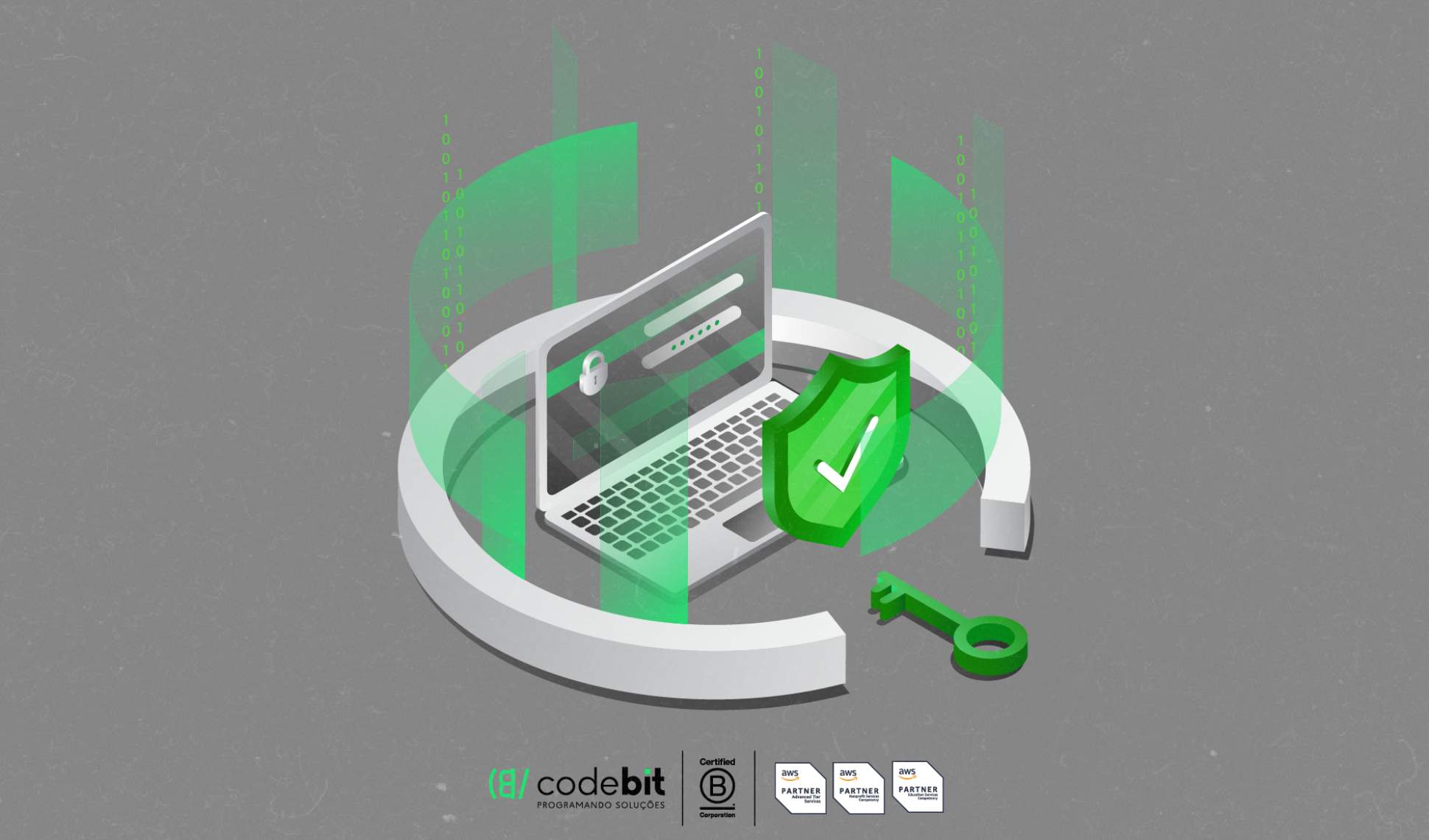
Cloud computing, also known as computação em nuvem, has been a solution increasingly adopted by businesses that want to have availability, scalability, and automation to stand out in the market and become more competitive.
After all, the cloud environment presents a virtual hosting solution, where all software, files, data, and information can be accessed, shared, and processed through the internet, at any time or place.
However, as much as the advantages of computing in the cloud are indisputable, it is important to highlight that the security of the environment is a shared responsibility between the service provider and the organization that uses the tool.
Therefore, it is up to public and private businesses to always stay alert to possible risks and threats that they may be exposed to in cases of security system failures. To help you in this mission, in today's blog post, we at CodeBlog have listed 5 security mistakes that can put your data at risk.
Follow along with the reading and keep up!
1. Using weak passwords and underestimating proper management
This is undoubtedly one of the most common and also most dangerous mistakes. This is because simple passwords such as number sequences or anniversary dates can be easily discovered by attackers.
Underestimating proper management of access keys can simplify intrusions and unauthorized access to the company's systems and data, resulting in various financial losses caused by the theft of information.
Protection tips:
Create a strong and unique password that has not been used previously for any other access. Try to mix letters, uppercase and lowercase, numbers, and special characters. This is a basic and simple process, but one that can be decisive in preventing attacks. There are even some password management applications that can be very useful. Basically, they store different access data in an encrypted environment, allowing passwords to remain protected and accessible.
2. Lack of training and qualification
Even though it is an automated and digital solution, the cloud environment is operated by human beings. Therefore, to ensure the security of all processes, it is essential to train and raise awareness among the employee team regarding the best practices of cybersecurity.
When an organization does not have an organizational culture focused on security and risk prevention, it ends up facilitating risky behaviors, such as clicking on suspicious links, disclosing confidential information, borrowing equipment used during corporate tasks, and other actions that increase the risk of phishing attacks and sensitive data leakage.
Protection tips:
Establish a period of training and adaptation, so that the entire team can get used to the technology and master the usage practices, reducing the feeling of resistance.
In addition, implement clear security policies.
Last but not least, demonstrate it in practice! Run some simulations of phishing attacks to educate your team of employees and hold frequent meetings to clarify doubts, educate, and inform them.
3. Insecure connections and public Wi-Fi usage
Considering that the cloud environment can be accessed on any authorized device connected to the internet and that the use of cloud storage resources is not limited to the physical business environment, it is necessary to pay attention and, especially, alert employees who operate remotely about the risk of accessing confidential information on public Wi-Fi.
These networks, unlike private ones, do not feature reinforced security and can make corporate information susceptible to theft, loss, and intrusion.
Protection tips:
Instruct your team of employees not to use public Wi-Fi networks to access or share sensitive data.
Install a VPN ("Virtual Private Network") and establish a secure network connection. Basically, VPNs encrypt your Internet traffic and disguise your online identity, making it difficult for third parties to access and track online activities.
Keep company Wi-Fi networks protected at all times, with strong and updated passwords.
4. Lack of updates and security patches
Unlike physical servers, cloud updates do not cause any type of disruption to systems, so there are no excuses for not applying them.
By underestimating the efficiency of these processes, organizations can leave identified vulnerabilities unpatched, facilitating the action of cybercriminals and, consequently, losses related to malware attacks, ransomware, and other threats, which besides bringing a lot of headaches, still compromise the integrity and availability of corporate data and systems.
Protection tips:
To avoid vulnerabilities, keep security patches up to date and make sure configurations comply with the new protection recommendations (if any).
Establish a regular update policy to ensure that all systems and applications operate on their latest, updated versions.
Consider hiring an outsourced team to offer full support, avoid incidents, anticipate, and prevent potential threats.
5. Failures in storage and absence of periodic backups
When proper storage measures are not established and backups are not performed frequently, the data and information stored in the cloud environment can be lost irreversibly, causing the interruption of business operations.
Several factors can cause data loss. Natural disasters, cyber attacks, or hardware failures negatively impact a business's reputation, productivity, and profitability.
How to protect yourself:
- Establish a data storage strategy that integrates security measures, such as access control and encryption.
- Perform regular backups.
- Make backup copies of your files, preferably in the cloud. Thus, if you are hit by ransomware, you can clean your device without losing the files and, then, reinstall them.
- Test and verify backups periodically to ensure they can be recovered in case of incidents.
In conclusion, want to discover everything the cloud can do for your business and how to implement a secure and optimized migration?
Then click here and talk to the team of specialists at CodeBit - one of the few Brazilian companies that are Advanced Partners of AWS - Amazon Web Services: the most secure and widely used cloud in the world.
Otherwise, keep an eye on CodeBlog. Soon, we will have news here.
A big hug and see you in the next post!




" width="15.500294250860316px"><path d="M 0 15.475 L 0 0 L 15.5 0 L 15.5 15.475 Z" fill="transparent" height="15.475099999999998px" id="tPiDQU_MP" width="15.5px"/><path d="M 3.167 1.589 C 3.847 0.724 4.607 0.171 5.61 0.046 C 6.532 -0.07 7.436 0.022 8.277 0.451 C 9.235 0.938 9.681 1.797 9.877 2.797 C 9.987 3.364 10.049 3.948 10.056 4.525 C 10.079 6.395 10.055 8.265 10.075 10.135 C 10.08 10.527 9.944 10.648 9.574 10.641 C 8.799 10.627 8.023 10.63 7.248 10.644 C 6.911 10.65 6.787 10.528 6.789 10.181 C 6.803 8.533 6.799 6.884 6.789 5.236 C 6.788 4.892 6.754 4.545 6.698 4.206 C 6.57 3.433 6.106 2.974 5.443 2.925 C 4.405 2.849 3.714 3.206 3.495 4.018 C 3.37 4.478 3.333 4.972 3.326 5.451 C 3.306 7.002 3.307 8.555 3.327 10.105 C 3.332 10.504 3.208 10.654 2.807 10.644 C 2.032 10.625 1.257 10.63 0.481 10.642 C 0.156 10.647 -0.001 10.546 0 10.193 C 0.007 7.035 0.006 3.876 0 0.718 C 0 0.391 0.104 0.24 0.458 0.249 C 1.219 0.269 1.981 0.267 2.743 0.252 C 3.068 0.245 3.197 0.361 3.17 0.688 C 3.148 0.948 3.166 1.211 3.166 1.589 Z" fill="rgb(245, 240, 237)" height="10.64451194394125px" id="Hw1mXDepj" transform="translate(5.425 4.831)" width="10.075487656011685px"/><path d="M 3.284 5.2 C 3.284 6.764 3.27 8.327 3.292 9.892 C 3.297 10.284 3.158 10.403 2.79 10.396 C 2.015 10.382 1.24 10.386 0.465 10.399 C 0.14 10.403 -0.001 10.305 0 9.947 C 0.012 6.792 0.012 3.637 0.002 0.481 C 0.001 0.123 0.105 -0.01 0.473 0.001 C 1.261 0.023 2.05 0.02 2.839 0.004 C 3.183 -0.003 3.294 0.124 3.29 0.467 C 3.276 2.044 3.284 3.623 3.284 5.2 Z" fill="rgb(245, 240, 237)" height="10.39869818980116px" id="sgvgyFXCr" transform="translate(0.237 5.076)" width="3.292113077251912px"/><path d="M 3.768 1.898 C 3.761 2.945 2.91 3.782 1.859 3.772 C 0.828 3.763 -0.012 2.892 0 1.842 C 0.012 0.824 0.864 -0.003 1.897 0 C 2.956 0.003 3.776 0.834 3.768 1.898 Z" fill="rgb(245, 240, 237)" height="3.772444228811899px" id="M8BOm1cI0" transform="translate(0 0)" width="3.768370362042166px"/></g></svg>)
" height="17px" id="G9twDfI1x" transform="translate(2 2)" width="17px"/></svg>)
" height="17px" id="q6YSjVL3w" transform="translate(6 2)" width="8.5px"/></svg>)
" height="12.720532384492868px" id="Jh_taQ7si" transform="translate(1 3.586)" width="18.00050025px"/></svg>)