Cloud Computing
Private cloud, public cloud, and hybrid cloud: which is the best solution for you?
Private cloud, public cloud, and hybrid cloud: which is the best solution for you?
09/06/2023


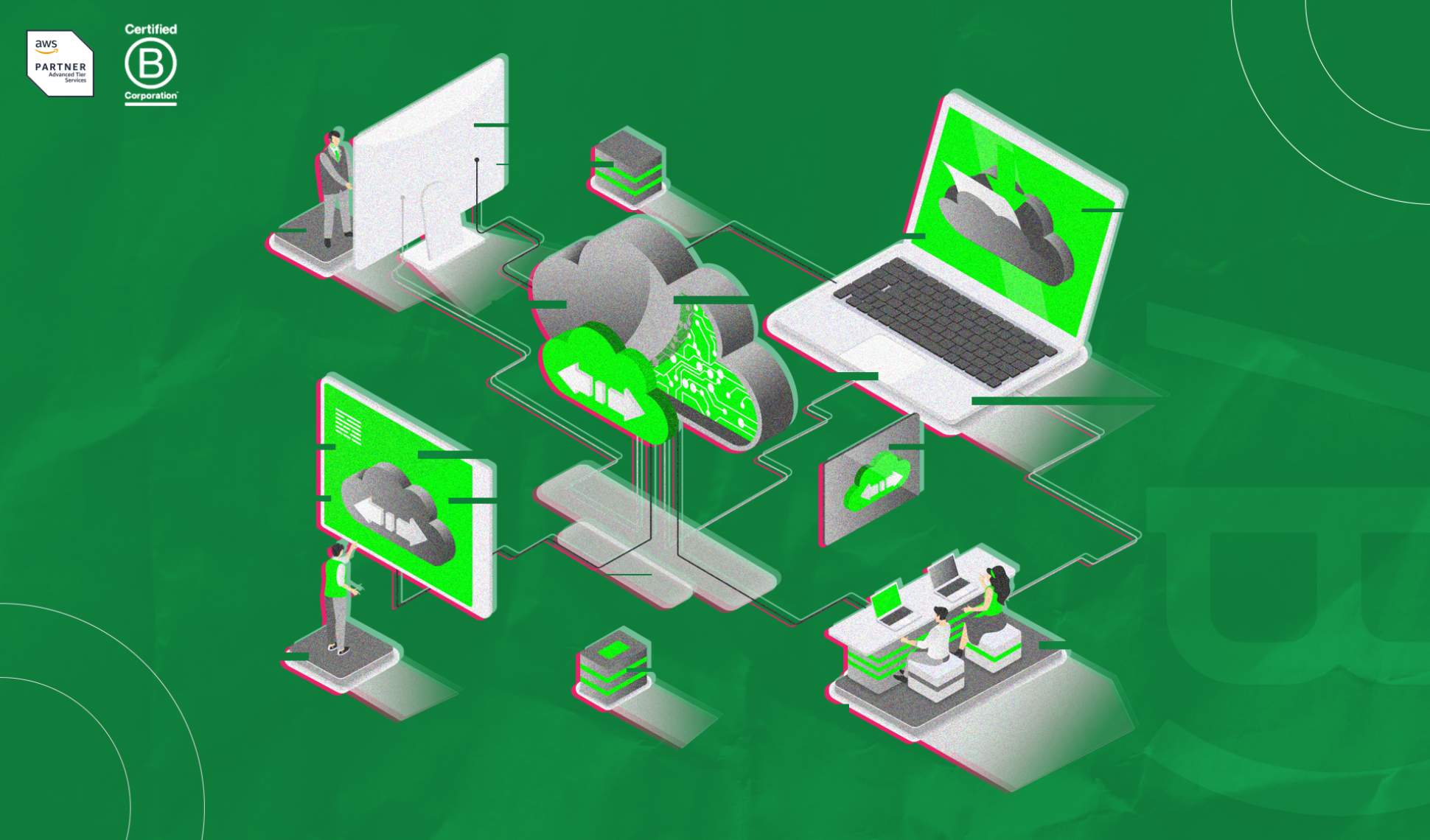
Cloud computing is no longer seen as an innovation and is now considered an urgency in the corporate ecosystem. According to a survey conducted by Infosys, 40% of companies intend to migrate more than half of their systems and processes to the cloud environment.
But, do you know what the advantages of this solution are and, above all, which of the cloud computing formats is the most suitable to meet your needs? Find out in the article that we, from the CodeBlog team, have prepared for you.
After all, what is the cloud?
Unlike common models, the cloud integrates a series of servers that represent a broad data storage and processing device and allow full elasticity in all resources provided.
In this way, it is possible to allocate resources from interconnected servers for your use and customize the processing capacity according to demand, with appropriate security and without the need for frequent installations or maintenance.
The cloud is a guarantee of more security, reliability, cost reduction, scalability, agility, and innovation.
Now that you already know what the cloud is, also known as cloud computing, check out, in the next topics, the types of models of this solution and find out which of them is most suitable to meet your demand.
Private cloud
Ideal for meeting the needs of a single business, the private cloud has fully customizable resources, architecture, and maintenance.
In this format, all hardware and software are maintained on a private network and directed, entirely, to the demands and needs of the contracting company.
These characteristics make the solution more customizable and suitable for ensuring organizational control over the business.
In addition, in this format, the infrastructure has more control and monitoring, to reduce possible issues related to security.
Benefits of the private cloud:
- it is more secure;
- it intensifies the level of reliability of the environment;
- it is flexible and adapts to the organization's work format;
- it ensures broad control of internal servers and their resources;
- it allows the use of allocated resources for maintenance or complementation of the cloud environment;
- it features exclusive support for identifying and correcting potential failures.
Public cloud
On the other hand, the public cloud is hosted in a virtual environment, which is shared with other users. Deemed the most popular model on the market, it integrates a simple, yet highly functional solution.
Unlike the private cloud, the public cloud does not integrate hardware or infrastructure developed exclusively for a business, so its resources cannot be customized.
On the other hand, when choosing the public cloud model, in addition to ensuring more savings, it is also possible to bear only the costs of the contracted capacity. After all, investments related to hardware, maintenance, and applications are the responsibility of the server itself.
Benefits of the public cloud:
- it is easily scalable;
- it is affordable;
- it is agile in making resources available;
- it guarantees greater reliability in the available servers.
Hybrid cloud
As the name implies, the hybrid cloud is the combination of the public and private cloud and its mission is to extract the best of both models to meet all the company's needs.
In practice, the hybrid cloud operates with exclusive servers to ensure the storage of the most sensitive, confidential, or important data.
On the other hand, it also features some shared software to store less sensitive information.
In short, the hybrid model is capable of promoting a high level of information security with relatively lower costs. After all, not all data is kept on servers with reinforced protection.
Benefits of the hybrid cloud:
- it is flexible and allows switching between public and private models;
- it has simplified migration and can be easily adopted by teams of different sizes;
- it promotes greater security for sensitive data;
- it is scalable and flexible;
- it features broad control and technical support.
Private cloud, public cloud, and hybrid cloud: which is the best solution for you?
Each cloud model has its characteristics, advantages, and differentials, so to make an assertive choice it is necessary, first of all, to identify the demands of your business.
The private cloud, for example, is highly recommended for companies or institutions that handle sensitive data and adopt a reinforced security culture, as is the case of NGOs, hospitals, clinics, and banking institutions.
In relation to the volume of operations, if fluctuating demands are the majority, the public cloud will probably be the best alternative. On the other hand, if the workload has more predictable patterns, the most advisable is to resort to the private cloud.
In contrast, hybrid clouds include both the features of public and private environments, encompass all resources geared toward the workload or format, and can be hosted anywhere, integrating environments installed on local servers or in the cloud environment, allowing total customization.
Generally, they are good choices for businesses that already have a good internal infrastructure, but still wish to experience all the advantages of the public model.
Anyway, did you enjoy discovering the main characteristics of public, private, and hybrid clouds?
If after learning more about the transformation generated by cloud computing, you want to find ways to apply it in your company or institution to simplify and reduce bureaucracy in processes, get in touch with the specialist team at CodeBit and discover all the personalized solutions available to meet your demand!
We offer, together with AWS (Amazon Web Services), several solutions that guarantee the support your institution needs throughout the journey, from understanding the level of technological maturity, to implementing cloud environments with high efficiency and low operational cost.
Furthermore, keep an eye on CodeBlog. Soon, we will have a lot of news here.
A big hug and see you in the next post.




" width="15.500294250860316px"><path d="M 0 15.475 L 0 0 L 15.5 0 L 15.5 15.475 Z" fill="transparent" height="15.475099999999998px" id="tPiDQU_MP" width="15.5px"/><path d="M 3.167 1.589 C 3.847 0.724 4.607 0.171 5.61 0.046 C 6.532 -0.07 7.436 0.022 8.277 0.451 C 9.235 0.938 9.681 1.797 9.877 2.797 C 9.987 3.364 10.049 3.948 10.056 4.525 C 10.079 6.395 10.055 8.265 10.075 10.135 C 10.08 10.527 9.944 10.648 9.574 10.641 C 8.799 10.627 8.023 10.63 7.248 10.644 C 6.911 10.65 6.787 10.528 6.789 10.181 C 6.803 8.533 6.799 6.884 6.789 5.236 C 6.788 4.892 6.754 4.545 6.698 4.206 C 6.57 3.433 6.106 2.974 5.443 2.925 C 4.405 2.849 3.714 3.206 3.495 4.018 C 3.37 4.478 3.333 4.972 3.326 5.451 C 3.306 7.002 3.307 8.555 3.327 10.105 C 3.332 10.504 3.208 10.654 2.807 10.644 C 2.032 10.625 1.257 10.63 0.481 10.642 C 0.156 10.647 -0.001 10.546 0 10.193 C 0.007 7.035 0.006 3.876 0 0.718 C 0 0.391 0.104 0.24 0.458 0.249 C 1.219 0.269 1.981 0.267 2.743 0.252 C 3.068 0.245 3.197 0.361 3.17 0.688 C 3.148 0.948 3.166 1.211 3.166 1.589 Z" fill="rgb(245, 240, 237)" height="10.64451194394125px" id="Hw1mXDepj" transform="translate(5.425 4.831)" width="10.075487656011685px"/><path d="M 3.284 5.2 C 3.284 6.764 3.27 8.327 3.292 9.892 C 3.297 10.284 3.158 10.403 2.79 10.396 C 2.015 10.382 1.24 10.386 0.465 10.399 C 0.14 10.403 -0.001 10.305 0 9.947 C 0.012 6.792 0.012 3.637 0.002 0.481 C 0.001 0.123 0.105 -0.01 0.473 0.001 C 1.261 0.023 2.05 0.02 2.839 0.004 C 3.183 -0.003 3.294 0.124 3.29 0.467 C 3.276 2.044 3.284 3.623 3.284 5.2 Z" fill="rgb(245, 240, 237)" height="10.39869818980116px" id="sgvgyFXCr" transform="translate(0.237 5.076)" width="3.292113077251912px"/><path d="M 3.768 1.898 C 3.761 2.945 2.91 3.782 1.859 3.772 C 0.828 3.763 -0.012 2.892 0 1.842 C 0.012 0.824 0.864 -0.003 1.897 0 C 2.956 0.003 3.776 0.834 3.768 1.898 Z" fill="rgb(245, 240, 237)" height="3.772444228811899px" id="M8BOm1cI0" transform="translate(0 0)" width="3.768370362042166px"/></g></svg>)
" height="17px" id="G9twDfI1x" transform="translate(2 2)" width="17px"/></svg>)
" height="17px" id="q6YSjVL3w" transform="translate(6 2)" width="8.5px"/></svg>)
" height="12.720532384492868px" id="Jh_taQ7si" transform="translate(1 3.586)" width="18.00050025px"/></svg>)