Health
Technology and health: learn all about telemedicine
Technology and health: learn everything about telemedicine in the article that the Codeblog team prepared for you.
12/13/2021


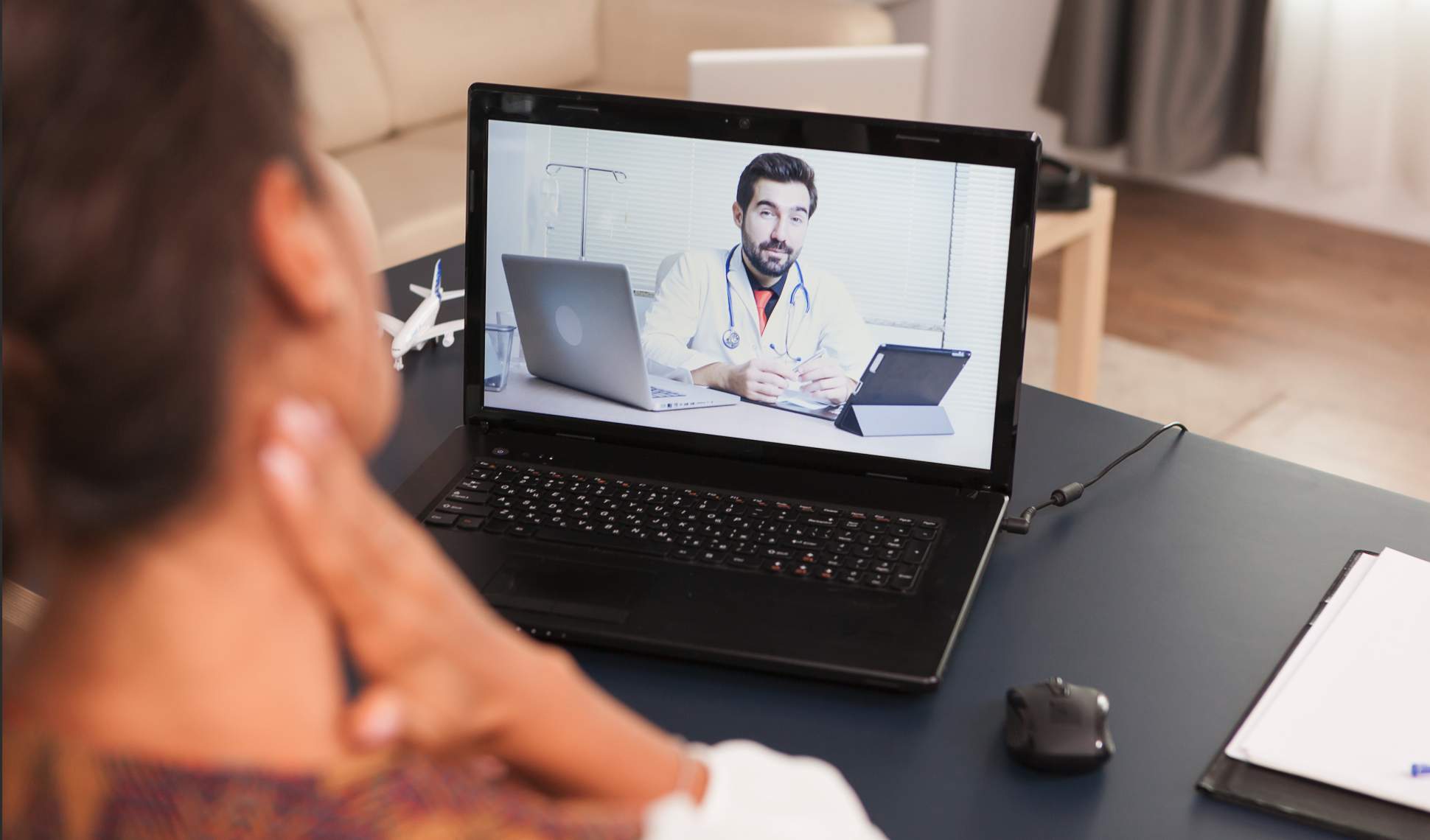
The constant development of technology has impacted the most diverse areas, including medicine.
Currently, there are countless tools such as AI and cloud computing, which are capable of offering great innovations for treatments and procedures. In addition, telemedicine, for example, has been one of the most relevant resources within healthcare.
The solution emerged as a way to treat patients located in regions where access to qualified professionals and necessary equipment is difficult.
With the passage of time and the arrival of the pandemic, telemedicine strengthened in the market, mainly because it enabled the exchange of information, even over long distances. But after all, what does telemedicine integrate and what other benefits can technology offer to the healthcare area? Continue reading and check out the answers to these questions in the article that the Codeblog team has prepared for you.
What is telemedicine?
Telemedicine integrates one of the most recent chapters in the history of medicine. Its birth occurred just over half a century ago. In Brazil, it began to be studied in 1985, at the University of São Paulo (USP), still under the name of "Medical Informatics". Initially, the purpose of the concept was, basically, to establish a communication channel between doctors and patients located in remote locations, without access to hospitals.
However, today, the functionalities of the practice go far beyond distance communication and allow for exams, medical reports and even online appointments.
With the passing of the years and the constant technological evolution, this tool has become an excellent way to serve people located in rural areas or distant places, who do not have medical centers or qualified professionals.
Today, telemedicine is much more advanced and allows medical care to be directed to anyone around the world, in a fast, agile and efficient manner.
As new as it may be, the trend is for the resource to be further expanded in the coming years.
Among the examples of current telemedicine are medical apps and video-calling tools, which group patients and area professionals together and contribute to the transmission of medical reports and records between distant centers, reducing delays in service.
How does telemedicine operate?
De facto, the technological progress has not only transformed the way we consume and relate to one another, but also the way we take care of our health and contact the appropriate professionals.
Nowadays, with just a few clicks on a device connected to the internet, communication can be established with patients located anywhere in the world.
But, to enable so many features, telemedicine relies on some specific components. Check them out below:
Network connections
Highly present in our daily lives, network connections are responsible for promoting telemedicine around the world and allowing medical establishments to connect across the entire planet.
Point-to-point connections
These connections are established at specific points, connecting one center to another on a larger scale. With it, professionals from small clinics or those located in remote areas can rely on the service of doctors located in major centers, in a practical and effective way.
Monitoring center
Even more specific, the so-called monitoring centers act, as the name itself suggests, as a tool capable of monitoring patients over long distances. To do this, they establish a connection between the patient's home or place of hospitalization and the professionals responsible for care and monitoring, so that they offer personalized service and keep the case always updated.
What are the main formats of telemedicine?
Even though the application of telemedicine already gives us some clues about the main definitions, it is necessary to explore the concepts a bit further to understand the scope of the solution and comprehend the benefits provided by it.
Check out below the main formats that make up the tool.
Remote patient monitoring
In summary, remote patient monitoring allows doctors and other healthcare professionals to monitor and track a patient's vital signs from a distance, facilitating the check of the overall status and providing personalized and effective care.
In cases of patients in critical or more serious conditions, remote monitoring is crucial, as it allows rapid intervention in case of an emergency, given that the signs are frequently monitored.
Thus, it is possible to observe patients recovering in their homes through constant follow-up and with the comfort of a treatment carried out in a family environment.
Furthermore, this application of telemedicine also helps patients with chronic conditions to manage their health and tightens communication with the professionals responsible for the treatment, who can generate reports on the progression of the condition in a fully automated way.
Storage and forwarding of information
Store-and-forward telemedicine enables providers to send, store and share patients' medical data, such as reports, test results, or medical records in a secure and efficient manner.
In this context, security is essential to ensure the confidentiality of patients' documents and also their integrity.
One of the main benefits provided by store-and-forward telemedicine is that, in most cases, it is done through cloud computing. In this way, professionals from different shifts can communicate and send data effectively, so that other doctors can perform the analysis.
Real-time telemedicine
Lastly, real-time telemedicine allows the exchange of data and live information between doctors and professionals from different parts of the world. For this, tools such as videoconferences, phone calls, and other similar calls are used.
From these solutions, it is possible to observe real-time data and even talk to the patient to collect some information regarding the development of the case.
Anyway, did you enjoy finding out what telemedicine is and what its functionalities are? If this article was interesting to you, keep an eye on Codeblog and don't miss the next updates.
And if you want to find out how technology can revolutionize your business processes, regardless of your field of practice, contact the team of specialists at Codebit and check out all the customized solutions to meet your demand.
A big hug and see you in the next post!




" width="15.500294250860316px"><path d="M 0 15.475 L 0 0 L 15.5 0 L 15.5 15.475 Z" fill="transparent" height="15.475099999999998px" id="tPiDQU_MP" width="15.5px"/><path d="M 3.167 1.589 C 3.847 0.724 4.607 0.171 5.61 0.046 C 6.532 -0.07 7.436 0.022 8.277 0.451 C 9.235 0.938 9.681 1.797 9.877 2.797 C 9.987 3.364 10.049 3.948 10.056 4.525 C 10.079 6.395 10.055 8.265 10.075 10.135 C 10.08 10.527 9.944 10.648 9.574 10.641 C 8.799 10.627 8.023 10.63 7.248 10.644 C 6.911 10.65 6.787 10.528 6.789 10.181 C 6.803 8.533 6.799 6.884 6.789 5.236 C 6.788 4.892 6.754 4.545 6.698 4.206 C 6.57 3.433 6.106 2.974 5.443 2.925 C 4.405 2.849 3.714 3.206 3.495 4.018 C 3.37 4.478 3.333 4.972 3.326 5.451 C 3.306 7.002 3.307 8.555 3.327 10.105 C 3.332 10.504 3.208 10.654 2.807 10.644 C 2.032 10.625 1.257 10.63 0.481 10.642 C 0.156 10.647 -0.001 10.546 0 10.193 C 0.007 7.035 0.006 3.876 0 0.718 C 0 0.391 0.104 0.24 0.458 0.249 C 1.219 0.269 1.981 0.267 2.743 0.252 C 3.068 0.245 3.197 0.361 3.17 0.688 C 3.148 0.948 3.166 1.211 3.166 1.589 Z" fill="rgb(245, 240, 237)" height="10.64451194394125px" id="Hw1mXDepj" transform="translate(5.425 4.831)" width="10.075487656011685px"/><path d="M 3.284 5.2 C 3.284 6.764 3.27 8.327 3.292 9.892 C 3.297 10.284 3.158 10.403 2.79 10.396 C 2.015 10.382 1.24 10.386 0.465 10.399 C 0.14 10.403 -0.001 10.305 0 9.947 C 0.012 6.792 0.012 3.637 0.002 0.481 C 0.001 0.123 0.105 -0.01 0.473 0.001 C 1.261 0.023 2.05 0.02 2.839 0.004 C 3.183 -0.003 3.294 0.124 3.29 0.467 C 3.276 2.044 3.284 3.623 3.284 5.2 Z" fill="rgb(245, 240, 237)" height="10.39869818980116px" id="sgvgyFXCr" transform="translate(0.237 5.076)" width="3.292113077251912px"/><path d="M 3.768 1.898 C 3.761 2.945 2.91 3.782 1.859 3.772 C 0.828 3.763 -0.012 2.892 0 1.842 C 0.012 0.824 0.864 -0.003 1.897 0 C 2.956 0.003 3.776 0.834 3.768 1.898 Z" fill="rgb(245, 240, 237)" height="3.772444228811899px" id="M8BOm1cI0" transform="translate(0 0)" width="3.768370362042166px"/></g></svg>)
" height="17px" id="G9twDfI1x" transform="translate(2 2)" width="17px"/></svg>)
" height="17px" id="q6YSjVL3w" transform="translate(6 2)" width="8.5px"/></svg>)
" height="12.720532384492868px" id="Jh_taQ7si" transform="translate(1 3.586)" width="18.00050025px"/></svg>)