Cloud Computing
How cloud management can help your business in 2024
How cloud management
01/19/2024


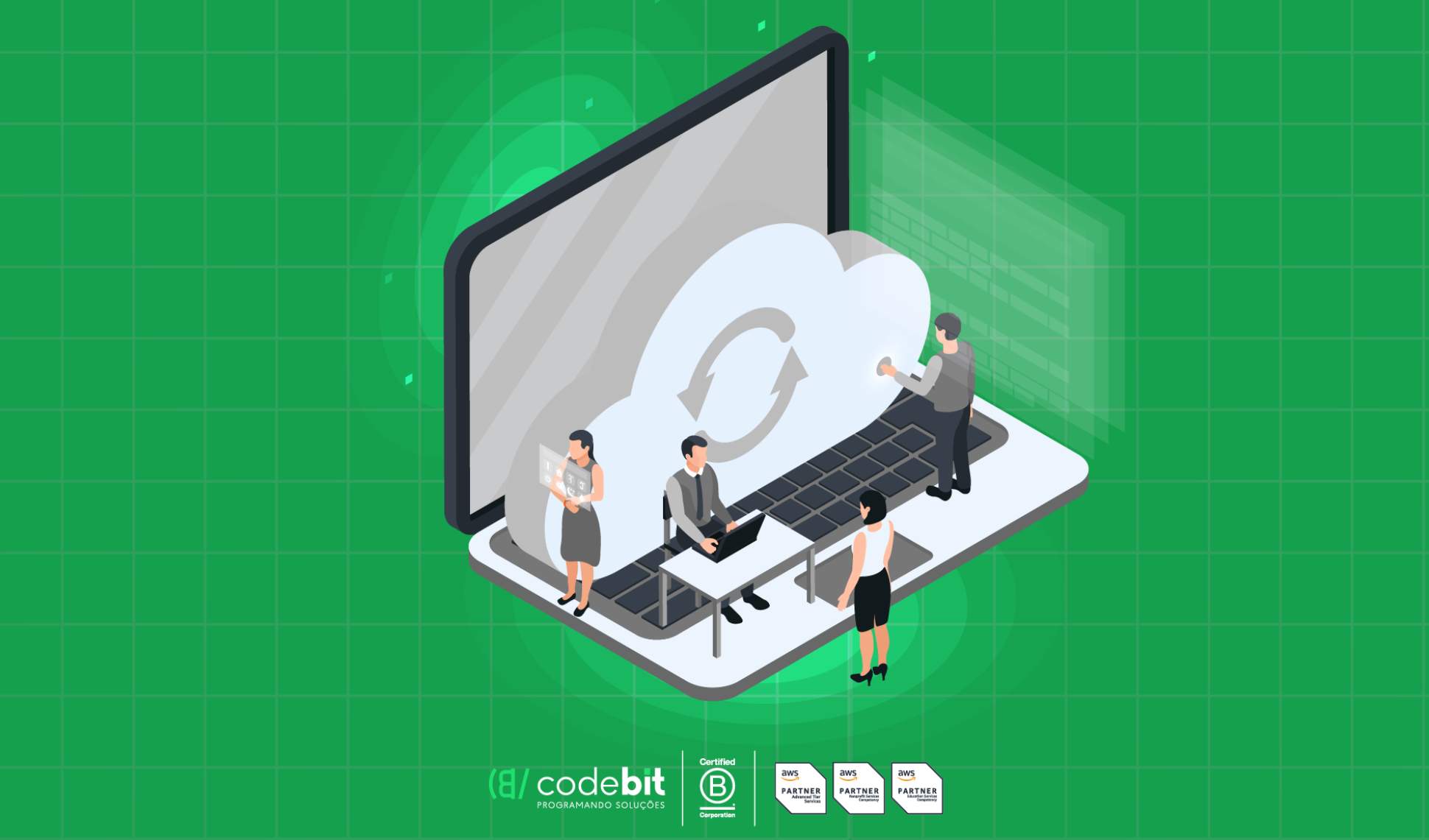
The beginning of a new year is always an excellent time to plan, set goals, make projections, and determine the next steps for a business.
And if you, as a manager, want to ensure more automation and autonomy, you need to understand the benefits of managing in the cloud, an ideal solution for companies of all sizes. It facilitates processes, ensures greater productivity for the team, and adds an extra layer of security to stored files, data, and programs.
According to a survey conducted by Gartner, for 2024 alone, global spending on public cloud computing services is projected to reach approximately US$ 679 billion.
The numbers themselves prove how much the market has embraced and capitalized on the technology, which is seen as a revolutionary resource, especially in the corporate world.
Want to understand why cloud computing is a strategic choice to launch your operations in 2024? Then, you are in the right place!
Continue reading and check out the blogspot that we, the team at CodeBlog, have prepared for you!
Cloud computing: the definition
Cloud computing is an innovative solution designed to simplify access to data and the execution of programs through the internet.
In practice, when using the system, users can access services and applications without the need for an installation, as everything (or almost everything) will run on servers.
In addition, access to data can be achieved through any device with proper authorization and an internet connection.
How cloud management can help your business in 2024
More effectiveness in data collection
We are definitely in the era of data, and all companies know how much the correct collection and storage of consumer information positively impacts decision-making related to products, launches, service personalization, and much more. But, to collect, organize, and analyze hundreds or thousands of data points effectively, it is necessary to rely on a robust IT infrastructure.
And that is precisely where computing emerges as an indispensable ally.
By hiring cloud computing services, in addition to not having to worry about setting up a local infrastructure, managers can track and monitor everything from service implementation to the development of new tools and methodologies.
Provides mobility
With cloud computing, managers and IT executives, who are generally the key decision-makers of a business, can operate systems at any time, in any place, through any device (computer, tablet, notebook). In other words, it is no longer necessary to be limited to the four walls of the office to share information or analyze reports.
In short, even when away from the workplace, it is possible to gather professionals for meetings (via teleconferencing), input data into management systems, and accelerate decision-making.
Furthermore, performance monitoring in the IT environment, as well as resource availability and operation development, also become more practical and effective.
By counting on cloud-based solutions, leadership can operate remotely and monitor the technology performance of businesses across different branches, business units, etc.
Scalability
As a business begins to grow and develop, it is natural for the company to reach its maximum capacity.
When this occurs, the need for new investments in hardware arises, which sometimes do not happen, harming the entire team's productivity and delivery results with slow and failing systems.
In this scenario, one of the great benefits of using the cloud is precisely scalability. Thanks to this differentiator, downloads and upgrades are carried out in a simple way. In addition, servers can always be updated to suit the company's needs.
Efficiency
One of the greatest attributes of cloud computing is digital efficiency, which in practice frees the team from various bureaucratic processes, making access to information faster and simplified. By adopting cloud computing, professionals can view data, purchase history, customer profiles, and preferences, as well as share unlimited information, within a few clicks.
Automation, besides ensuring more efficiency, reduces the time spent searching for files and documents, contributing significantly to increasing the team's productivity.
Security
The best cloud servers, such as AWS, developed by Amazon and marketed by Codebit, feature various resources to keep their data centers free of vulnerabilities, apply internationally recognized methodologies to prevent data breaches, and employ highly qualified professionals to deal with this theme.
Additionally, unlike physically stored paper files, cloud information is not at risk of being corrupted in potential natural disasters, thefts, or other incidents.
Savings
Cloud storage solutions allow their users to scale up and down the capacity of their machines in a simple and uncomplicated way, which provides more elasticity and optimizes processes in general.
In addition, the investment in IT infrastructure for adopting the tool is considerably low compared to the operational costs of physical storage.
Expenses for printers, ink, and paper are also drastically reduced, since with digital access, editing, and sharing, the need to print documents is diminished.
Sustainability
Precisely because it does not require the use of extensive proprietary equipment, cloud computing also ensures more sustainability for companies, keeping in mind space and energy savings, a lesser need for cooling, reduced carbon dioxide emissions, reduced paper usage, and much more.
From the moment large servers are centralized and use the best technologies available on the market, it is possible to optimize resource consumption and, consequently, minimize the impacts caused to the planet.
And as for your company, is it already reaping the fruits of all these benefits?
If you want to discover how cloud computing can help launch your business in 2024, click here, access the CodeBit website, learn about the services offered by our team of specialists, and discover customized solutions to meet your demands.
Furthermore, keep an eye on the CodeBlog. Soon, we will have news here.
A big hug and see you in the next post!
next post!




" width="15.500294250860316px"><path d="M 0 15.475 L 0 0 L 15.5 0 L 15.5 15.475 Z" fill="transparent" height="15.475099999999998px" id="tPiDQU_MP" width="15.5px"/><path d="M 3.167 1.589 C 3.847 0.724 4.607 0.171 5.61 0.046 C 6.532 -0.07 7.436 0.022 8.277 0.451 C 9.235 0.938 9.681 1.797 9.877 2.797 C 9.987 3.364 10.049 3.948 10.056 4.525 C 10.079 6.395 10.055 8.265 10.075 10.135 C 10.08 10.527 9.944 10.648 9.574 10.641 C 8.799 10.627 8.023 10.63 7.248 10.644 C 6.911 10.65 6.787 10.528 6.789 10.181 C 6.803 8.533 6.799 6.884 6.789 5.236 C 6.788 4.892 6.754 4.545 6.698 4.206 C 6.57 3.433 6.106 2.974 5.443 2.925 C 4.405 2.849 3.714 3.206 3.495 4.018 C 3.37 4.478 3.333 4.972 3.326 5.451 C 3.306 7.002 3.307 8.555 3.327 10.105 C 3.332 10.504 3.208 10.654 2.807 10.644 C 2.032 10.625 1.257 10.63 0.481 10.642 C 0.156 10.647 -0.001 10.546 0 10.193 C 0.007 7.035 0.006 3.876 0 0.718 C 0 0.391 0.104 0.24 0.458 0.249 C 1.219 0.269 1.981 0.267 2.743 0.252 C 3.068 0.245 3.197 0.361 3.17 0.688 C 3.148 0.948 3.166 1.211 3.166 1.589 Z" fill="rgb(245, 240, 237)" height="10.64451194394125px" id="Hw1mXDepj" transform="translate(5.425 4.831)" width="10.075487656011685px"/><path d="M 3.284 5.2 C 3.284 6.764 3.27 8.327 3.292 9.892 C 3.297 10.284 3.158 10.403 2.79 10.396 C 2.015 10.382 1.24 10.386 0.465 10.399 C 0.14 10.403 -0.001 10.305 0 9.947 C 0.012 6.792 0.012 3.637 0.002 0.481 C 0.001 0.123 0.105 -0.01 0.473 0.001 C 1.261 0.023 2.05 0.02 2.839 0.004 C 3.183 -0.003 3.294 0.124 3.29 0.467 C 3.276 2.044 3.284 3.623 3.284 5.2 Z" fill="rgb(245, 240, 237)" height="10.39869818980116px" id="sgvgyFXCr" transform="translate(0.237 5.076)" width="3.292113077251912px"/><path d="M 3.768 1.898 C 3.761 2.945 2.91 3.782 1.859 3.772 C 0.828 3.763 -0.012 2.892 0 1.842 C 0.012 0.824 0.864 -0.003 1.897 0 C 2.956 0.003 3.776 0.834 3.768 1.898 Z" fill="rgb(245, 240, 237)" height="3.772444228811899px" id="M8BOm1cI0" transform="translate(0 0)" width="3.768370362042166px"/></g></svg>)
" height="17px" id="G9twDfI1x" transform="translate(2 2)" width="17px"/></svg>)
" height="17px" id="q6YSjVL3w" transform="translate(6 2)" width="8.5px"/></svg>)
" height="12.720532384492868px" id="Jh_taQ7si" transform="translate(1 3.586)" width="18.00050025px"/></svg>)