Education
Education for all, how can technology help with inclusion?
Education for all, how can technology help with inclusion? Discover it on the CodeBit Blog.
08/22/2022


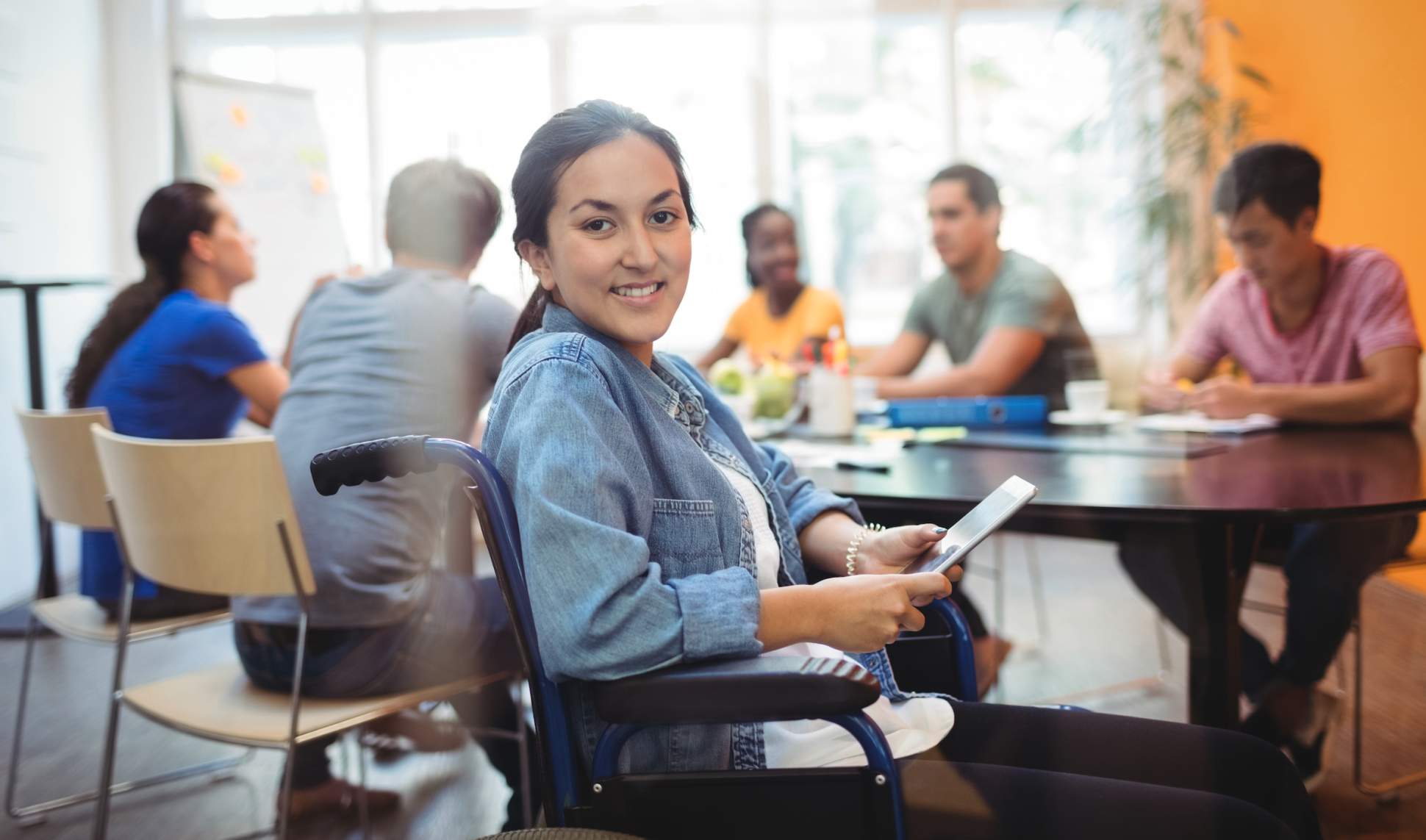
For a long time, the educational process favored a certain profile of student and, simultaneously, excluded several others who had difficulties keeping up with classes for various reasons. Fortunately, today, inclusive education is a concern of educators worldwide.
Talking about inclusion means considering all types of differences that make traditional teaching unsuitable for some people.
In this context, to pave a path with more respect and actually implement a more inclusive and democratic teaching, technology is an essential ally.
Want to discover how technological tools can contribute to inclusion in the educational system? Then, continue reading and check out the article that the CodeBlog team has prepared for you.
How can technology assist in promoting a more inclusive education?
Inclusive education aims to provide access to learning, taking into account the diverse profiles of students.
In other words, this is a global education vision, which aims to prepare methodologies, spaces, and materials to make school a place for everyone.
However, for many educational institutions, the implementation of inclusion, as well as understanding the multiplicity of students, is still challenging.
It is necessary, therefore, to keep in mind that the first step to promoting an inclusive education is to understand Brazilian legislation or, more specifically, the LBI (Brazilian Law of Inclusion).
Learn more about it below:
Understanding the LBI
The Brazilian Law of Inclusion (LBI) came into force in 2016 to guarantee rights for people with disabilities.
In addition to access to information, housing, work, and other fundamental rights, the Law reinforces the need for access and permanence of the person with a disability in school.
In the chapter on education, the duty, responsibility, and social role of schools in the work of inclusion are outlined.
The LBI also proposes the development of new teaching methods and techniques, in addition to the use of assistive technology equipment and resources.
In this scenario, education stops being "special" and becomes "inclusive", as the teaching methodologies and resources used by the school begin to meet all differences, practicing inclusion effectively.
In other words, the purpose is to teach together, taking into account the individual learning process, without defining the disability as an impediment or practicing any type of exclusion.
Inclusion with technology
Several teaching strategies can be implemented through technology, especially because new generations have had contact with mobile devices from a very early age. In view of this, bringing them into the classroom involves an interesting way to redefine the possibilities of use, as a fuel capable of accelerating the modernization of schools.
For example, using games or apps allows for exchanges among children and brings the teacher closer to elements that contribute to intensifying their educational potential.
Furthermore, internet access also broadens the debate through blogs, podcasts, and audiovisual content, enabling the development of themes that address, among others, deaf culture and the use of Libras, Brazil's second official language.
Various platforms can be used to ensure that materials acquire a playful role and stimulate concentration, attention, and creativity of people with or without disabilities.
In addition, assistive technologies expand the abilities of people with disabilities. Whether through a text reader for the blind, bilingual websites and platforms, or games focused on visual-motor perception or facilitating the children's literacy process.
For these and many other reasons, it is fundamental that the school is willing to adapt methodologies according to each class and, thus, move towards inclusive education.
Innovation inside and outside the classroom
Even though technology in the classroom is already a reality, the truth is that it can be explored in various ways, going beyond enhancing traditional teaching methodologies. This is because the use of technological equipment helps the teacher identify the needs of each student, allowing the necessary changes in how these platforms are used. It is worth noting that this practice tends to expand to other environments of the school.
It is certain that using the possibilities of the virtual environment makes mechanical tasks more efficient. In the administrative sector, for example, the use of a School Management System, together with cloud computing, helps to reduce deadlines and paper, besides simplifying administrative procedures, facilitating the family's access around the student.
If we can rethink education in so many ways, why not combine it with technology?
If this article was interesting to you, keep an eye on CodeBit's Blog and follow all contents focused on innovation, technology, inclusion, and much more.
Warm regards and see you in the next post!


" width="15.500294250860316px"><path d="M 0 15.475 L 0 0 L 15.5 0 L 15.5 15.475 Z" fill="transparent" height="15.475099999999998px" id="tPiDQU_MP" width="15.5px"/><path d="M 3.167 1.589 C 3.847 0.724 4.607 0.171 5.61 0.046 C 6.532 -0.07 7.436 0.022 8.277 0.451 C 9.235 0.938 9.681 1.797 9.877 2.797 C 9.987 3.364 10.049 3.948 10.056 4.525 C 10.079 6.395 10.055 8.265 10.075 10.135 C 10.08 10.527 9.944 10.648 9.574 10.641 C 8.799 10.627 8.023 10.63 7.248 10.644 C 6.911 10.65 6.787 10.528 6.789 10.181 C 6.803 8.533 6.799 6.884 6.789 5.236 C 6.788 4.892 6.754 4.545 6.698 4.206 C 6.57 3.433 6.106 2.974 5.443 2.925 C 4.405 2.849 3.714 3.206 3.495 4.018 C 3.37 4.478 3.333 4.972 3.326 5.451 C 3.306 7.002 3.307 8.555 3.327 10.105 C 3.332 10.504 3.208 10.654 2.807 10.644 C 2.032 10.625 1.257 10.63 0.481 10.642 C 0.156 10.647 -0.001 10.546 0 10.193 C 0.007 7.035 0.006 3.876 0 0.718 C 0 0.391 0.104 0.24 0.458 0.249 C 1.219 0.269 1.981 0.267 2.743 0.252 C 3.068 0.245 3.197 0.361 3.17 0.688 C 3.148 0.948 3.166 1.211 3.166 1.589 Z" fill="rgb(245, 240, 237)" height="10.64451194394125px" id="Hw1mXDepj" transform="translate(5.425 4.831)" width="10.075487656011685px"/><path d="M 3.284 5.2 C 3.284 6.764 3.27 8.327 3.292 9.892 C 3.297 10.284 3.158 10.403 2.79 10.396 C 2.015 10.382 1.24 10.386 0.465 10.399 C 0.14 10.403 -0.001 10.305 0 9.947 C 0.012 6.792 0.012 3.637 0.002 0.481 C 0.001 0.123 0.105 -0.01 0.473 0.001 C 1.261 0.023 2.05 0.02 2.839 0.004 C 3.183 -0.003 3.294 0.124 3.29 0.467 C 3.276 2.044 3.284 3.623 3.284 5.2 Z" fill="rgb(245, 240, 237)" height="10.39869818980116px" id="sgvgyFXCr" transform="translate(0.237 5.076)" width="3.292113077251912px"/><path d="M 3.768 1.898 C 3.761 2.945 2.91 3.782 1.859 3.772 C 0.828 3.763 -0.012 2.892 0 1.842 C 0.012 0.824 0.864 -0.003 1.897 0 C 2.956 0.003 3.776 0.834 3.768 1.898 Z" fill="rgb(245, 240, 237)" height="3.772444228811899px" id="M8BOm1cI0" transform="translate(0 0)" width="3.768370362042166px"/></g></svg>)
" height="17px" id="G9twDfI1x" transform="translate(2 2)" width="17px"/></svg>)
" height="17px" id="q6YSjVL3w" transform="translate(6 2)" width="8.5px"/></svg>)
" height="12.720532384492868px" id="Jh_taQ7si" transform="translate(1 3.586)" width="18.00050025px"/></svg>)