Environment
Work, technology, and the environment: 5 resources to reduce impacts generated by companies
Work, technology, and the environment: 5 resources that help reduce the impacts generated by companies.
08/17/2022


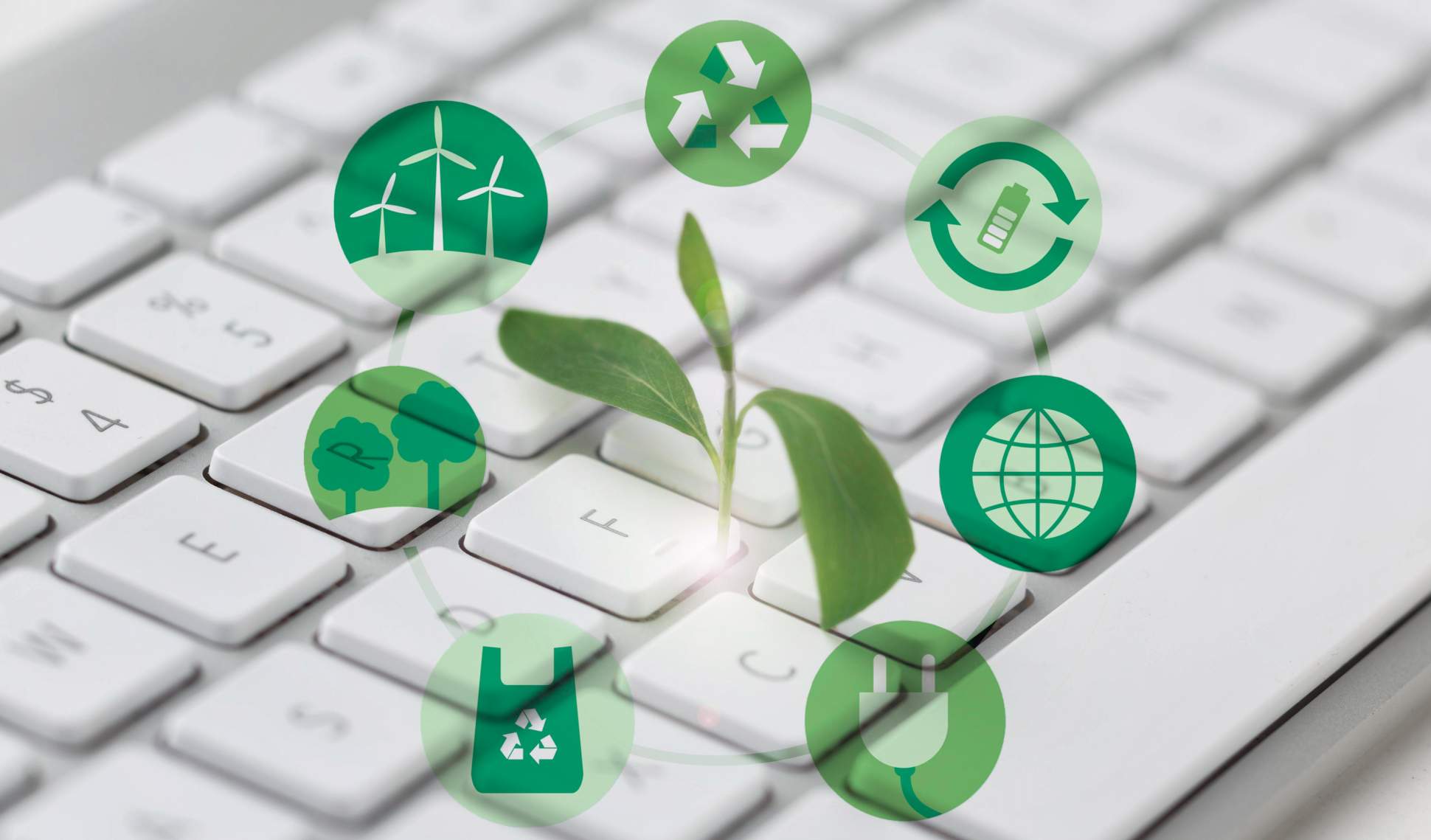
Technology and all its conveniences are increasingly present in people's lives. It is important to highlight that besides new connections, digitization opportunities, and other forms of consumption, these resources can also help reduce environmental impacts.
Debates on the conscious use of electricity, recycling, and water consumption have always been urgent, but now, the use of devices has intensified the importance of these issues even more.
Despite the challenges, technology shows how much it can contribute with efficient solutions to minimize some imminent problems.
An example of this is private companies, which have been investing in innovative resources such as electricity bill management, smarter shipping software, and digitization tools to reduce paper use and place the world on a more sustainable path.
Do you want to discover some of the resources used by organizations to reduce environmental impacts? Then, read on and check out the article that the CodeBlog team has prepared for you.
Reduction and optimization of electricity consumption
The environment and energy consumption are inseparable issues.
Lately, the unsustainable energy management promoted by some companies has raised an alarm about the need to adopt new efficient technologies to optimize electrical use, reduce consumption, and invest in renewable sources.
To do this, the first step is to analyze the processes and resources that demand high consumption in operations. Then, observe invoice history and identify sources of waste.
In this context, one solution is to invest in automated invoice management – a solution that helps detect failures and plan quick actions, which can provide immediate returns for large energy consumers.
On the other hand, solar energy has become increasingly popular in corporate environments. After all, it is environmentally renewable and economically profitable. Furthermore, it demands low maintenance and has a long lifespan.
Greener and smarter approaches to delivery and shipping
With the considerable increase in online sales, the impact of the supply chain on the environment must also be a point of discussion for companies.
Most brands that sell online do not allow customers to add items to orders after completing a transaction. This lack of flexibility causes purchases to be delivered by several different carriers, generating more waste due to countless packagings and more carbon emissions from multiple transportation routes leading to the same place.
To solve this issue, there are some technologies focused on order management that offer smarter ways to manage these operations.
In short, these resources create orders with a 'draft' status when the items are still in stock and allow the customer to make changes or additions until the purchase is shipped.
A relatively simple feature, but one that helps eliminate duplicate shipping offers, along with protective and packaging materials associated with multiple smaller orders.
Reducing carbon footprint by decreasing unnecessary travel
When it comes to reducing carbon footprint, reducing travel with vehicles powered by fossil fuels is one of the most viable alternatives.
In this context, hybrid work is part of the movement aimed at developing environmentally sustainable processes and routines in organizations.
This work model guarantees savings for companies, conservation of productivity, and flexibility for employees.
To achieve this, task management software and cloud computing solutions ensure that all tasks are properly executed, even with the employee team working remotely.
More sustainable and efficient agribusiness
According to data from the Food and Agriculture Organization of the United Nations (FAO), over the last 50 years, agribusiness was responsible for doubling greenhouse gas emissions.
However, technology has the potential to be one of the main drivers of transformation in this scenario. Precision farming tools, for example, offer advanced control over agricultural machinery, with controlled sprayer applications, autopilot systems, traffic optimization, and fleet allocation.
According to a study conducted by Hexagon's Agriculture division, herbicide application technologies can reduce the use of agrochemicals in an agricultural operation by up to 25%.
Automation and digital signatures help eliminate paper use in companies
According to a study conducted by The World Count, paper is responsible for 50% of waste generated by businesses worldwide. To minimize this problem and make processes more sustainable (and more efficient), many companies are investing in digitization and adopting digital signatures and certificates, which allow managers to sign documents and obtain the same legal validity as paper documents, in a much quicker and safer way.
Along with this solution, cloud computing has established itself as a major trend in the corporate market, as it allows access and storage of numerous types of files, in addition to executing tasks through internet-connected devices.
With this solution, offered by CodeBit in partnership with AWS, files or applications do not need to be installed on computers, since all data is available on a remote network.
By adopting this digital service, an organization can utilize its tools and save all the work done to access it later from anywhere, reducing paper use, providing greater security in processes, and significantly increasing team productivity.
Did you enjoy learning about the 5 resources that help reduce the environmental impacts generated by companies?
If you want to discover how technological advancements can contribute to the positioning and optimization of your company's processes, click here, access the CodeBit website and check out all the customized solutions prepared by a team of experts to meet your demand.
In the meantime, keep an eye on CodeBlog. We will have many novelties here soon.
Warm regards!




" width="15.500294250860316px"><path d="M 0 15.475 L 0 0 L 15.5 0 L 15.5 15.475 Z" fill="transparent" height="15.475099999999998px" id="tPiDQU_MP" width="15.5px"/><path d="M 3.167 1.589 C 3.847 0.724 4.607 0.171 5.61 0.046 C 6.532 -0.07 7.436 0.022 8.277 0.451 C 9.235 0.938 9.681 1.797 9.877 2.797 C 9.987 3.364 10.049 3.948 10.056 4.525 C 10.079 6.395 10.055 8.265 10.075 10.135 C 10.08 10.527 9.944 10.648 9.574 10.641 C 8.799 10.627 8.023 10.63 7.248 10.644 C 6.911 10.65 6.787 10.528 6.789 10.181 C 6.803 8.533 6.799 6.884 6.789 5.236 C 6.788 4.892 6.754 4.545 6.698 4.206 C 6.57 3.433 6.106 2.974 5.443 2.925 C 4.405 2.849 3.714 3.206 3.495 4.018 C 3.37 4.478 3.333 4.972 3.326 5.451 C 3.306 7.002 3.307 8.555 3.327 10.105 C 3.332 10.504 3.208 10.654 2.807 10.644 C 2.032 10.625 1.257 10.63 0.481 10.642 C 0.156 10.647 -0.001 10.546 0 10.193 C 0.007 7.035 0.006 3.876 0 0.718 C 0 0.391 0.104 0.24 0.458 0.249 C 1.219 0.269 1.981 0.267 2.743 0.252 C 3.068 0.245 3.197 0.361 3.17 0.688 C 3.148 0.948 3.166 1.211 3.166 1.589 Z" fill="rgb(245, 240, 237)" height="10.64451194394125px" id="Hw1mXDepj" transform="translate(5.425 4.831)" width="10.075487656011685px"/><path d="M 3.284 5.2 C 3.284 6.764 3.27 8.327 3.292 9.892 C 3.297 10.284 3.158 10.403 2.79 10.396 C 2.015 10.382 1.24 10.386 0.465 10.399 C 0.14 10.403 -0.001 10.305 0 9.947 C 0.012 6.792 0.012 3.637 0.002 0.481 C 0.001 0.123 0.105 -0.01 0.473 0.001 C 1.261 0.023 2.05 0.02 2.839 0.004 C 3.183 -0.003 3.294 0.124 3.29 0.467 C 3.276 2.044 3.284 3.623 3.284 5.2 Z" fill="rgb(245, 240, 237)" height="10.39869818980116px" id="sgvgyFXCr" transform="translate(0.237 5.076)" width="3.292113077251912px"/><path d="M 3.768 1.898 C 3.761 2.945 2.91 3.782 1.859 3.772 C 0.828 3.763 -0.012 2.892 0 1.842 C 0.012 0.824 0.864 -0.003 1.897 0 C 2.956 0.003 3.776 0.834 3.768 1.898 Z" fill="rgb(245, 240, 237)" height="3.772444228811899px" id="M8BOm1cI0" transform="translate(0 0)" width="3.768370362042166px"/></g></svg>)
" height="17px" id="G9twDfI1x" transform="translate(2 2)" width="17px"/></svg>)
" height="17px" id="q6YSjVL3w" transform="translate(6 2)" width="8.5px"/></svg>)
" height="12.720532384492868px" id="Jh_taQ7si" transform="translate(1 3.586)" width="18.00050025px"/></svg>)